Earth Cooks Its Gold in a Two-Stage Kitchen Beneath the Pacific, and 66 Chunks of Volcanic Glass Show How
Glass dredged from the Kermadec arc north of New Zealand carries several times more gold than mid-ocean ridge magma. The trick is that the mantle has to melt more than once.
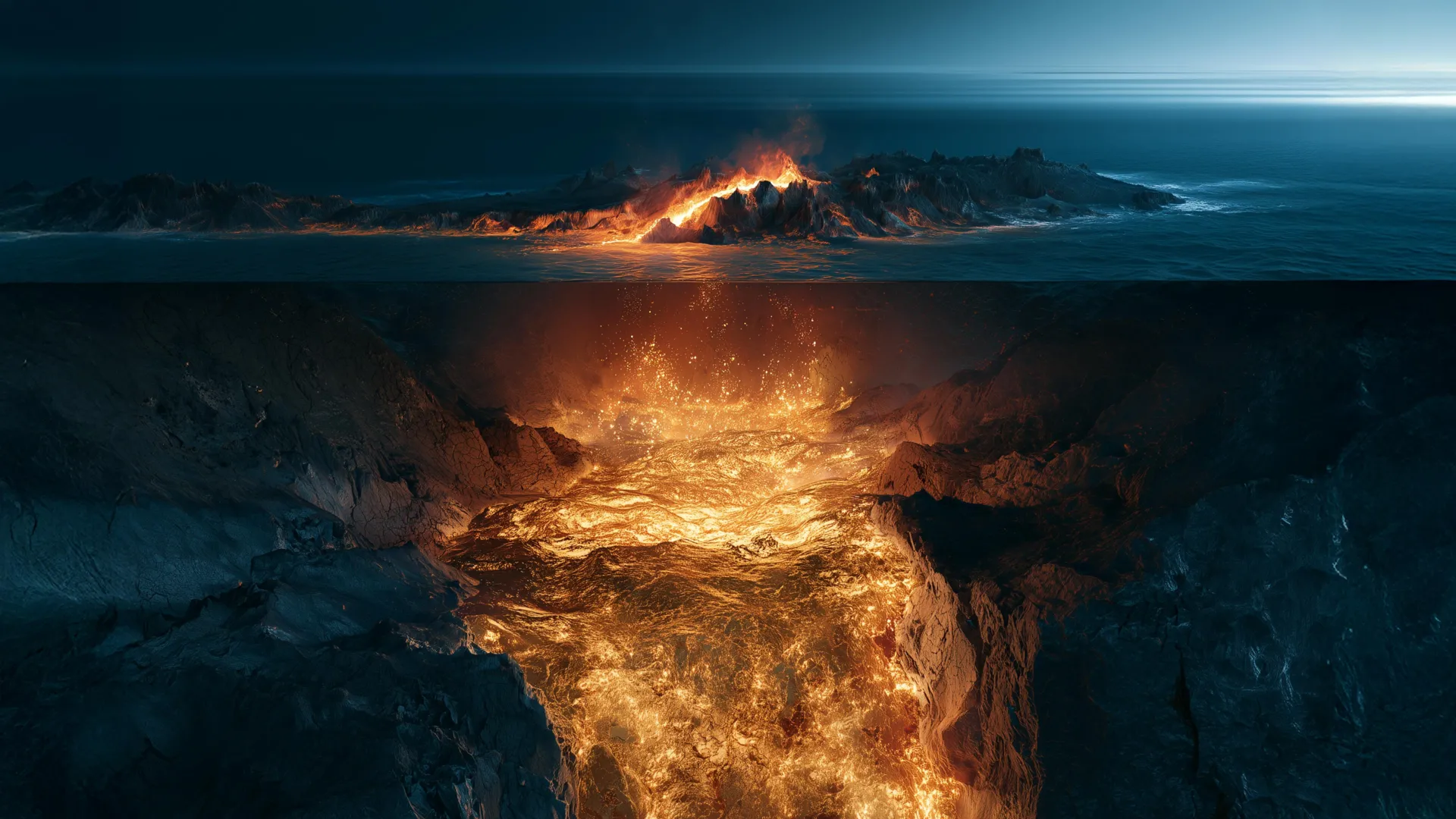
Gold is not evenly smeared through the Earth. It clusters, and it clusters hardest above subduction zones — the trenches where one tectonic plate dives beneath another. Geologists have known that correlation for a long time without being able to say what the mantle actually does down there to gather the metal. A study of 66 samples of volcanic glass from the seafloor north of New Zealand now offers a mechanism, and the surprising part is that it takes two steps rather than one.
Researchers at the GEOMAR Helmholtz Centre for Ocean Research Kiel worked with glass from the Kermadec island arc, a chain of submarine volcanoes running northeast from New Zealand. Volcanic glass is a useful thing to measure because it is quenched magma: lava that hit cold seawater and froze before its chemistry could reorganize, preserving a snapshot of the melt as it was. The primitive samples in the set carried gold concentrations several times higher than magma from mid-ocean ridges, reaching up to six nanograms of gold per gram of rock, with gold-to-copper ratios well above what an ordinary fertile mantle would produce.
The mechanism turns on sulfur. In the mantle, gold is normally locked inside sulfide minerals, which hold onto it tightly and keep it out of any melt that rises toward the surface. Break those sulfides down and the gold is released into the melt. What breaks them down is melting itself, and specifically a lot of it — the more thoroughly the mantle rock melts, the less sulfide survives to hold the gold back.
Water is what makes the melting extensive. The plate sliding into a subduction zone carries seawater down with it, and that water lowers the melting point of the mantle wedge above. Crucially, the study concludes that water is a trigger rather than a direct control: it does not carry the gold or preferentially grab it. It simply forces the mantle to melt harder, and hard melting is what destroys the sulfide cages.
One round of that is not enough. The patterns the team measured in silver, copper and platinum — elements that partition differently and therefore record the history — point to multiple melting stages rather than a single event. "The mantle behaves like a multi-stage melting system that progressively concentrates gold," said Christian Timm, who led the work. "Only repeated melting allows gold to become strongly concentrated." The mantle beneath the Kermadec arc happened to be both water-rich and oxidized, which further weakened the sulfides' grip.
The findings, published in Communications Earth & Environment, describe the first leg of gold's journey rather than the whole trip. Even six nanograms per gram is nowhere near an ore deposit; hydrothermal systems circulating through the crust have to do a great deal of further concentrating before anything worth mining exists. What the Kermadec glass supplies is the starting condition — an explanation for why the magmas feeding submarine hydrothermal sulfide deposits above subduction zones arrive pre-enriched, and why the world's gold map looks so much like its trench map.
Originally reported by ScienceDaily.