Two Active Magma Reservoirs Found Under Nicaragua's Masaya Volcano, 13 Miles From 2 Million People
Penn State researchers used six years of satellite radar data and found the caldera and the lava-lake crater are moving in opposite directions.

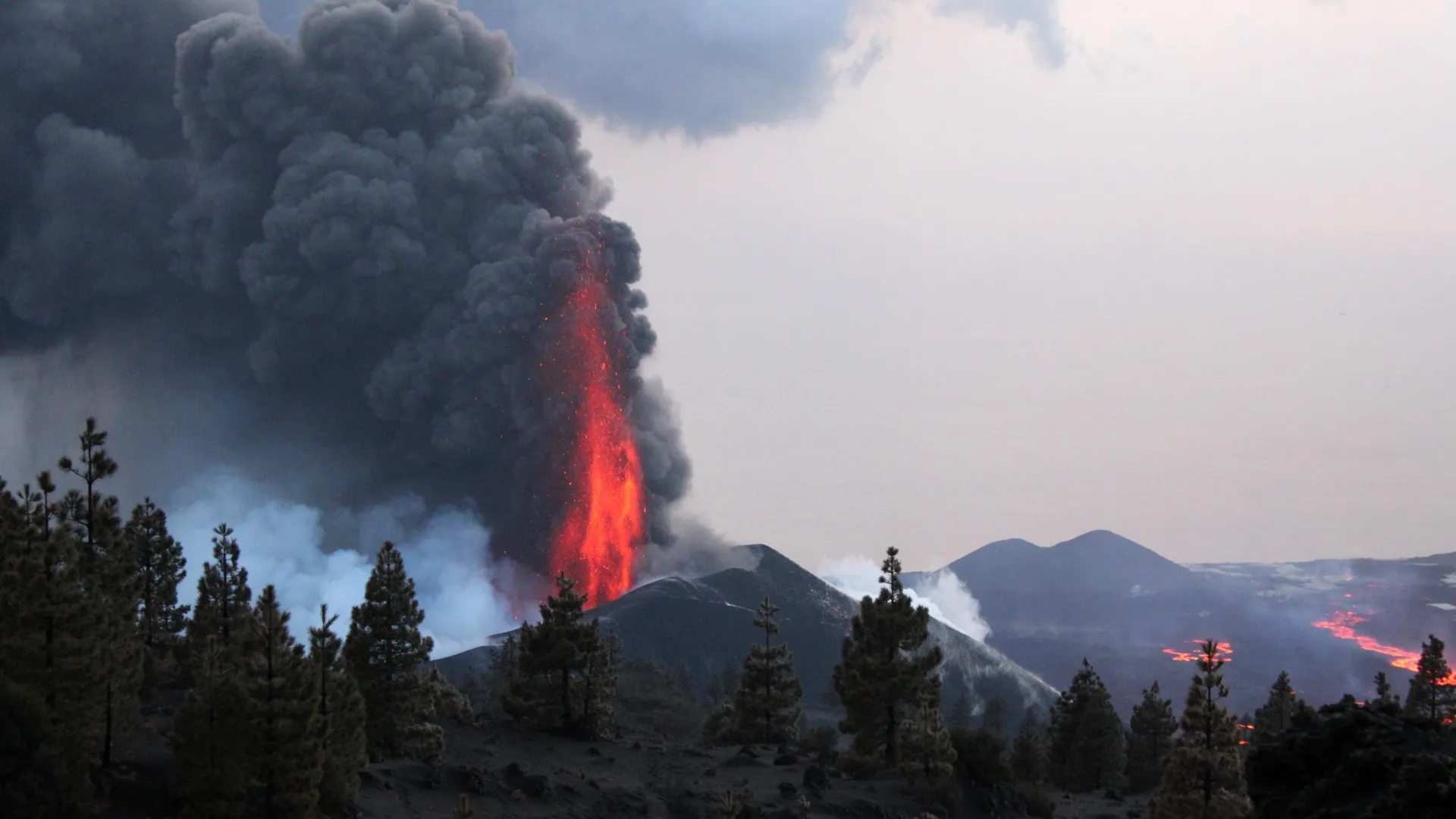
Masaya volcano in Nicaragua sits on top of two separate active magma reservoirs, according to a Penn State study of satellite radar data. The volcano is within 13 miles of about 2 million people, including residents of the capital, Managua. The researchers found no immediate danger, but the discovery shows the volcano's plumbing is more complicated than scientists had assumed.
The team, led by Lizzie Johnson, who studied geosciences at Penn State, analyzed six years of observations from the European Sentinel-1 satellite, from 2018 to 2024. They used interferometric synthetic aperture radar, or InSAR, which compares radar images over time to measure tiny shifts in the ground. The work was published in Geophysical Research Letters.
InSAR suits a volcano like Masaya because radar can see through clouds. "Cloud penetration is important for volcanoes because many of them, like Masaya, are in tropical areas where there is often cloud cover," said Young Cheol Kim, who earned a doctorate at Penn State.
The ground told two different stories. The caldera first sank and then rose, a pattern that suggests fresh magma arriving from deeper below. But the area around Santiago crater, which has held an active lava lake since December 2015, deflated throughout the whole study period. "At the same time, the area directly around the active Santiago crater deflated over the entire study period independently of the transition to inflation of the main reservoir," Johnson said. The simplest explanation is two reservoirs that behave independently.
Masaya is a complex volcano of nested craters and calderas. Its last major lava flow was in 1772, but it constantly releases gas, and it "often produces dangerously high concentrations of sulfur dioxide volcanic gas." It is also a national park and a popular tourist destination, which means people are often close to the vents.
The researchers said they did not find any imminent hazard to nearby communities. What they want is a baseline. "Doing continuous monitoring allows us to understand the baseline activity and see if things are changing," Kim said. "And then if there is a need to warn people, we can do that in a timely manner."
Ground movement matters because it reveals how magma is supplied and how it moves between underground storage and the surface. Johnson said longer-term geodetic measurements and better models will give a fuller picture and allow more effective hazard monitoring and mitigation at Masaya and other basaltic volcanoes that host lava lakes. For a volcano with millions of people in range, knowing there are two reservoirs rather than one changes what the monitoring needs to look for.