CBS Poll: Democrats on Pace for 229 House Seats, but No Clear Wave Yet
A CBS News/YouGov survey finds Democrats' lead steady but not growing, with late-deciding voters leaning Republican and turnout the biggest unknown.
Democrats are on pace to win about 229 House seats in the midterm elections, according to the latest CBS News model, but the party's advantage has held steady in recent weeks rather than growing into a wave.
The estimate, updated Sunday, comes from a CBS News/YouGov poll of 2,355 U.S. adults conducted October 21-23. The margin of error is 2.6 points for all adults, 2.9 points for registered voters and 3.0 points for likely voters. The model says outcomes in the 230s are possible, and it leaves Republicans a narrow path to keeping the majority. The analysis was written by CBS News polling director Anthony Salvanto, Jennifer De Pinto and Fred Backus.
Salvanto described the contest as an "avoidance" election, one in which many voters are motivated more by stopping something they fear than by winning something they want. That shows up most clearly in how each side talks about President Trump. More than seven in 10 Democratic voters say they are casting ballots to oppose him. Most Republican voters say they are voting to support him, though with less intensity. About four in 10 Democrats say they lack confidence in their own party's plan and are mainly driven by opposition to Trump, while about four in 10 Republicans say their vote is not about the president at all.
Turnout may decide the outcome. More Democrats say they will definitely vote or have already voted early, while the voters who say they will only probably or maybe vote lean Republican. Undecided and uncertain voters also tilt toward the GOP. Trump's campaign appearances cut differently within his own party: most MAGA Republicans say they make them more likely to vote Republican, but many non-MAGA Republicans say they do not.
The economy remains a drag on the president. Ratings of the economy are negative and have slipped back to roughly where they were last spring. Most likely voters say Trump's policies have made their personal finances worse, and inflation ranks among voters' top concerns. Those who call inflation very important mostly back Democrats. More voters also say Trump puts his own and his family's finances ahead of the country's, and those voters mostly support Democrats. Most Republicans believe he puts the country first.
Neither party has persuaded voters it has a plan. Most voters say neither side has a clear agenda if it wins control of Congress, and few expect gas prices to fall under either party, though more expect them to rise if Republicans win. Most also expect more government corruption if Republicans keep Congress, and large majorities in both parties say corruption affects their vote.
Voters on both sides view a loss as a threat. Many say a win by the other party would endanger their way of life, and MAGA Republicans are especially likely to say that about Democrats. About a third of voters say the Democratic Party puts recent immigrants ahead of U.S. citizens, and they mostly back Republicans. Another third say Democrats put both groups first, and they mostly back Democrats. Republicans lead among voters who call transgender issues a major factor in their vote, though the issue ranks behind others overall.
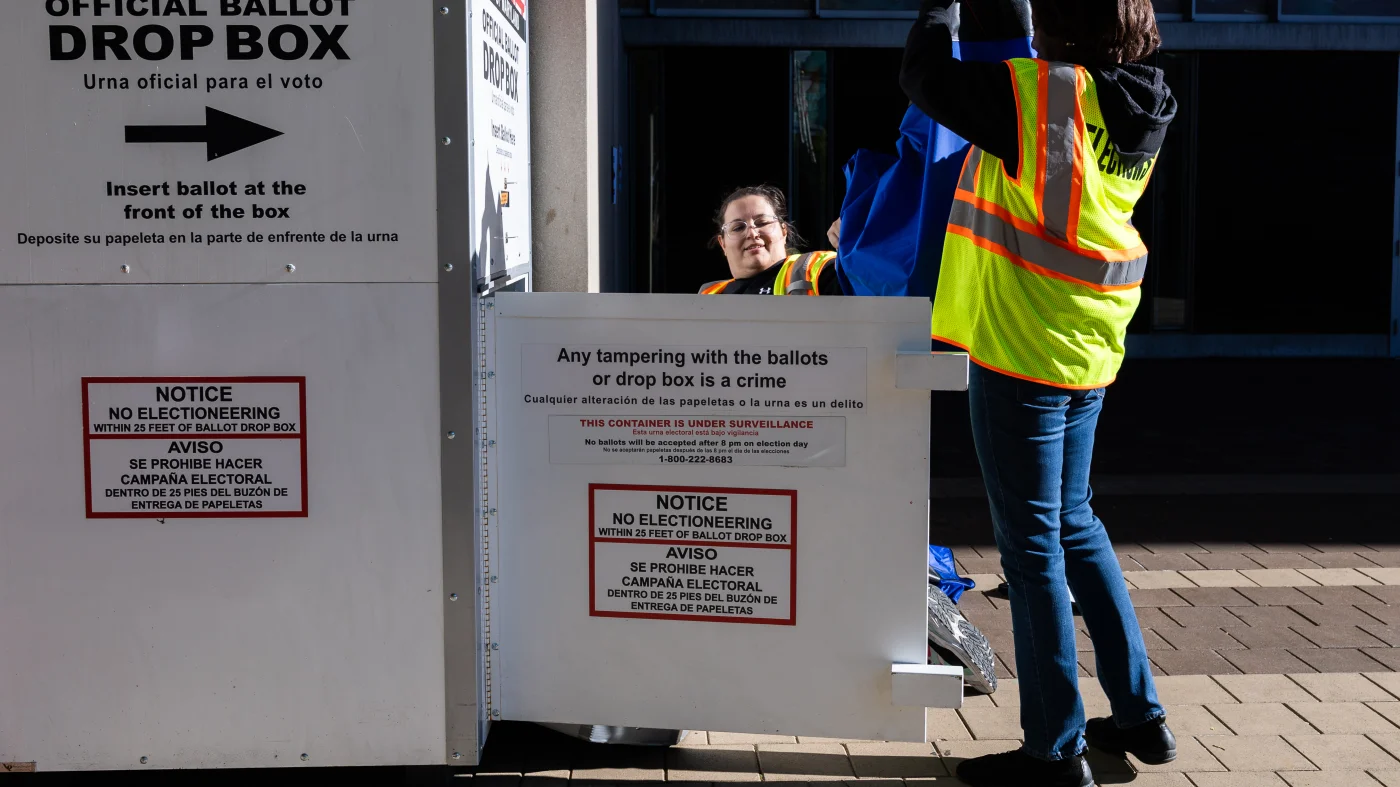
On the mechanics of voting, most voters say they are at least somewhat confident in their local election administration and that their own ballot will be counted accurately. Democrats are more likely than Republicans to say they are very confident. Republicans are far more likely to believe that illegal voting by noncitizens happens in federal elections.
With the election days away, the poll leaves Democrats ahead but short of a decisive margin, and the final result will hinge on who actually turns out.