Archbishop Apologizes After White House Publicizes His Prayer With Trump
Milwaukee's Jeffrey Grob says the bishops were told the meeting would be private, and a second bishop says the White House exploited it for partisan ends two weeks before the midterms.
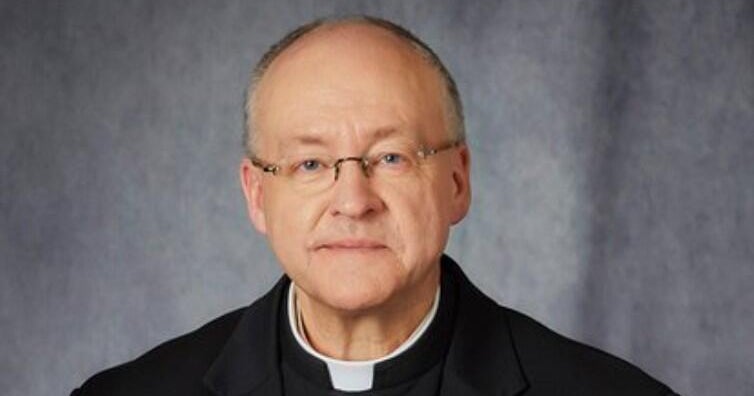
Two Catholic bishops have said they regret attending a White House meeting last week after the administration publicized a photo of them praying with President Trump less than two weeks before the midterm elections.
Milwaukee Archbishop Jeffrey Grob issued a statement Sunday titled "A Public Apology." He said the White House released photos and video of Thursday's meeting without the participants' consent, and he described the prayer as having been "manipulated." Twelve bishops attended in all.
William Joensen, the bishop of Des Moines, Iowa, said the White House took advantage of the bishops and that others "exploited" the meeting for partisan purposes.
Grob said the bishops were told in advance that the session would be a private discussion, that some Catholic members of the Cabinet might attend, and that they could pray privately with the president. The invitation, sent in September, reportedly listed immigration enforcement, visas for religious workers, abortion and federal tax credits for private education as topics.
The archbishop said he had reservations before attending and later received messages of concern from people worried about bishops appearing at a political event so close to an election, including some who have been harmed by the administration's policies. He apologized for the damage the episode caused.
The White House press office did not say whether it had obtained consent to publicize the photos and video. Spokesperson Taylor Rogers instead praised Trump's record on issues important to Catholics.
The episode exposes the divisions inside the U.S. Conference of Catholic Bishops over how to deal with the administration. Some bishops have engaged closely with it: Bishop Robert Barron agreed to serve on a Religious Liberty Commission. Others have criticized the administration's immigration enforcement as contrary to Catholic teaching.
Catholic voters are a closely watched group in several battleground states, and both parties court them. Church leaders generally avoid endorsing candidates, and a picture of bishops in prayer beside a sitting president carries obvious political weight in the final days of a campaign.
The apologies are unusual in their directness. Bishops rarely say publicly that they were misled by a government they have met with, and the statements leave open how willing church leaders will be to attend future White House events without firm ground rules.
The meeting came as Catholic leaders were already under pressure over immigration, one of the topics the White House said it wanted to discuss. Several bishops have publicly argued that mass deportation and the treatment of migrants conflict with church teaching, which made the optics of a smiling prayer circle with the president especially fraught for the participants.