The Army Shot Down Three Cartel Drones at the Southern Border With a High-Energy Laser
U.S. Northern Command says the aircraft were downed Tuesday night and Wednesday morning after being judged hostile. It won't say where, or which cartel they belonged to.
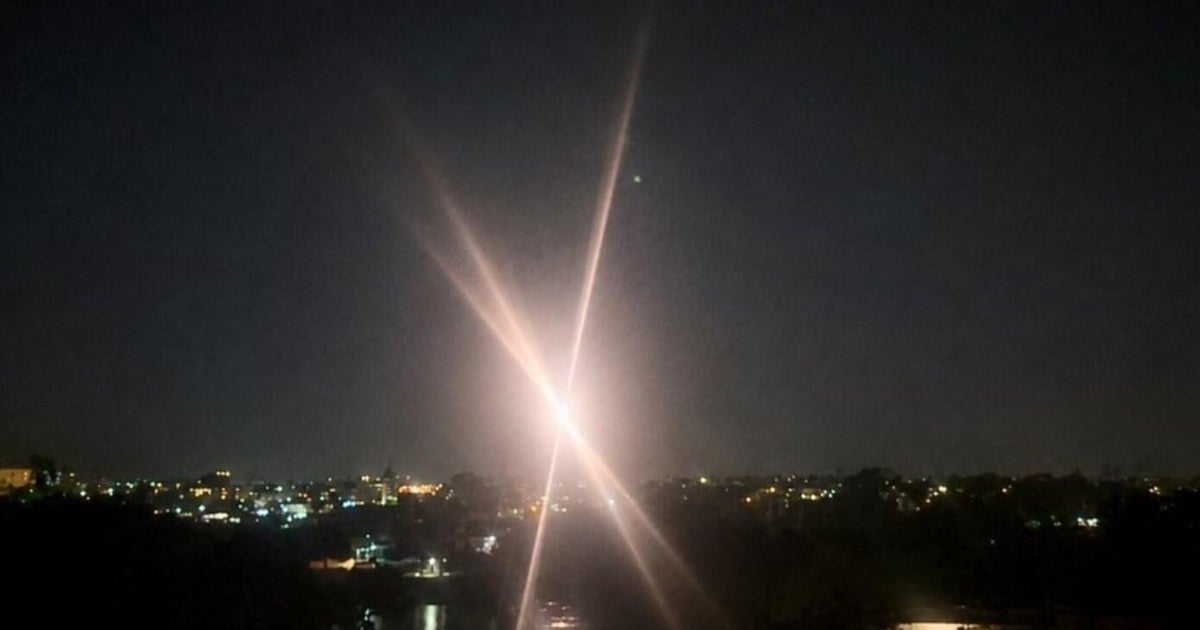
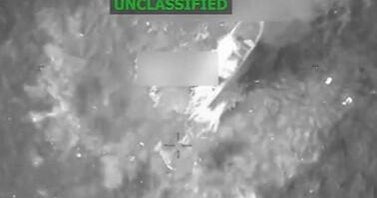
The U.S. military used a high-energy laser this week to shoot down three drones along the U.S.-Mexico border that it says were operated by drug cartels, the Pentagon confirmed Thursday. The unmanned aircraft were destroyed late Tuesday night and early Wednesday morning with an "Army Multipurpose High Energy Laser system," according to U.S. Northern Command, the combatant command responsible for military defense operations in North America.
The shootdowns were carried out by USNORTHCOM's southern border Joint Task Force, a roughly 8,000-service-member unit formed last year to support President Trump's immigration crackdown. The command declined to say where along the border the drones were downed, or which cartels they were believed to belong to. Asked whether the shots crossed into Mexican airspace, a USNORTHCOM spokesperson told CBS News that "the shots were taken in coordination with all partners operating along the border," adding that "due to operational security reasons and ongoing counter cartel and counter drone operations, we do not have additional details to provide at this time."
USNORTHCOM said the drones were classified as hostile because they were flying in "support of activities posing a physical threat to U.S. military personnel" and U.S. Customs and Border Protection agents. "Cartel networks are increasingly employing unmanned aircraft systems to facilitate illicit human-smuggling and actively spy on our personnel and law enforcement partners," said Maj. Gen. Curtis Taylor, commander of the southern border Joint Task Force. "By integrating layered countermeasures alongside advanced directed-energy capabilities like this laser system, we have made it clear that we will not tolerate hostile surveillance."
Directed-energy weapons work by concentrating a beam on a target until its structure or electronics fail — no ammunition, and a cost per shot measured in the electricity consumed rather than the price of an interceptor missile. That economics argument is why the Pentagon has pushed the technology for two decades. It is also a technology with a thin operational record and a recent history of mistakes at this particular border.
In February, a U.S. military laser accidentally shot down a Customs and Border Protection drone near Fort Hancock in southwest Texas. Earlier that same month, the Federal Aviation Administration briefly closed commercial airspace around El Paso after an internal safety dispute with the Pentagon over military drone tests near Fort Bliss that sources said involved a high-energy laser system. Transportation Secretary Sean Duffy said at the time that the FAA and Defense Department had "acted swiftly to address a cartel drone incursion" and that the "threat has been normalized."
What the cartels are actually flying matters to how the escalation is read. Austin Doctor, an associate professor at the University of Nebraska at Omaha and director of strategic initiatives at the National Counterterrorism Innovation, Technology, and Education Center, told CBS News in February that cartel drones near the border are used primarily for surveillance "to support their other illegal criminal activities, including smuggling of narcotics, smuggling of persons, firearms, and other illicit goods." Doctor noted that cartels have not used weaponized drones inside the United States, though they do use them inside Mexico against rival organizations.
The Pentagon released no imagery, no timeline beyond the two-night window, and no assessment of what the drones were carrying or observing. It also did not say whether the laser engagements were a one-off or the start of standing practice along the border.