Dan Driscoll Resigned as Army Secretary 12 Days Ago. On Saturday in Kyiv He Said Ukraine's Battle Software Beats Anything the U.S. Has.
In his first public appearance since leaving the Pentagon, Driscoll praised the DELTA platform and warned that the U.S. plans to buy 300,000 drones a year while Ukraine builds 7 to 10 million.
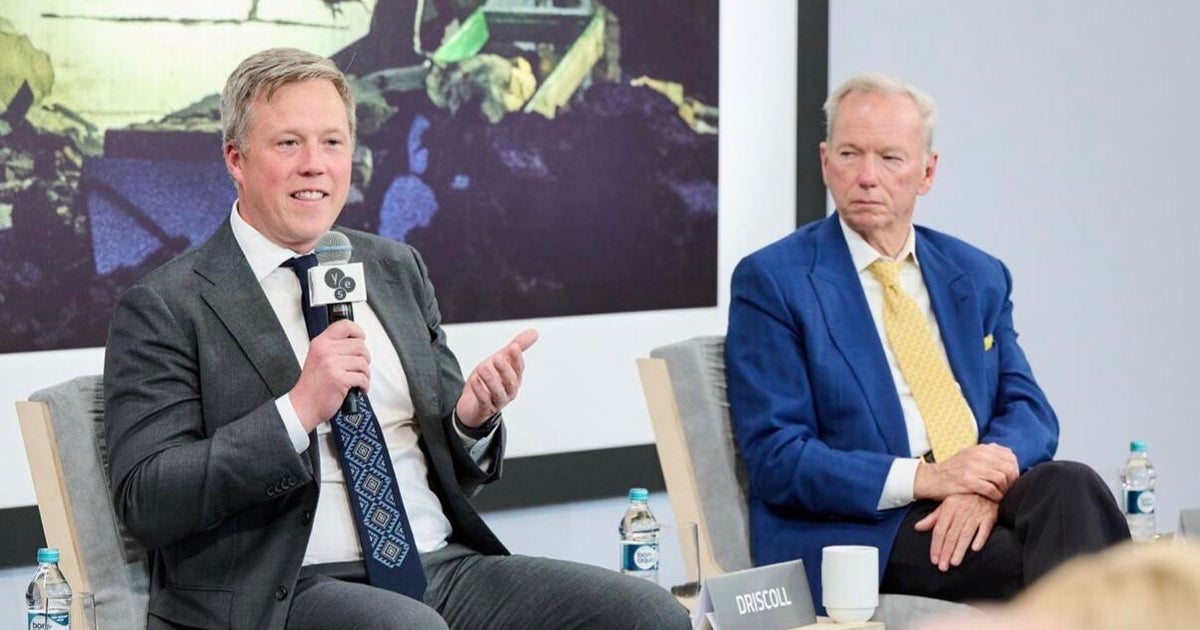
Former Army Secretary Dan Driscoll chose Kyiv for his first public remarks since resigning, and he used them to tell a Ukrainian audience on Saturday that their military is out-innovating his own. Speaking on the second day of the Yalta European Strategy forum, organized by the Victor Pinchuk Foundation and moderated by CNN's Fareed Zakaria, Driscoll described "an inflection point in warfare" in which speed and iteration matter more than scale, and said Ukraine's battlefield software platform DELTA surpasses any technology the U.S. military currently fields.
DELTA pulls data from radars, sensors and individual soldiers into a single picture that commanders can act on in real time. Driscoll said that capability, built under fire, gives Kyiv "an amazing opportunity for your nation to outrun the Russians, and out-innovate them." He urged the United States to "internalize these lessons" from what he called Ukraine's "scrappy, fast, iterative nature," and pointed to a gap in numbers that he said should alarm Washington: the U.S. military is projected to buy about 300,000 drones a year, while Ukraine is producing between 7 million and 10 million.
Driscoll, an Iraq War veteran and former venture capitalist who was a Yale Law School classmate and close friend of Vice President JD Vance, announced his resignation on Aug. 31 after 18 months in the job. The White House gave no official reason. Reports at the time described clashes with Defense Secretary Pete Hegseth over the removal of senior officers and the pace of Army modernization. Two generals who had championed the Army's push to learn from Ukraine are gone: Gen. Randy George, the Army chief of staff, was forced out, and Gen. Christopher Donahue, who commanded U.S. Army Europe and Africa, was pushed into retirement. In August the Army also shut down a drone battalion that had been set up specifically to study how Ukraine fights.
Driscoll did not attack his former boss by name. He said U.S. support for Ukraine "has remained, not perhaps, as strong as you wanted, but from my position, it's been unflinching," and cast his departure as a choice rather than a dismissal. "My highest and best use to make the world a little bit safer at this very scary time was to do it on the outside," he said. He had also taken part in the administration's efforts to negotiate a peace settlement between Kyiv and Moscow before he left.
He shared the stage with former Google chief executive Eric Schmidt, who now runs the defense firm Perennial Autonomy. Schmidt said his company rushed 13,000 "Merops" interceptor drones and 10,000 "Bumblebee" reconnaissance and strike drones into service when the United States found itself without an adequate answer to Iranian Shahed drones after the war with Iran began in February. "The question is, could the government have had a multi-year plan to anticipate this?" Schmidt asked. Driscoll had begun procurement reforms at the Army in January that were meant to answer exactly that question, and the forum gave him a platform to argue that the work should continue without him.
Originally reported by CBS News.