Trump's 'Secret Weapon' Against Colleges Is a New Accreditation Rule Taking Effect in July
The Education Department's overhaul makes accreditors judge schools on 'intellectual diversity,' and critics say it opens a path to policing campus speech.
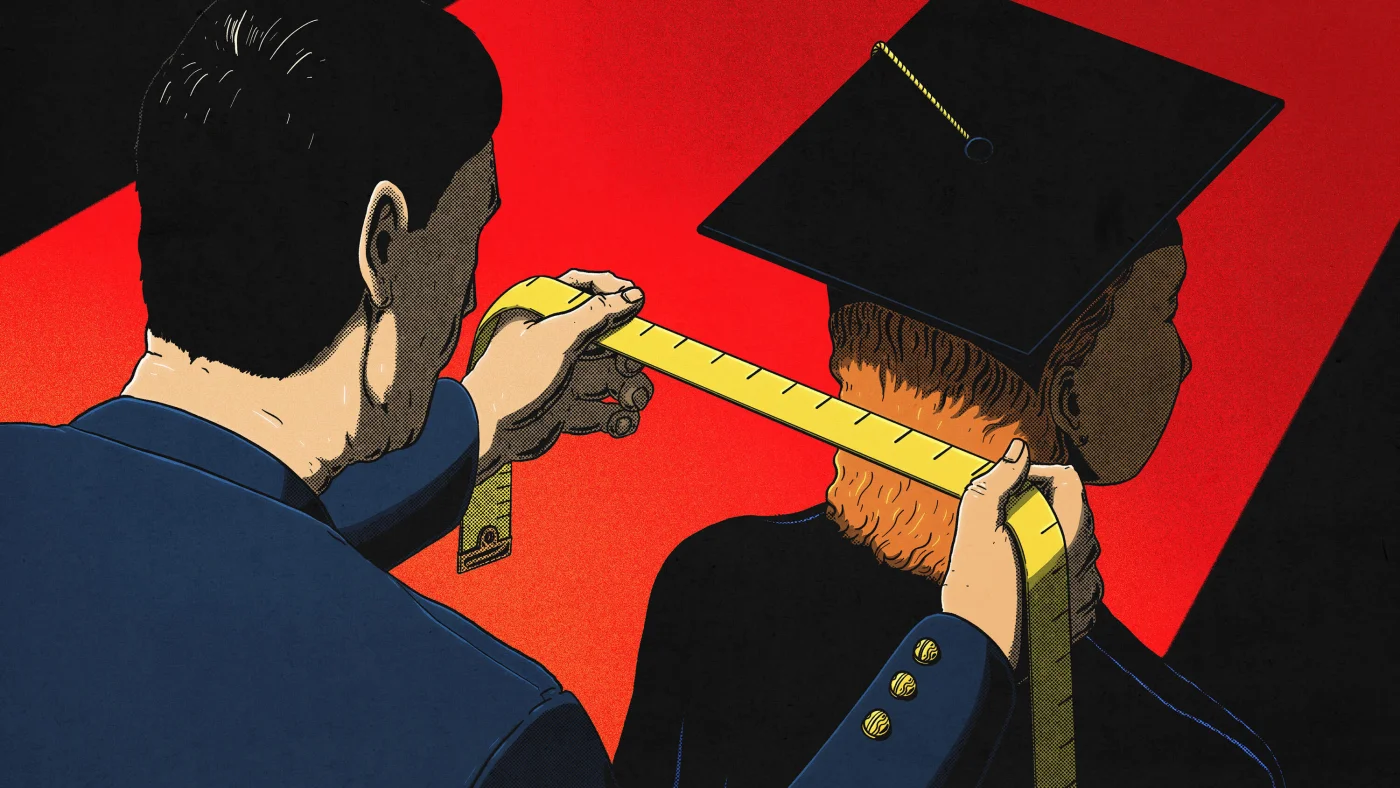
President Donald Trump once called it his "secret weapon" for taking on American universities, and it is about to become reality. The Education Department has overhauled the federal rules governing college accreditation, a change that has drawn little public attention but will take effect in July, ahead of the 2027-28 academic year.
Accreditation is the system the federal government relies on to decide which colleges are worthy of receiving millions, and in some cases billions, of dollars in student loans and grants. Colleges pay membership dues to third-party nonprofit accreditors, which review schools on curriculum quality, faculty qualifications, facilities, financial soundness and more. Their job is to make sure students get good value and to keep shady schools from pocketing taxpayer money.
"The time has come to reclaim our once great educational institutions from the radical left," Trump said in a 2023 campaign video. "Our secret weapon will be the college accreditation system." He pledged to fire the accreditors that he said had allowed colleges to become dominated by what he called Marxists, maniacs and lunatics. The department has now kept the promise to overhaul the rules.
The most controversial change requires accreditors to evaluate school policies on intellectual diversity, "ensuring that students are exposed to a range of viewpoints," according to a department press release. Bob Shireman, an accreditation expert and former top Obama-era Education Department official, said the rule gives the department authority "to meddle in the internal affairs of colleges and universities in ways that they never have been able to in the past." He said it creates an avenue for the federal government to tell colleges what balance of viewpoints it wants.
PEN America, the free-expression group, warned that the change is part of a plan to weaken higher education and its historic protections for academic freedom. Even some conservatives are uneasy. Beth Akers, an economist at the American Enterprise Institute who supports much of the overhaul, said this piece goes too far because it puts the administration "in a seat of judgment" over whether institutions are teaching ideology, something she called uncomfortable.
The department rejects the criticism. Ellen Keast, communications director for the under secretary, told NPR the regulations do not mandate specific policies or give the department authority to police speech. She called the change a commonsense step toward restoring intellectual diversity and said truth emerges through rigorous debate, not enforced consensus.
Not everything in the package is contested. Emily Rounds, a senior higher education policy adviser at the center-left think tank Third Way, said one change enjoys bipartisan support: it pushes accreditors to weigh student outcomes more heavily, such as earnings, licensure pass rates, graduation rates and whether students stay enrolled year to year.
Antoinette Flores of the Council for Higher Education Accreditation noted that Congress deliberately made accreditors independent of the federal government. Because the new rules were adopted through the traditional rulemaking process, they will be hard for Democrats to undo, even with the House majority they won in last week's midterms.