Trump and NATO's Rutte Warn Russia Against Widening the War in Ukraine
After closed-door talks at Mar-a-Lago, the two leaders called for a rapid peaceful resolution and more allied defense spending. The Kremlin said the warning should apply to Kyiv.
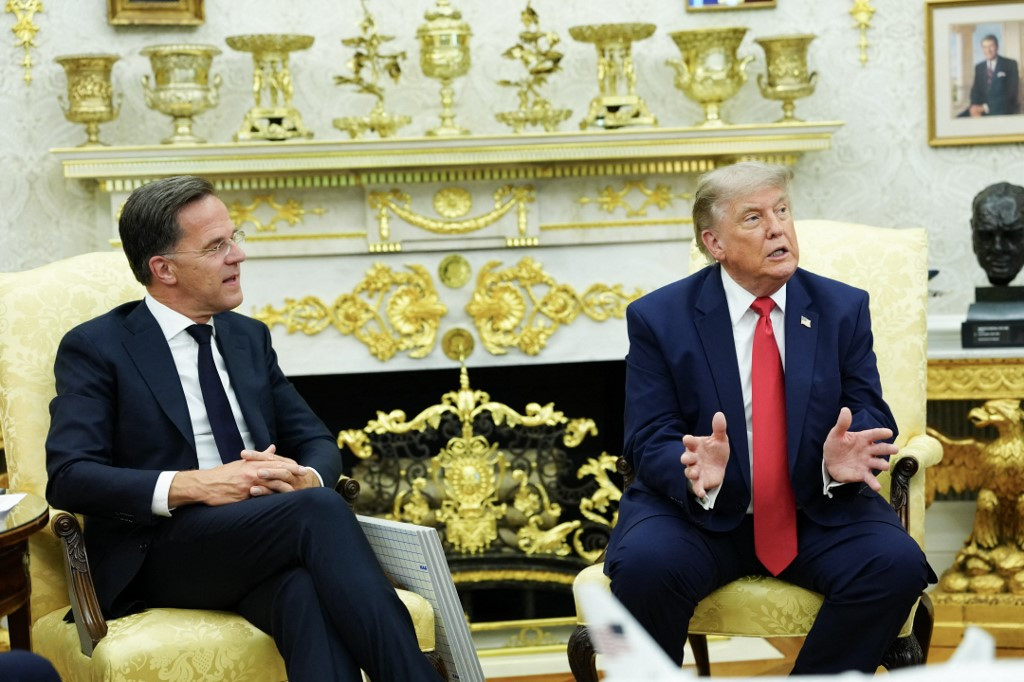
President Donald Trump and NATO Secretary General Mark Rutte have warned Russia against any action that could widen its war in Ukraine, issuing a joint statement after a closed-door meeting at the president's Mar-a-Lago resort in Florida on Wednesday night.
"We also discussed the importance of Russia avoiding any actions that intentionally, or unintentionally, expand the war, and the importance of obtaining a peaceful resolution to the war as rapidly as possible," the two leaders said in the statement released by the White House. They described the session as an "outstanding meeting" and "very impactful," and said the war between Russia and Ukraine and the conflict with Iran were the primary subjects.
Trump and Rutte also pointed to what they called the "record setting achievements" of the alliance's last two summits, in The Hague and Ankara, and stressed the need to further increase defense spending and investment in arms production in the United States and across NATO. The statement gave little detail on Iran and announced no specific new decisions on Ukraine.
The talks came less than a week after Trump held three-way discussions with Russian President Vladimir Putin and Chinese President Xi Jinping in Shenzhen. Those meetings produced a four-point "declaration toward peace" that pledged dialogue on nuclear nonproliferation but made no mention of Ukraine, and they failed to deliver a ceasefire. Trump wrote on Truth Social on Thursday that he had briefed Rutte on his conversations with Putin, in which he pressed the Russian leader to "pull back all Military aggression against territories throughout Europe" so that a deal could be reached. "I really believe this is a strong possibility," he wrote, calling the monthly death toll "A COMPLETE BLOODBATH."
Rutte has defended the president's outreach, even as some European leaders objected to Trump calling Putin his friend. "Russia and the U.S. are big nuclear powers. China is an upcoming nuclear power. It is important that leaders meet," Rutte said before a recent meeting in Berlin, praising what he called Trump's "Herculean efforts" to secure peace. Before arriving at Mar-a-Lago, the NATO chief said Trump was testing Putin's willingness to end the war, and repeated that any settlement, whether a full peace agreement or a long-term ceasefire, must include credible security guarantees for Ukraine.
The Kremlin answered on Thursday by turning the warning back on Kyiv. Presidential spokesman Dmitry Peskov said that talk of expanding the conflict "apparently refers to the Kyiv regime's attempts to expand the geography of this conflict," citing what he called terrorist activity in the Mediterranean and the Baltic. Ukraine has recently struck Russian vessels in the Gulf of Finland and off the coast of Libya. President Volodymyr Zelensky told Bloomberg News that any Russian-flagged vessel carrying weapons or sanctioned cargo is a legitimate target.
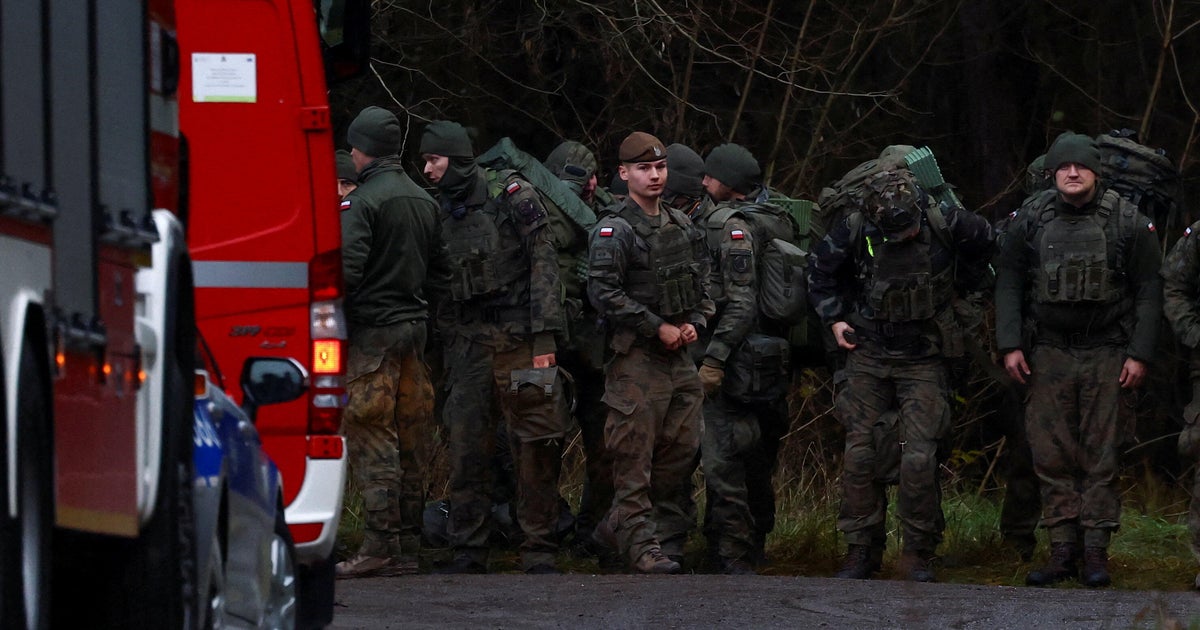
The risk of spillover has grown on several fronts. Poland last week accused Russia of intentional provocation after cruise missiles landed in the country's southeast, and drones have repeatedly entered NATO airspace. In the Black Sea, where Romania, Bulgaria and Turkey are alliance members, NATO military spokesman Col. Martin O'Donnell told CBS News there have been 400 to 500 incidents involving drones, mines and commercial shipping this year, compared with fewer than 50 in 2025. The alliance's Article 5 clause treats an attack on one member as an attack on all 32.