The Senate Voted 74-24 to Advance a Bill Giving the NCAA an Antitrust Exemption, Capping Athlete Pay at 22% of Revenue and Limiting Players to One Free Transfer. Four Black Democrats Voted No.
Ted Cruz and Maria Cantwell's Protect College Sports Act cleared the filibuster easily on Tuesday. Chris Murphy said it 'protects a system of exploitation,' the NAACP opposes it, and the House has failed repeatedly to pass its own version.
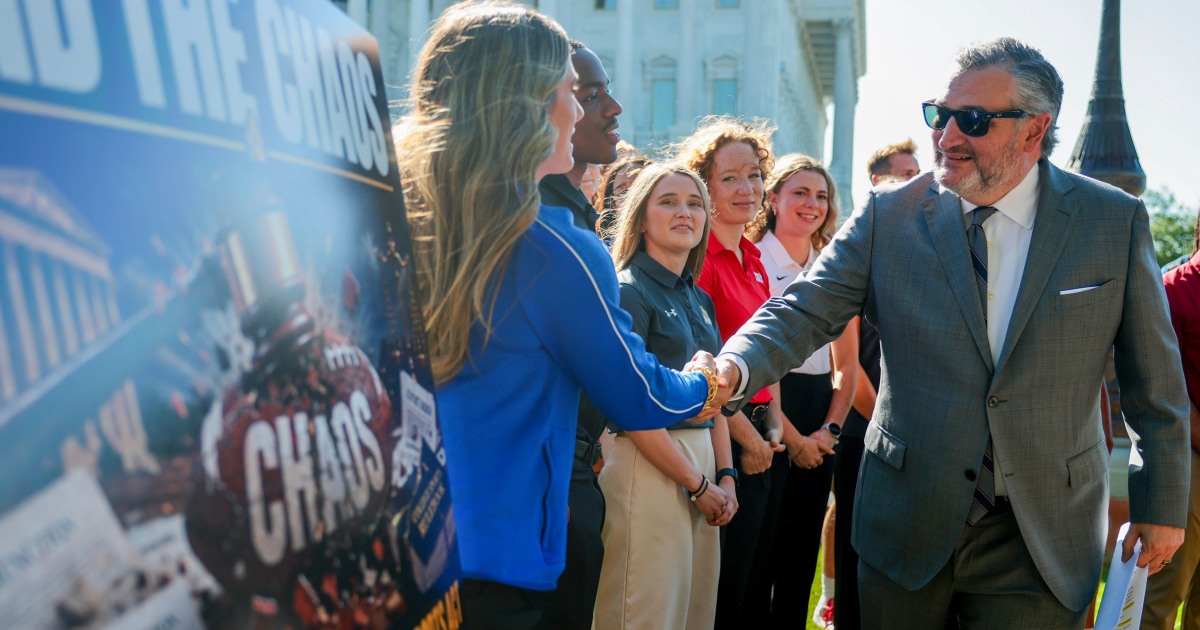
The Senate voted 74-24 on Tuesday to end debate on the Protect College Sports Act, clearing the 60-vote filibuster threshold and moving the most sweeping federal overhaul of college athletics ever attempted toward a final vote. The 4:59 p.m. cloture vote on the motion to proceed to S. 4668 drew broad support from both parties; Sens. Chris Coons and Jacky Rosen did not vote. The Senate adjourned at 6:22 p.m. and will resume consideration of the bill at 10 a.m. Wednesday, though the timing of final passage remains unclear.
The bill, sponsored by Sens. Ted Cruz of Texas and Maria Cantwell of Washington with Sen. Eric Schmitt of Missouri as a co-sponsor, would set national standards for eligibility, transfers and compensation after years in which state laws and court injunctions dismantled the NCAA's old rules piece by piece. It codifies a five-year maximum on player eligibility and limits athletes to one penalty-free transfer without sitting out a season. It locks in the 22% cap on revenue that schools can share with players under the House settlement, roughly $21.5 million per school per year, and adds a $27.5 million "retention pool" that schools can use to keep current players through regulated deals. Conferences would be allowed to pool their television rights, an arrangement supporters say could generate $4 billion to $8 billion in new revenue, although the SEC and Big Ten have said they will not participate.
The most contested provision grants the NCAA an antitrust exemption comparable to those enjoyed by professional leagues and bars certain eligibility-related lawsuits, the mechanism athletes have used to win free transfers and direct payments from schools. Cruz called the measure "a bipartisan solution designed to bring order to the chaos." Coaches lined up behind it. Gonzaga's Mark Few said, "This bill might not be perfect, but it's far, far away the best thing we got out there right now." Arkansas coach John Calipari said, "I think this clears up about 75-80% of our issues," describing it as "a bite out of the apple."
Opposition came from the left. Sen. Chris Murphy of Connecticut argued the bill "protects a system of exploitation" and "protects the billions" coaches and administrators earn while suppressing what athletes can be paid, noting that courts have repeatedly found the NCAA in violation of antitrust law. Sen. Cory Booker spoke against it on the floor. Booker, Raphael Warnock, Lisa Blunt Rochester and Angela Alsobrooks, the four Black Democrats in the Senate, all voted no. The Congressional Black Caucus and the NAACP oppose the bill, and athlete advocates have warned it contains loopholes that could let schools escape accountability for violations including sexual abuse.
The bill still needs to pass the House, which has repeatedly failed to move its own versions of college sports legislation, including the SCORE Act, despite Republican control. With the midterm elections seven weeks away and the Senate split 53-47, lawmakers on both sides described this week as the last realistic window before the next Congress. The NCAA, which has lobbied for federal relief since the state-level rulings began, is the bill's primary backer.
For athletes, the practical stakes are concrete. If the bill becomes law, the era of unlimited transfers and open-ended eligibility challenges ends, revenue sharing is capped at a figure the schools negotiated among themselves, and the courts that delivered every major athlete victory of the past five years would largely be closed to future claims.
Originally reported by NBC News.