Tropical Geometry Could Break the Cost Wall in Particle Collision Predictions
Perimeter's Michael Borinsky says a pretzel-style simplification of quantum field theory could turn factorially growing calculations into polynomial ones.

Particle accelerators are expensive to build and run. A less visible cost is predicting what they should see. A Perimeter Institute physicist says a mathematical trick called tropical field theory could make those predictions dramatically cheaper.
Predicting the outcome of collisions relies on quantum field theory, the language that describes particle behavior. According to Perimeter research faculty member Michael Borinsky, the prediction pipeline has a flaw. 'We take a theoretical model of physics as input, translate it into the QFT language, and it's very hard to produce predictions,' he said. 'What you put in encodes a law of nature, how particles interact locally, and what you want is some prediction of what follows on a larger scale.'
The trouble is computational. As colliders probe shorter length scales, predictions have to be more precise, and every extra digit costs far more computer time than the last. The cost grows factorially rather than exponentially. Take n equals 5: exponential growth gives 2 to the fifth power, or 32, while the factorial 5! is 120. 'That's a horrible growth rate,' Borinsky said. 'You can maybe compute three digits, but then computing the fourth digit takes much, much more time. You really hit this wall.'
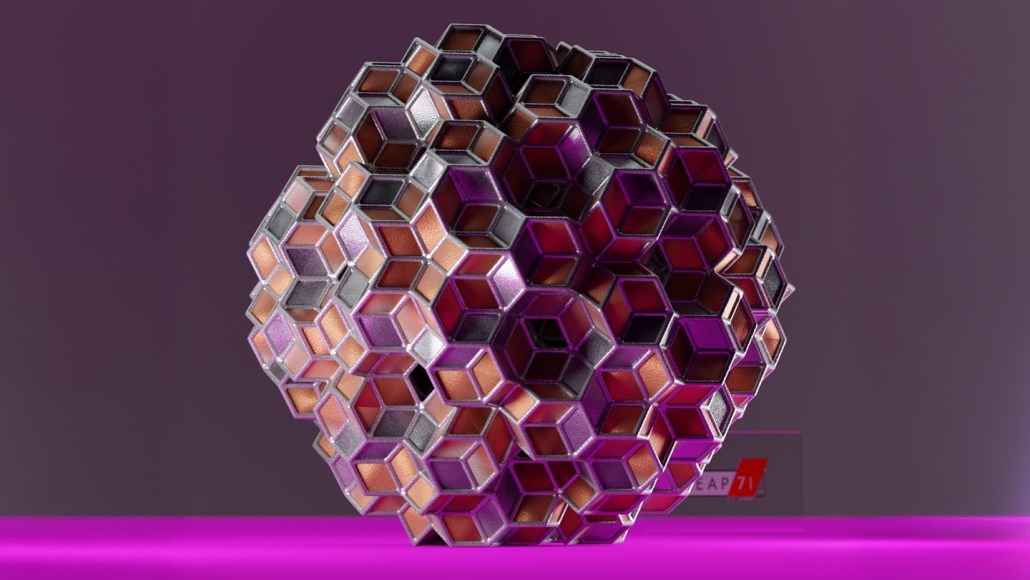
His aim is to replace factorial growth with polynomial growth, which is conceptually harder to achieve but far more efficient for computers. The tool is tropical geometry, a branch of mathematics that simplifies a geometric object by breaking it into smaller pieces and reassembling them.
Borinsky uses a pretzel to explain it. Smooth the bumpy exterior, cut the pretzel into small, nearly straight chunks, and the shape is simpler while its overall form is still recoverable. He applies the same idea to quantum field theory. 'We have this original quantum field theory that is very complicated, hard to understand for both humans and computers,' he said. 'But then we deform it into this cartoon version that the tropical theory provides, which makes the computation of the original theory much more efficient.'
The early results are encouraging. 'We land on something that can be solved extremely easily compared to the standards from normal QFTs,' Borinsky said. 'Even on pen and paper, one can make computations in this tropical world that would otherwise take years.' His paper, 'Tropicalized Quantum Field Theory and Global Tropical Sampling,' appeared in Annales Henri Poincaré (DOI 10.1007/s00023-026-01695-y).
Collider physics is not there yet. The tropical approach is already used to sharpen predictions for condensed matter experiments that explore exotic phases of matter, but more work is needed before it serves accelerator experiments. A key open question is what information survives the simplification. 'So far, it's not clear what information is lost and what survives,' Borinsky said.
He expects the field needs a few more breakthroughs. 'There's going to be a couple of new fundamental insights needed,' he said. 'Then it would really accelerate particle predictions significantly.'