The Last Kremlin Critic Who Stayed Recorded a Video in Front of the Eiffel Tower: 'I'm Alive and Free'
Boris Nadezhdin, barred as a 'foreign agent' from September's parliamentary elections, announced Monday that he has left Russia for France.
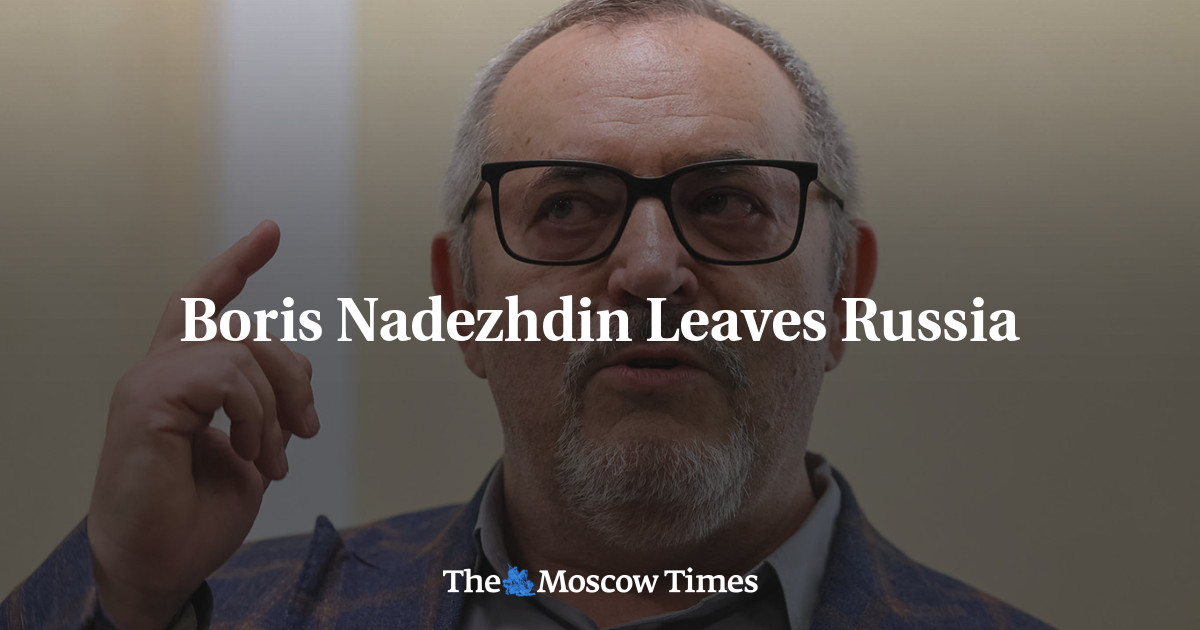
Boris Nadezhdin, the anti-war politician who tried to challenge Vladimir Putin for the presidency in 2024 and then stayed in Russia when almost every other prominent critic left or was jailed, announced Monday that he is out of the country.
He delivered the news in a short video recorded in Paris, the Eiffel Tower behind him. "The good news is I'm alive and free," Nadezhdin said. "But sadly, not yet in Russia."
The departure follows months of escalating official pressure. In July, Nadezhdin was fined 1,000 rubles — about $13 — for displaying symbols the authorities deemed "extremist." More consequentially, he was designated a "foreign agent," a label that under Russian law bars its holder from seeking public office. Days before he left, he suspended his campaign for a seat in the State Duma in the parliamentary elections scheduled for September. He had also previously been banned from leaving the country; neither the timing nor the mechanics of his exit have been explained.
Nadezhdin, 63, occupied an unusual niche in Russian politics. He was a State Duma deputy from 1999 to 2003 and a councilman in the Moscow region from 2019 to 2024, and earlier in his career he advised prime ministers Boris Nemtsov and Sergei Kiriyenko. He was not a street-protest figure in the mold of Alexei Navalny, and he continued to appear on Russian state television talk shows for years after the full-scale invasion of Ukraine began, arguing against the war in front of audiences that were not built to hear it.
His 2024 presidential run was the closest thing to an organized anti-war campaign the country produced. Volunteers gathered tens of thousands of signatures across dozens of regions and lines formed outside his campaign offices in Moscow, St. Petersburg and other cities. Election officials disqualified him before the vote, citing irregularities in the signature sheets, and Putin was returned to office with the state reporting more than 87 percent support.
In an interview with the independent outlet Meduza shortly before leaving, Nadezhdin said he and his family had been weighing whether to go, and acknowledged the possibility that staying would end in prison. He said he would "take stock of the situation" and post updates about his plans on his Telegram channel.
The exit closes out one of the last remaining spaces for open opposition politics inside Russia. Nearly every figure who campaigned openly against the war has now been imprisoned, driven abroad or designated a foreign agent, and the September Duma elections will proceed with no anti-war candidate of national standing on the ballot.
Originally reported by The Moscow Times.