Scientists Create Revolutionary Camera That Captures Trillionths of a Second
New imaging technique reveals hidden structural changes in ultrafast phenomena, turning split-second events into detailed movies for the first time.

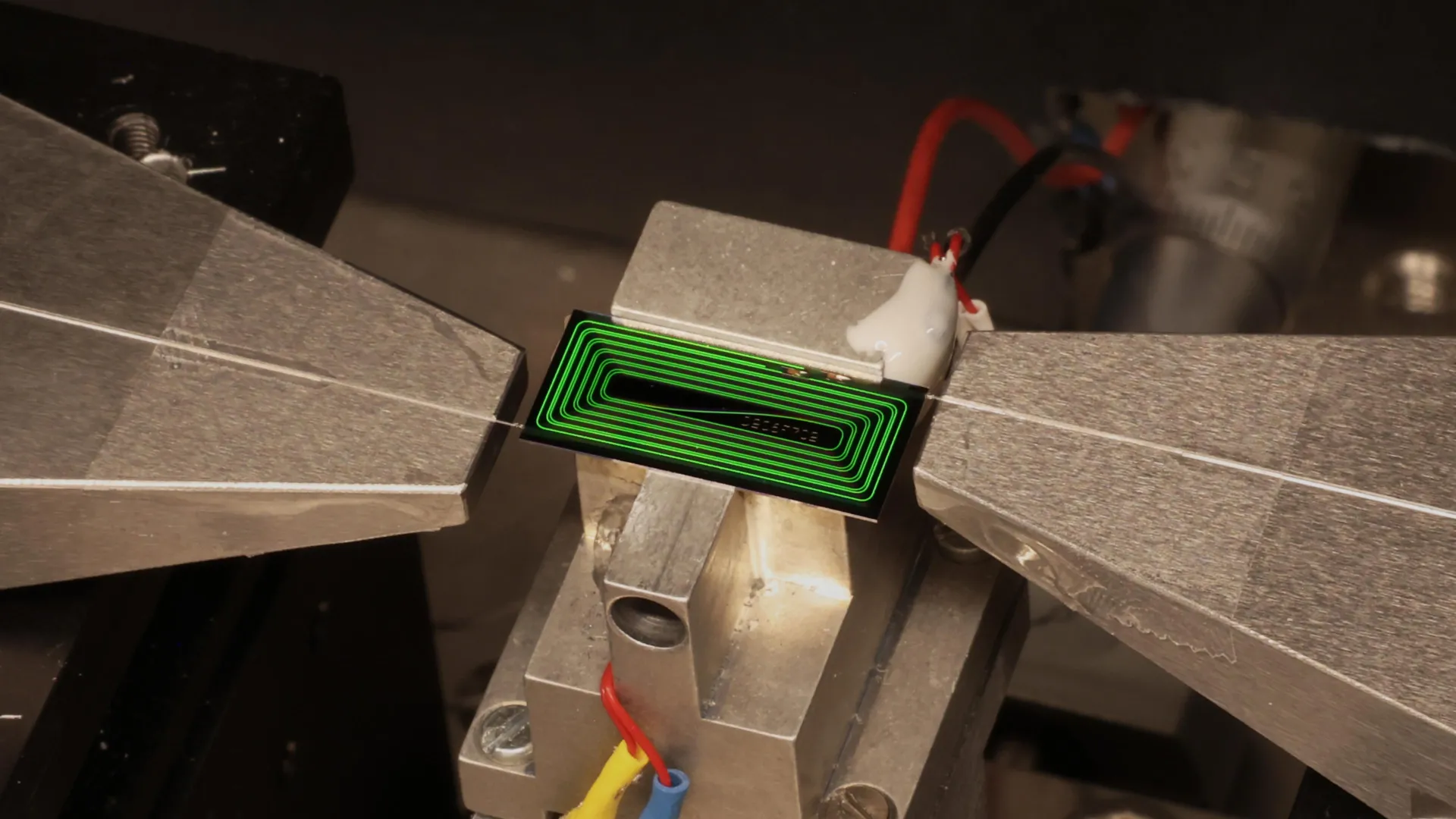
Researchers have developed a groundbreaking imaging method capable of capturing events that unfold in trillionths of a second, revealing previously invisible details about how materials transform at the atomic level. The technique, called compressed spectral-temporal coherent modulation femtosecond imaging (CST-CMFI), represents a major advance in ultrafast photography by recording both brightness changes and subtle structural modifications simultaneously in a single measurement.
The breakthrough, led by Yunhua Yao from East China Normal University and published in Optica, addresses a long-standing limitation in ultrafast imaging. Previous methods primarily captured changes in light intensity but missed crucial phase information that reveals how light bends or changes speed as it passes through materials. "Our new technique can capture the complete evolution of both the brightness and internal structure of an object in a single measurement," Yao explained. "This is a big step forward for understanding the fundamental nature of matter."
The CST-CMFI system combines three advanced techniques: time-spectrum mapping for tracking extremely fast changes, compressive spectral imaging for gathering more data in single measurements, and coherent modulation imaging for preserving fine image details. This integration allows scientists to observe phenomena that were previously impossible to study, such as plasma formation in water after femtosecond laser pulses and the behavior of excited charge carriers in semiconductor materials like zinc selenide.
The applications extend far beyond basic research into practical technologies that could reshape multiple industries. The technique could improve high-power laser technologies used in clean energy research, advanced manufacturing, and scientific instrumentation. It may also accelerate the development of more efficient electronics, improved solar cells, and faster computing devices by providing unprecedented insights into how materials behave during extremely brief time intervals.
This work represents part of ongoing research at the Extreme Optical Imaging Laboratory at East China Normal University to advance ultrafast camera technologies. The team's focus on single-shot ultrafast optical imaging is particularly valuable for studying events that cannot be repeated, as it captures entire sequences in a single exposure. As Yao noted, the technique "could help improve high-power laser technologies used for clean energy research, advanced manufacturing and scientific instrumentation," while potentially leading to breakthroughs in understanding chemical reactions, biomolecular dynamics, and materials science at previously unattainable temporal resolutions.