Record $11 Billion in Midterm Ads, Few of Them Labeled as AI, Floods the Final Weekend
CBS News polling points to a Democratic House majority of 229 seats, while the Senate map has widened to red states like Kansas and Texas.
Americans head to the polls Tuesday in a midterm election that is already setting records before a single ballot is counted. Political advertising will top $11 billion this cycle, the most ever spent in a midterm, and a growing share of it uses artificial intelligence to show candidates saying or doing things they never did, according to researchers who track the spending.
"This will be a record-breaking year basically any way you slice it," Erika Franklin Fowler, a Wesleyan University professor who studies political advertising, told CBS News Sunday Morning. She said the AI-generated scenes are the most worrying development. "It's having candidates say things that they never said or do things that they never did," Fowler said. "Those are particularly concerning because it's not clear to the viewer that this never happened."
There is no federal rule governing AI in political ads. "There's no federal regulation of AI in advertising," Fowler said, "so most of it actually doesn't even carry a disclaimer." She also questioned whether the final burst of spending matters. Early voting has grown this year, she said, so "a lot of the advertising that's on air now is actually too late to make a difference." And no amount of advertising, she added, will change how citizens feel about the price of goods.
Prices are at the center of the mood. New Yorker columnist Susan Glasser said President Donald Trump enters the midterms as the most unpopular president in the history of modern polling. "People are so angry," Glasser said, pointing to gas pump and grocery prices. CBS News pollster Anthony Salvanto said the numbers are shifting toward Democrats, which is not unusual for a president's party in a midterm. Two-thirds of voters say they are casting ballots for Congress either to support Trump, at 26 percent, or, more often, to oppose his policies, at 41 percent.
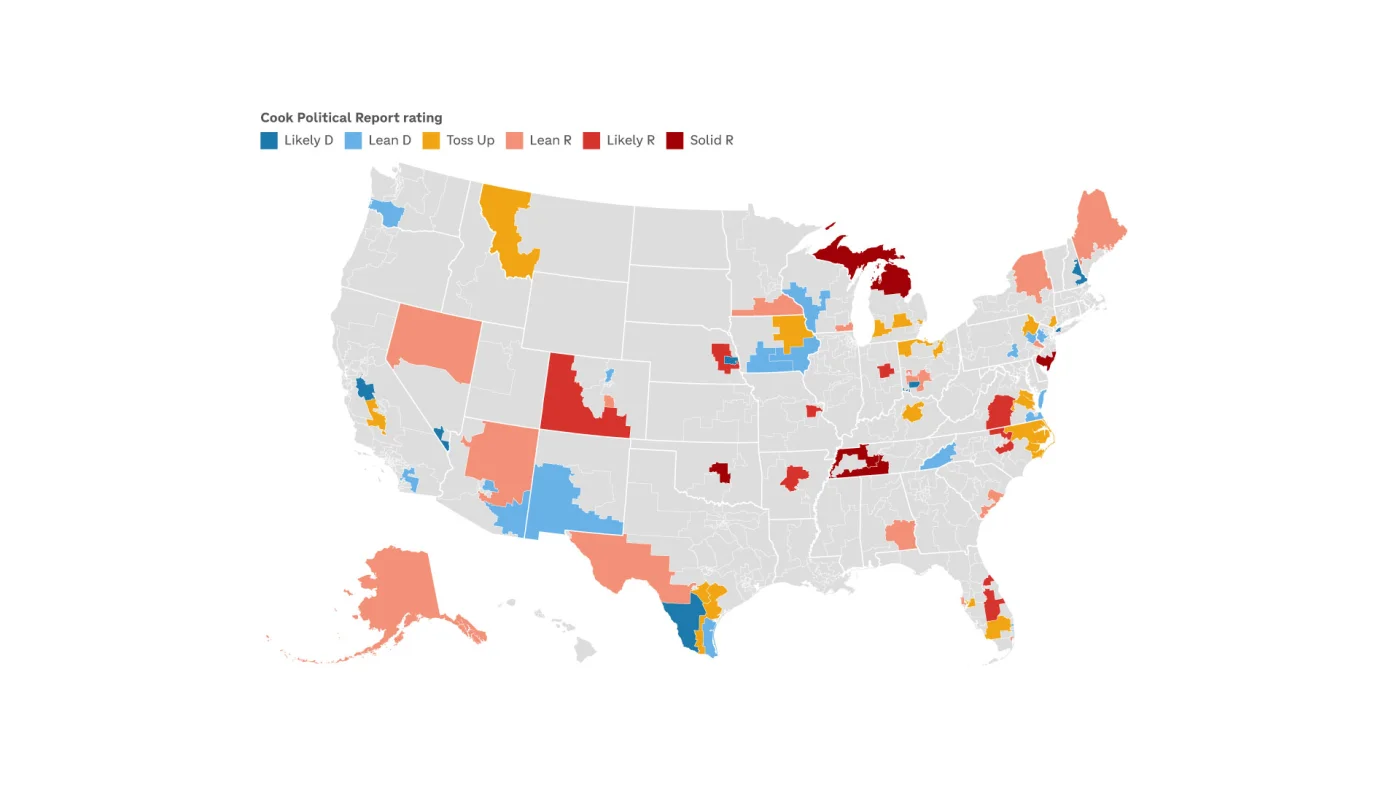
The latest CBS News House model has Democrats on pace to win 229 seats, enough for a majority in the 435-member chamber. The Senate is harder. "At the start of the year, there weren't many folks who gave Democrats a chance to take the Senate," Salvanto said. "Well, what we've seen over time is that a lot of those red Republican states have in fact come into play." Glasser noted how unusual that is: the last time Democrats won a Senate seat in Kansas was the 1930s, and the last Texas Democrat elected to the Senate was Lloyd Bentsen in 1988.
Many Republican ads avoid mentioning Trump altogether, and some break with him. Michigan Senate candidate Mike Rogers has run an ad calling for an end to the president's tariff fight with Canada. If Democrats take both chambers, Glasser said, she expects efforts to restrain Pentagon spending on the Iran war, aggressive oversight hearings and subpoenas.
Glasser's larger worry is what comes after Election Day. She said Trump has stated he will not accept the results of any election he believes was not run the way he wanted, and that Trump and his allies might try to delay or block certification of incoming senators in close races. The Trump administration has already ordered a criminal investigation into Alaska's Senate race, where Democrats are alleged to have recruited a candidate with the same name as the Republican. "I think we'd be looking at very different paths for our country depending on the outcome on Tuesday night," Glasser said.