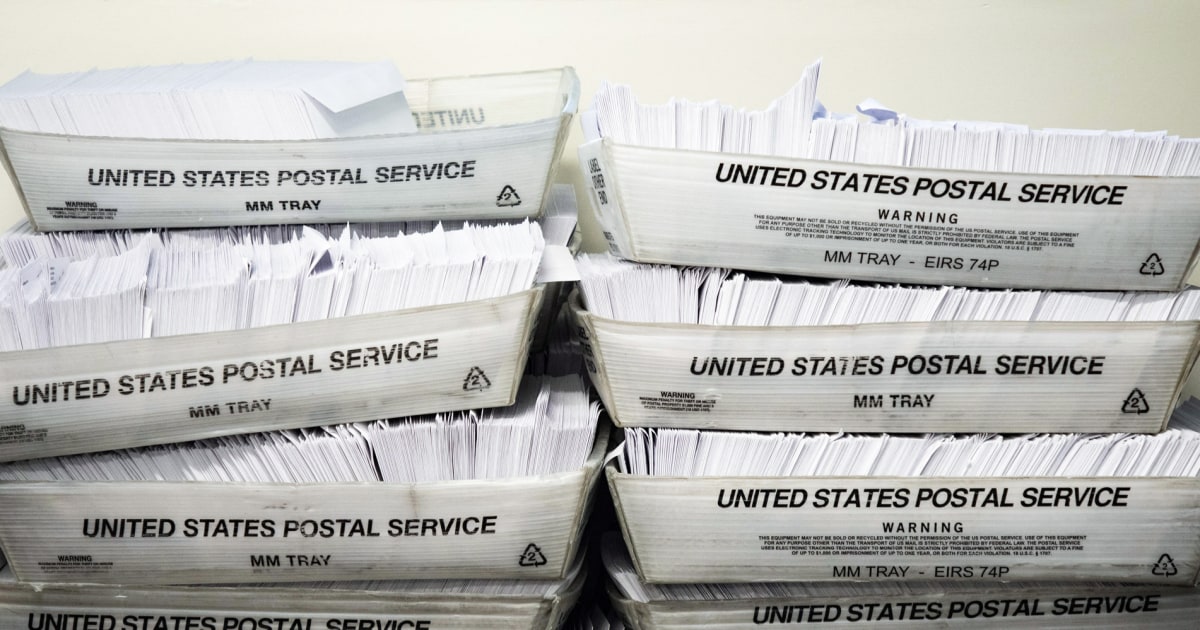
Postal Service Proposes Blocking Mail Ballots in States That Don't Share Voter Data
Democrats and voting-rights groups challenge the proposed rule as harmful federal intrusion affecting millions of mail-in voters.

The United States Postal Service has issued a controversial proposal that would potentially block mail-in ballots in states that refuse to turn over detailed voter registration data to federal authorities. The proposed rule has drawn fierce opposition from Democrats and voting-rights organizations, who characterize it as an unprecedented federal intrusion into state election administration that could disenfranchise millions of Americans who rely on mail-in voting.
Under the proposed regulation, states would be required to provide comprehensive voter registration databases to the Postal Service, including personal information about registered voters and their voting history. States that decline to comply would face restrictions on mail ballot delivery services, potentially forcing voters to cast ballots in person or risk having their mail-in votes delayed or rejected. The proposal represents a significant escalation in federal oversight of state election processes, traditionally managed at the local level.
Democratic lawmakers have denounced the proposal as a partisan attempt to suppress voting in states that have expanded mail-in ballot access. Several Democratic governors have already indicated they will refuse to comply with any data-sharing requirements, setting up potential legal battles that could reach the Supreme Court before the 2026 midterm elections. Voting rights advocates argue that the proposal violates fundamental principles of federalism and could create a two-tiered voting system that disadvantages states with strong privacy protections.
The Postal Service has defended the proposal as necessary for ensuring the integrity and efficiency of mail-in voting systems. Officials argue that access to voter registration data would allow them to better verify ballot delivery addresses and prevent fraudulent voting attempts. However, critics note that the Postal Service has successfully handled mail-in ballots for decades without requiring such extensive access to state voter databases, raising questions about the true motivation behind the new requirements.
The proposal comes at a time when mail-in voting has become increasingly popular among American voters, with several states making permanent the expanded mail ballot access implemented during the COVID-19 pandemic. If implemented, the rule could affect millions of voters across multiple states and significantly complicate election administration ahead of crucial midterm contests. Legal challenges are expected to begin immediately if the Postal Service moves forward with finalizing the regulation, potentially creating uncertainty about voting procedures just months before major elections.