Oak Trees Delay Spring to Starve Caterpillars in Evolutionary Arms Race
Trees shift leaf emergence by just three days after heavy insect attacks, cutting caterpillar damage by over half in surprisingly effective defense.
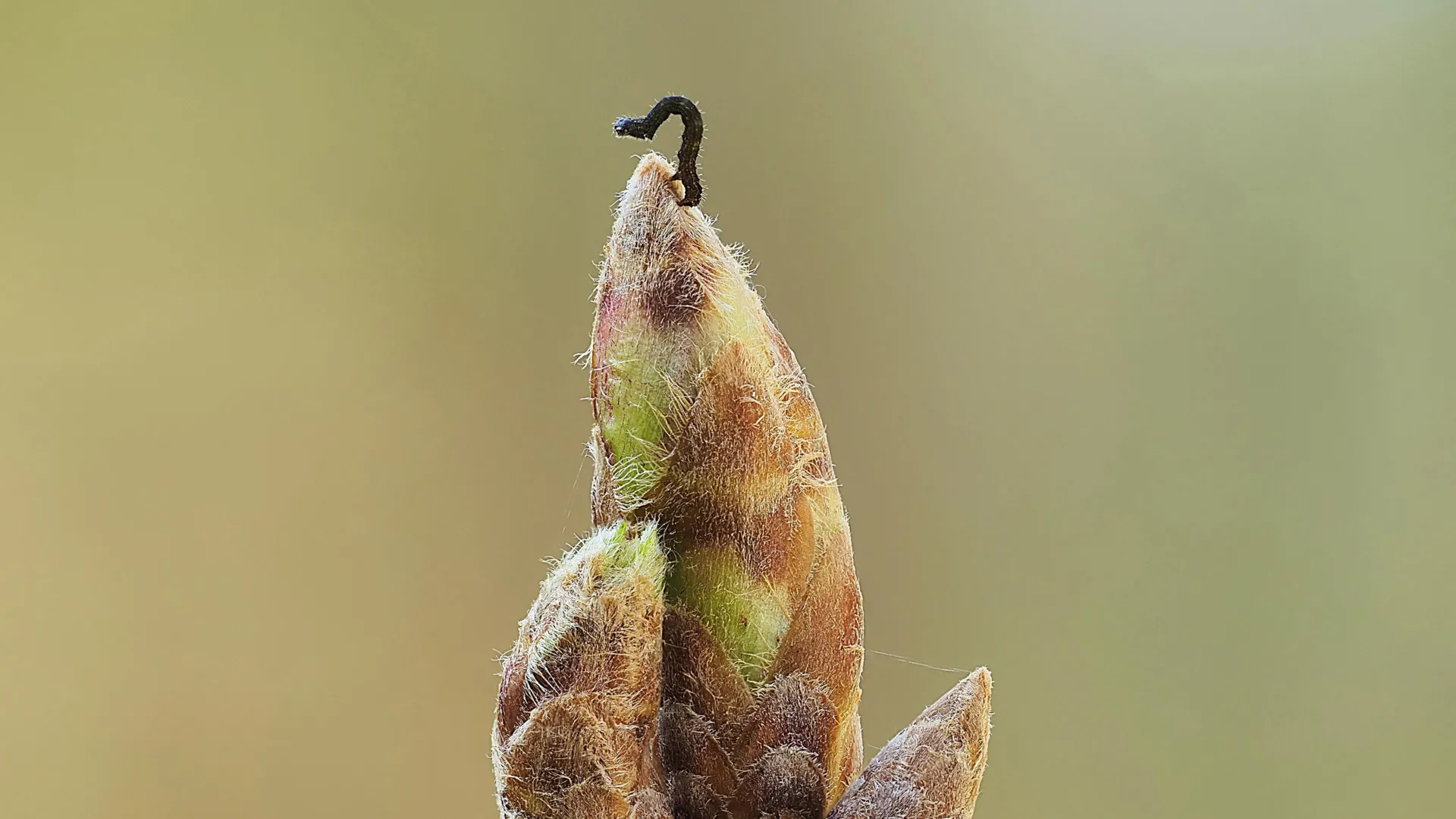
Oak trees have evolved a remarkably simple yet devastatingly effective defense against caterpillar infestations: they deliberately delay their spring awakening by just three days, leaving newly hatched insects with nothing to eat. This discovery, published in Nature Ecology & Evolution by an international research team, fundamentally changes our understanding of forest timing and reveals an ongoing evolutionary arms race between trees and their insect predators.
When oak trees experience heavy caterpillar damage in one year, they respond the following spring by delaying leaf emergence by approximately three days. This seemingly minor adjustment has profound consequences for caterpillars, which hatch precisely timed to coincide with tender, nutrient-rich young leaves. When the leaves remain sealed inside buds, the caterpillars face immediate starvation, dramatically reducing their survival rates and cutting feeding damage to trees by about 55 percent.
'The delaying tactic is more effective for the oak than a chemical defense, such as bitter tannins in the leaves,' explains Dr. Soumen Mallick, a postdoc at the University of Würzburg's Biocentre and lead author of the study. Chemical defenses require significant energy investments from trees, making the timing strategy far more efficient. The discovery shows that trees actively respond to biological threats rather than simply reacting to temperature and weather conditions.
The research team used advanced satellite technology to document this phenomenon across 2,400 square kilometers in Northern Bavaria. Sentinel-1 radar satellites provided 137,500 observations over five years, with resolution precise enough to track individual tree crowns. The year 2019 offered a perfect natural experiment when a major gypsy moth outbreak hit the region, allowing researchers to observe exactly how affected trees responded the following spring.
'This discovery fundamentally changes our previous understanding of the onset of spring in the forest,' says Mallick. The findings help explain why forests don't always turn green as early as rising temperatures might predict, providing crucial insights for conservation efforts. Many existing ecological models focus primarily on temperature responses, but this research demonstrates that biological interactions play equally important roles in determining forest timing. The work reveals that even in an era of climate change, trees maintain sophisticated strategies for defending themselves against evolving threats.