Netanyahu Rejects Trump's 15-Point Gaza Plan: 'The IDF Will Not Carry Out Any Withdrawal'
Israel's prime minister told his Cabinet on Sunday that the framework drawn up by Trump's Board of Peace is unacceptable, insisting Hamas surrender every weapon first. Hamas signed on to the framework in July.
Israeli Prime Minister Benjamin Netanyahu rejected the 15-point framework for Gaza produced by President Trump's Board of Peace, telling his Cabinet on Sunday that Israeli troops will not pull back from the territory until Hamas has surrendered its entire arsenal.
"Israel rejects the 15-point document," Netanyahu said. "The IDF will not carry out any withdrawal until Hamas is disarmed." He drew a hard line on what counts as compliance: "When I say Hamas must be disarmed, I mean heavy weapons, lighter weapons, all weapons. We are talking about genuine disarmament, not a fictitious one."
The document Netanyahu turned down is the operational version of the peace proposal Trump introduced last fall, worked out over months by the Board of Peace, the international body the administration created to supervise the postwar arrangement. It ties an Israeli military withdrawal to the pace of Hamas disarmament — troops leave as weapons are handed over — and hands day-to-day security to an International Stabilization Force operating alongside a newly recruited Palestinian police force. Trump has described the package as a "historic agreement for the complete disarmament of Hamas."
Hamas endorsed the framework in July, and repeated Sunday that it has not changed position. The group said it "remains committed to the roadmap" and that its acceptance "reflected a sense of national responsibility ... in consideration of the Palestinian people's interests." That leaves the United States in the unusual position of having secured the agreement of the armed group it set out to disarm, and being blocked by its closest ally in the region.
The sticking point is sequencing. The American text treats withdrawal and disarmament as interlocking steps that unlock one another, with international monitors certifying each phase. Netanyahu's position is that disarmament must be finished and verified before Israeli forces give up any ground, a standard that would require Hamas to hand over small arms held by thousands of fighters across a territory Israel does not fully control.
Netanyahu is also under pressure inside his own coalition. Far-right partners have said publicly they will not sit in a government that accepts a phased pullback, and Israel is heading toward elections in which those parties hold the balance of power. Rejecting the document costs him little domestically and preserves the coalition through the campaign.
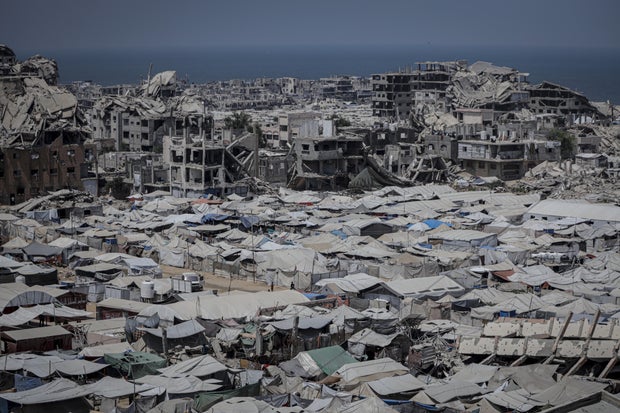
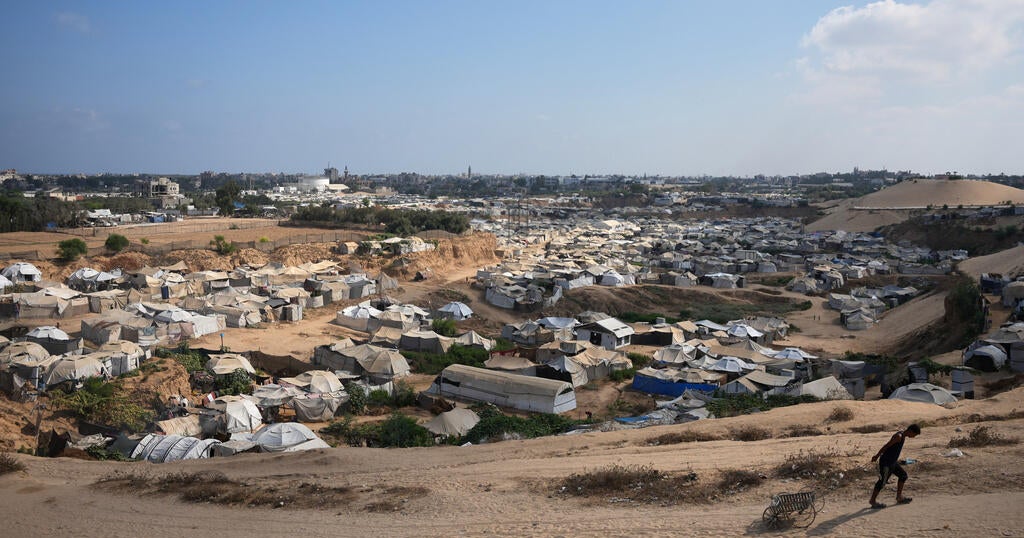
For Washington, the rejection stalls the reconstruction machinery that the framework was supposed to switch on. Aid and rebuilding money is tied to the stabilization force taking over security, and the force cannot deploy into areas Israeli troops still occupy. Nothing in the framework provides for the United States to impose the terms on Israel, and the administration has not said whether it will revise the text, press Netanyahu privately, or let the impasse stand until after the Israeli vote.
The practical result is that a plan both Trump and Hamas have publicly endorsed now has no path to implementation, and the civilian population in Gaza waits through another round of negotiation over which side moves first.