A Projectile Hit an Iranian Cargo Ship Off Qeshm Island Sunday and Killed a Crewman. Asked If the U.S. Did It, Trump Said 'I Don't Want to Say.'
Iran's briefing for Gulf foreign ministers on how it plans to manage Hormuz shipping was called off hours later. Oman said the delay was 'in the interests of consensus.' Trump said the war will end 'right after the midterms.'
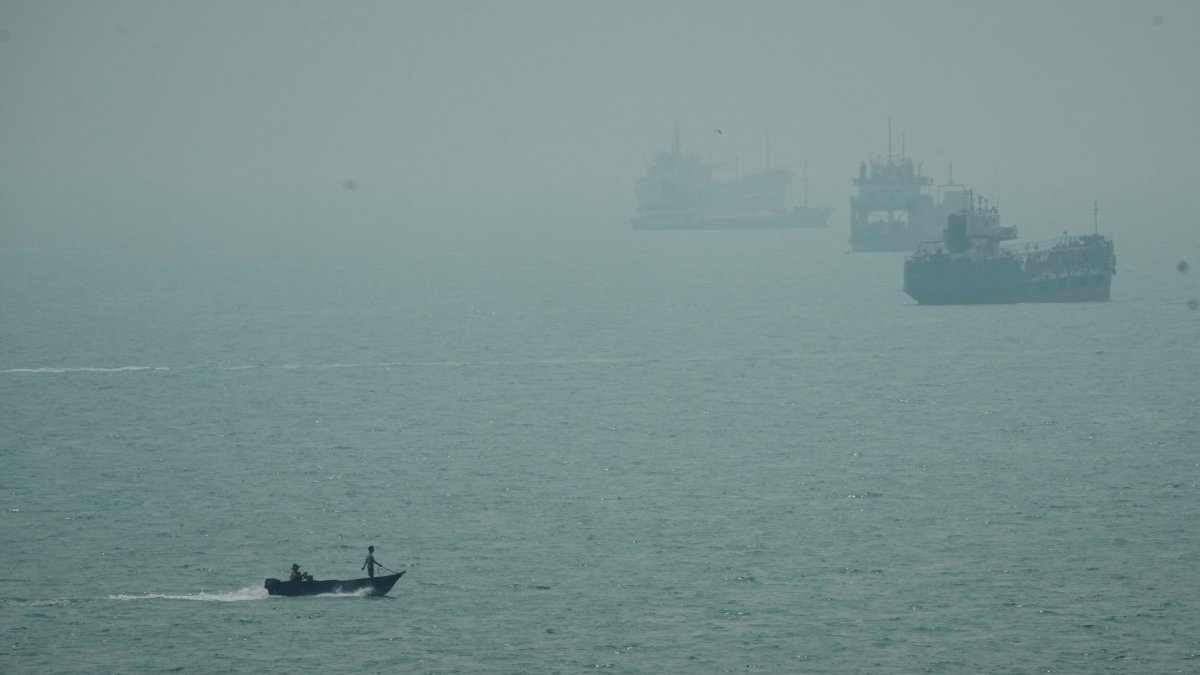
An Iranian commercial cargo ship was struck by a projectile early Sunday off Qeshm Island in the Strait of Hormuz, killing one of its 10 crew members and wounding four, Iran's state media reported. The island sits about 14 miles from the port city of Bandar Abbas and is central to Iran's effort to assert control over traffic through the strait. The state-run IRNA news agency quoted Qeshm's governor blaming a "terrorist enemy." Authorities said they had not identified the projectile.
The United Kingdom Maritime Trade Operations center, which tracks incidents in the region, reported that a vessel transiting the strait had been hit by projectile fire and that "a severe fire had broken out," with local authorities evacuating those aboard. The U.S. military, which has struck Iranian-flagged vessels as part of its blockade of Iranian ports, issued no immediate statement. When reporters asked President Trump directly whether the United States had hit the ship, he answered: "I don't want to say."
Trump was more expansive about the state of the war. Iran "wants to make a deal so bad," he said, and is "calling constantly." He predicted the conflict would end "right after the midterms," the November 3 elections, and that gasoline prices would fall sharply once it did. He said he did not care how a planned meeting between Iran and Gulf states in Oman turned out.
That meeting did not happen. Iran had planned to brief foreign ministers from neighboring countries on Monday in Muscat on its proposals for managing shipping through the strait, an arrangement it has been developing with Oman. Iraq had confirmed it would attend. Bahrain declined, citing its lack of diplomatic relations with Tehran, and it was unclear which other governments would send anyone. Hours after the strike on the cargo ship, Oman's foreign minister, Badr Albusaidi, announced the gathering had been postponed "in the interests of consensus." Oman, he said, remains committed to "fostering dialogue that supports stability."
Iranian President Masoud Pezeshkian struck a harder note. "Our people can't be bullied into submission. Iran won't surrender," he wrote in a social media post. In an interview with India Today TV, he said any reopening of the waterway to normal traffic depends on the United States ending its blockade. Traffic through Hormuz, which carried about a fifth of the world's oil before the war, has been a fraction of normal for months, and diesel prices in the United States set another record this week.
The strike refocused attention on the strait a week after Houthi forces seized Perim Island and completed their hold on the Yemeni side of the Bab el-Mandeb, the southern entrance to the Red Sea. That closed off the main alternative route for Saudi crude to reach the sea without passing Iran, and left Riyadh with problems at both ends of the Arabian Peninsula.
Asked on CBS News on Sunday about the pace at which the United States has been burning through missile interceptors, Adm. Brad Cooper, the head of U.S. Central Command, said he was "not concerned at all." American forces, he said, are "well armed and ready for any contingency." The Pentagon has said rebuilding stockpiles of Patriot interceptors and other precision munitions depleted over six months of exchanges with Iran will cost billions of dollars.
Originally reported by NBC Washington / AP.