Iran Fires Ballistic Missiles at U.S. Forces in a 'Surprise Attack,' and Trump Promises a 'Beating' in Return
CENTCOM says every Iranian missile launched at 5:45 p.m. ET Tuesday was intercepted. Hours later, American and Saudi fighter jets struck weapons sites across eastern Iraq, shattering a two-day lull in a war that had appeared to be cooling.

A two-day pause in the war between the United States and Iran collapsed Tuesday evening when Islamic Revolutionary Guard Corps units launched a volley of ballistic missiles from Iranian territory at American forces in the Middle East, and President Donald Trump responded Wednesday by promising a punishing round of retaliatory strikes.
U.S. Central Command described the launch in blunt terms. "At 5:45 p.m. ET today, Islamic Revolutionary Guard Corps forces launched multiple ballistic missiles from Iran in an attempted surprise attack on U.S. forces based in the Middle East," the command said in a statement. "All Iranian missiles were successfully intercepted. U.S. forces remain vigilant and at a high state of readiness." A senior U.S. official said the missiles were aimed at an American base in Jordan. No American casualties were reported.
Trump made clear within hours that the United States would not treat the failed salvo as a diplomatic incident to be absorbed. "We'll be hitting them hard. They're going to get a beating," the president told a Fox News reporter on Wednesday. The comment marked an abrupt reversal from the posture Washington had adopted over the weekend, when the two sides had stopped firing at one another and mediators from Qatar and Pakistan began shuttling messages between the capitals.
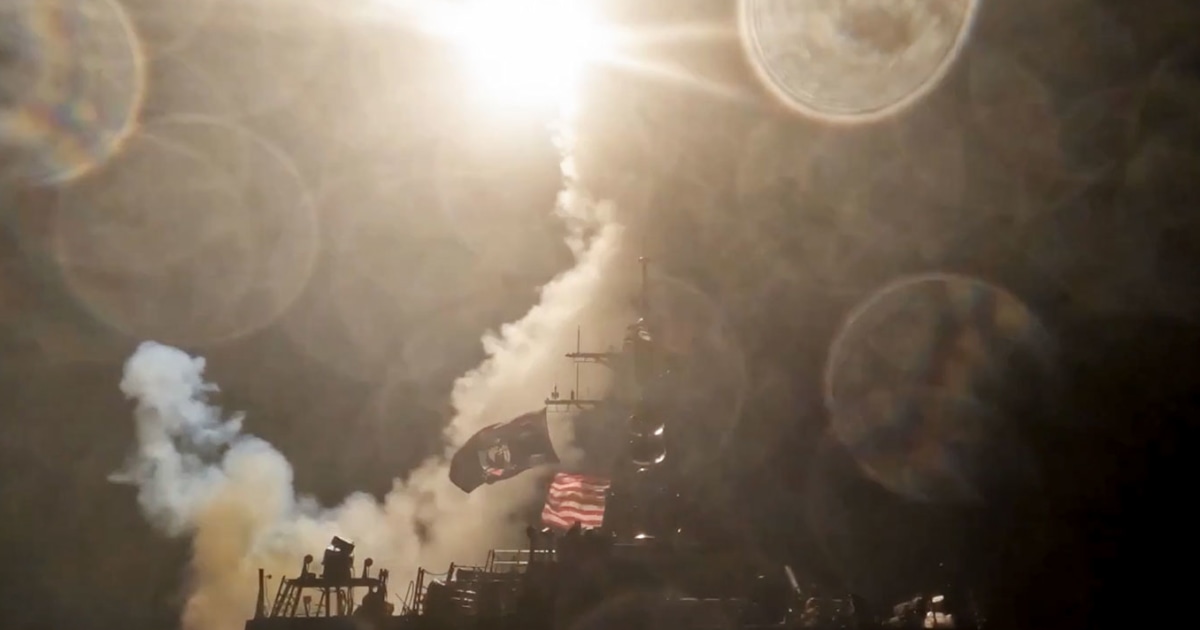
The military response came fast, and it came with a partner. Central Command said American and Saudi fighter aircraft struck multiple terrorist logistics and weapons sites across eastern Iraq, calling it a response to more than 30 IRGC-directed aerial drone attacks over the previous 72 hours. Saudi Arabia's Ministry of Defense confirmed its participation, describing "limited, targeted strikes" against Iran-backed militias in Iraq that Riyadh has tied to attacks on Saudi oil facilities. The Iran-aligned Iraqi Popular Mobilization Forces said in a statement later Tuesday that at least 20 of its members had been killed in the strikes and 32 wounded.
The renewed fighting immediately rippled through energy markets. Oil prices, which had fallen for three consecutive sessions on hopes that the mediation would hold, surged again. The average U.S. price for a gallon of gasoline stood at $4.11, according to AAA, a level sustained by Iran's continuing effort to shut down commercial traffic through the Strait of Hormuz. The U.K. Maritime Trade Operations Centre added to the unease by reporting suspicious activity in the southern Red Sea, where the master of a tanker said he heard an explosion while transiting the area. Houthi rebels claimed attacks on two Saudi oil tankers in the same waters last week.
Trump had earlier set aside plans to escalate the campaign against Iran amid internal concern about dwindling stockpiles of Patriot interceptors and other air-defense munitions across the region, The New York Times reported. Trump publicly dismissed those worries. Iranian officials, for their part, had signaled through Reuters over the weekend that Tehran would hold its fire as long as American aircraft stayed away. Inside Iran, the war has begun to bite at home: officials are urging the public to cut energy use and warning of rolling blackouts after the country lost roughly 230 million cubic meters per day of natural gas production capacity since the fighting began.