Massachusetts Just Erased Its 24-Week Abortion Line. The Decision Now Rests on One Physician's Judgment
Governor Maura Healey signed H 5595 on Monday, striking the four-part test that governed abortions at or after 24 weeks. The state becomes one of 10 with no statutory gestational limit.
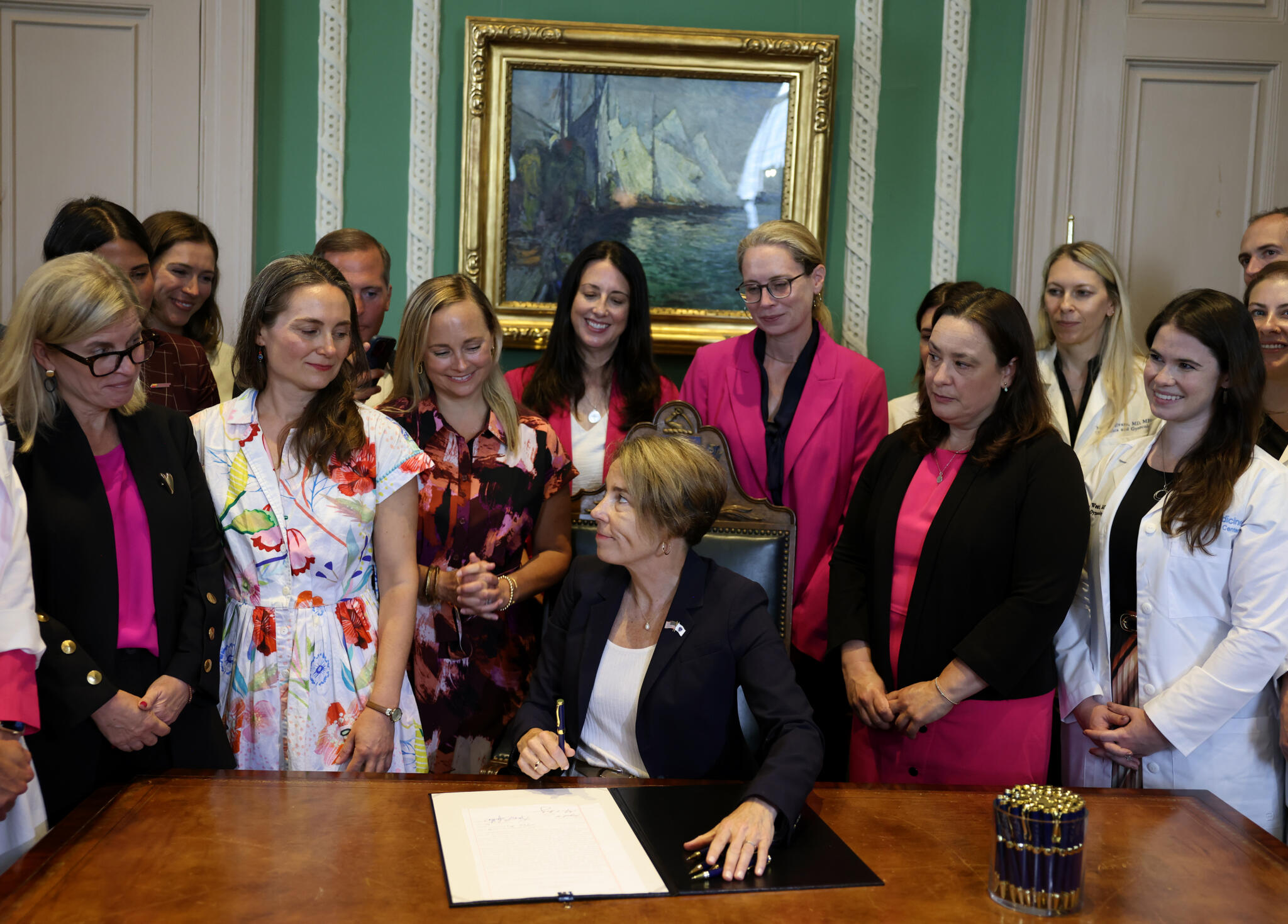
Governor Maura Healey signed legislation on Monday that removes the statutory restrictions governing abortions after 24 weeks of pregnancy in Massachusetts, replacing a detailed four-part test with a single standard: the professional judgment of a licensed physician.
Under the previous law, an abortion at or after 24 weeks was permitted only when necessary to preserve the patient's life, to preserve their physical health, to preserve their mental health, or in cases involving a lethal or severe fetal abnormality. The new law, H 5595, eliminates that framework and states instead that "an abortion may be performed by a physician based upon the professional judgment of the physician."
The change moves Massachusetts into a group of 10 states with no statutory gestational limit on abortion, according to data compiled by KFF, the nonpartisan health policy research organization. In practical terms, the decision that was previously made by a physician working inside a statutory checklist is now made by a physician applying medical judgment, with the statute silent on the categories.
Healey framed the signing around the cases that prompted the bill, citing stories of "anguish and heartache" from patients who had received devastating diagnoses late in wanted pregnancies and found that the existing four-pronged test did not clearly cover their circumstances. That was the practical complaint driving the legislation: not that late abortions were common in Massachusetts, but that physicians facing rare and severe cases were reading statutory language rather than treating patients, and some were sending those patients out of state.
Abortions after 24 weeks are a very small fraction of the procedures performed in any state, and the bill's opponents and supporters do not seriously dispute that. The fight is over who holds the decision. Critics, including anti-abortion groups that described the bill as rushed, argue that removing the enumerated conditions removes any external check on the timing of the procedure. Supporters argue that the enumerated conditions were never a medical standard to begin with — they were a legislature's attempt to anticipate every clinical scenario in advance, which is not how medicine works.
The signing lands in a national environment where state law is the only law that matters on this question. Since the Supreme Court returned abortion regulation to the states, the country has split into two increasingly distinct legal regimes, and Massachusetts has spent four years moving deliberately toward the permissive end of its side. The state also expanded protections for providers treating out-of-state patients, a posture that has real consequences given how many patients now travel.
What Massachusetts did on Monday was not create new access at the margin. It moved the legal line from the statute book to the exam room.