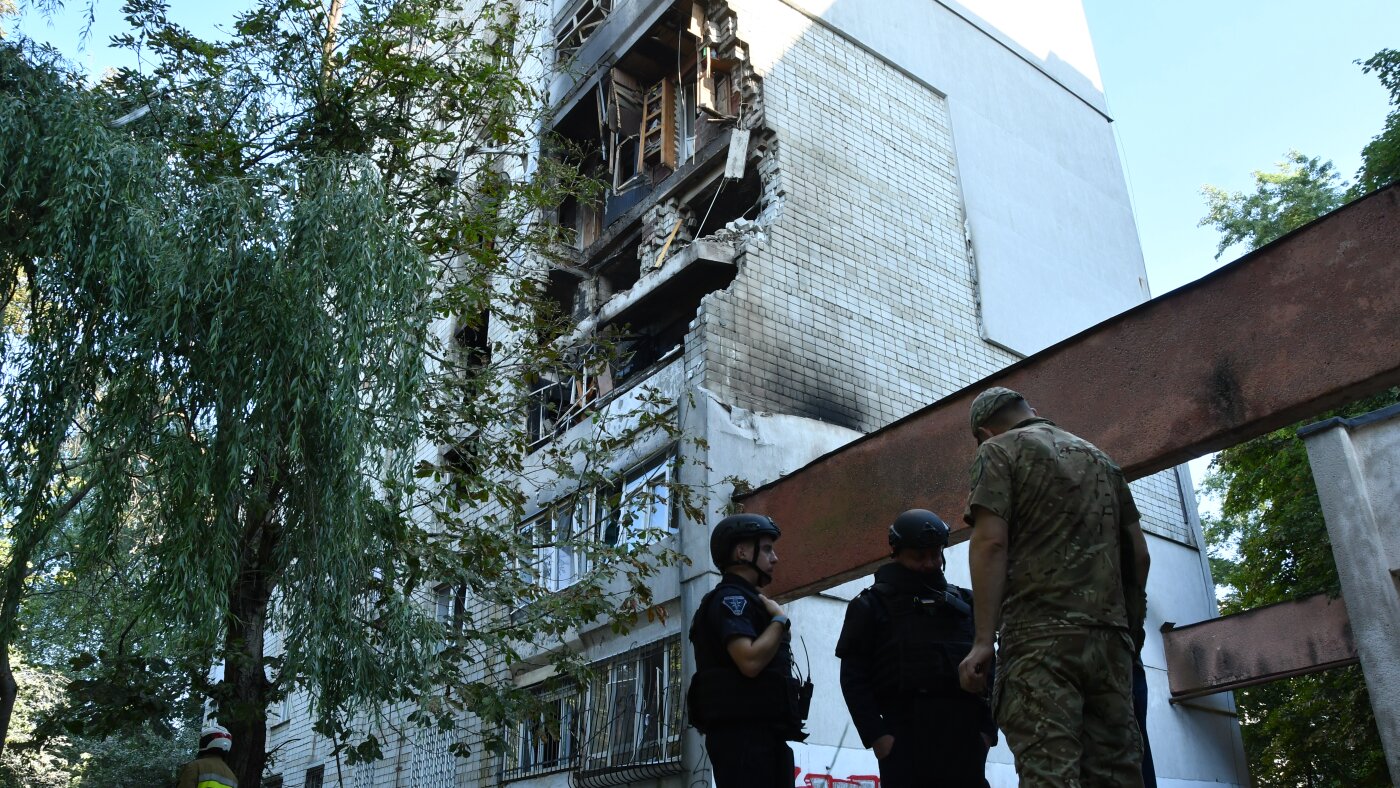
Germany Says Russia Flew an Explosive Drone at a Ukrainian Cargo Plane. It Is Closing a Consulate Over It
Interior Minister Alexander Dobrindt said the device found at Leipzig/Halle Airport on August 4 matched known Russian hybrid operations. Putin, speaking in Kyrgyzstan, said the evidence "has been planted."
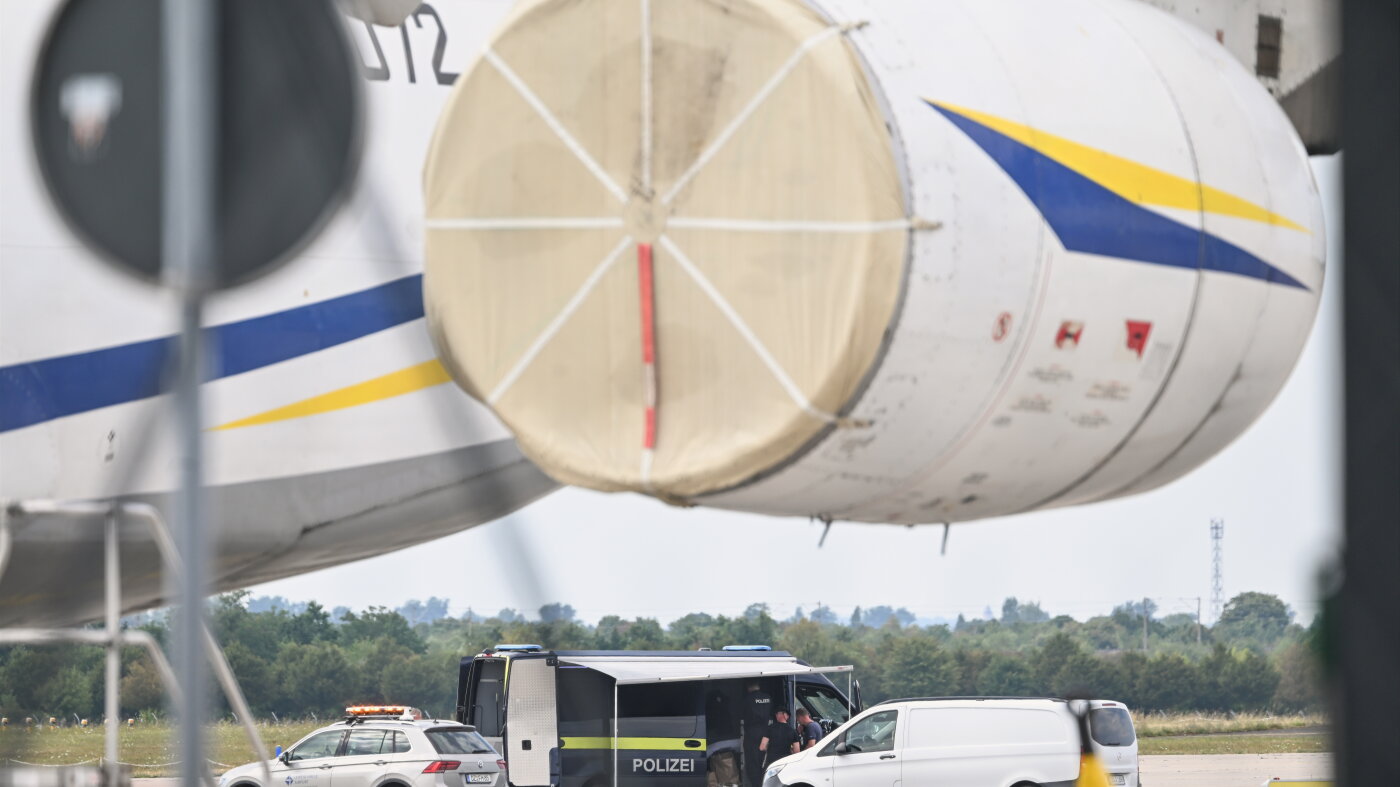
The German government formally blamed Russia on Tuesday for an attempted attack at Leipzig/Halle Airport last month, in which a drone carrying explosives was found beside a Ukrainian aircraft and defused by a bomb-disposal team. Berlin responded by ordering the closure of a Russian consulate, summoning Moscow's ambassador and preparing a new round of sanctions proposals.
The drone was discovered on August 4 near a Ukrainian plane on the tarmac at the airport in Schkeuditz, outside Leipzig. Technicians removed its detonator. Interior Minister Alexander Dobrindt said investigators found that the drone's configuration, components, explosives and detonator were "known to us from other Russian hybrid operations and its war against Ukraine." The device showed "a high degree of technical expertise" and careful planning, he said, while the execution appeared to have been handed to low-level agents.
"Taken together, the police investigations, the pattern and intelligence findings prove a Russian responsibility for the attempted attack at Leipzig airport," Dobrindt told reporters, adding that intelligence pointed to "people being involved who acted on behalf of Russian state entities."
Foreign Minister Johann Wadephul announced the retaliation. The Russian consulate in Bonn will close effective September 18, and the Russian House cultural center in Berlin will shut as well, though that may take longer. Germany will propose adding more Russian individuals to European Union sanctions lists in connection with hybrid attacks, tighten entry controls for Russian nationals and press harder on the shadow fleet of tankers suspected of moving Russian oil around sanctions. "With the attempted attack in Leipzig, the Russian leadership decided deliberately to do significant damage again to our already massively burdened bilateral relationship," Wadephul said. He later told ARD television that Germany could escalate further but that doing so was "not necessary at this point."
Moscow rejected the finding. Foreign Ministry spokesperson Maria Zakharova promised a "fitting response" to the closures and called the accusations a "far-fetched and contrived pretext," saying no serious evidence had been presented. President Vladimir Putin, speaking in the early hours of Wednesday in Kyrgyzstan, where he was attending a Shanghai Cooperation Organization summit, said German leaders wanted to distract from domestic failures. "But where is the proof? Well, the proof has been planted," he said, without elaborating.
Leipzig/Halle is not an incidental target. It is one of Europe's main freight hubs, a regular stop for Ukrainian Antonov transports, and home to NATO's Strategic Airlift International Solution, which flies almost daily to alliance battle groups from Finland to Romania. In 2024 an incendiary device ignited in a freight container at a logistics center at the same airport before it could be loaded onto a plane, in a plot Western security officials linked to Russian intelligence.
The Associated Press has counted roughly 200 incidents of sabotage and malign activity across Europe attributed to Russia by Western officials since the invasion of Ukraine, from arson at warehouses to cyberattacks on critical infrastructure. NATO Secretary-General Mark Rutte said he had spoken with Chancellor Friedrich Merz and that the alliance "stands in full solidarity with Germany after the Russian hybrid attack in Leipzig." Hours before Berlin's announcement, Polish Prime Minister Donald Tusk said Poland had been hit by fresh sabotage within the past two days, including a fire at WB Electronics, described by his government as Europe's largest drone manufacturer, that caused at least 15 million zlotys — about $4 million — in damage.