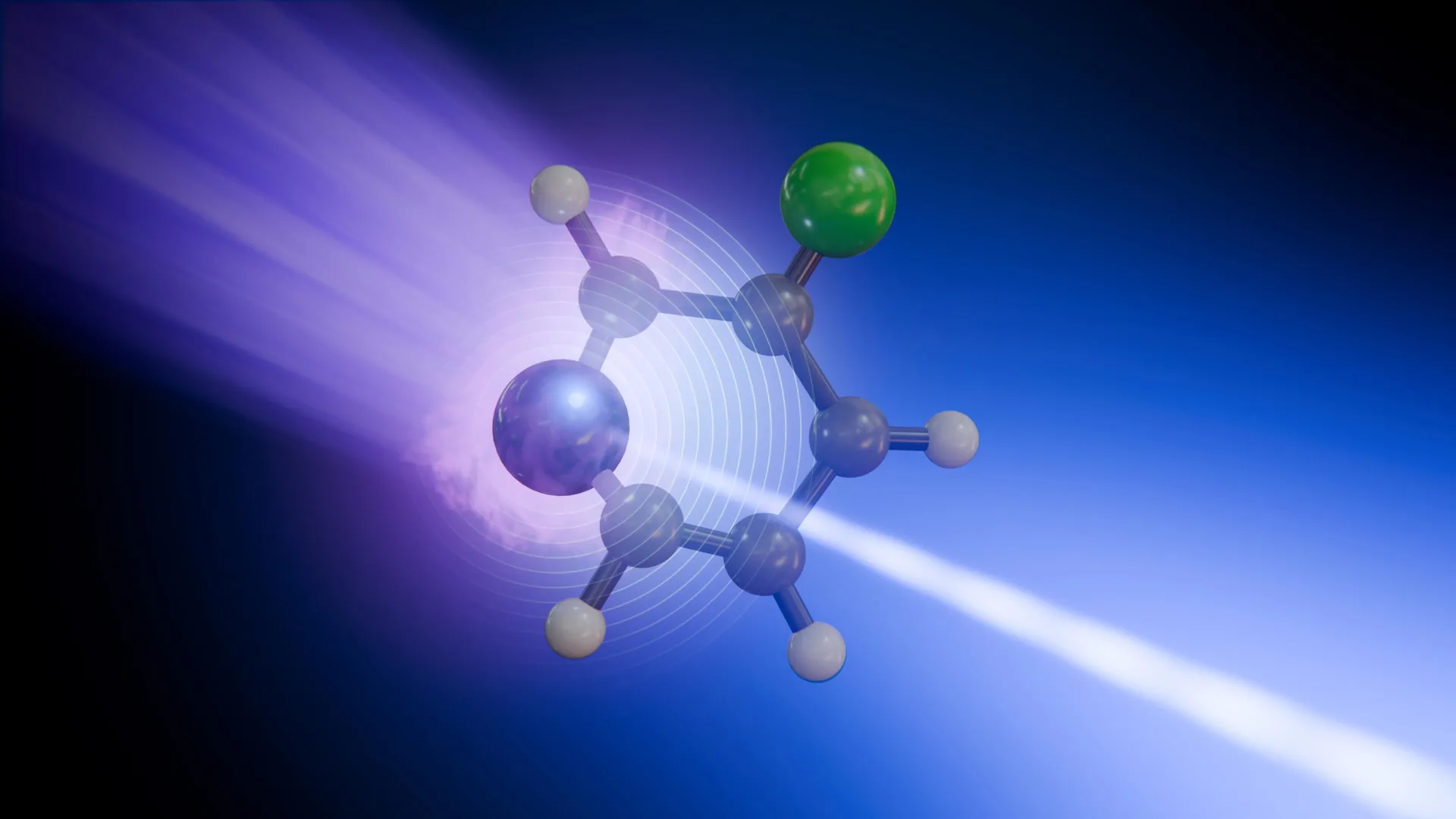
European XFEL Sets Record With X-Ray Laser Flashes Shorter Than an Atom's Spacing
Researchers at DESY and European XFEL produced and delivered 30,000-electronvolt flashes at 800 per second, keeping nearly 60% of the light along a kilometer of beamline.

Researchers from DESY and European XFEL have shown they can reliably produce and deliver X-ray laser flashes at a wavelength of about 0.04 nanometers, raising their own world record. The flashes have a photon energy of 30,000 electronvolts, and the results were published in the journal Optica.
A wavelength of 0.04 nanometers is much shorter than the typical distance between neighboring atoms in a solid. That lets scientists study materials at higher spatial resolution than before. The team says the capability could help in investigating dense materials and following rapid changes in experiments that subject samples to extreme pressures, which matters for work on functional, catalytic and quantum materials.
The team generated 800 flashes per second and carried them along a beamline roughly one kilometer, or 0.6 miles, long. Almost 60% of the extreme X-ray light was still there after passing through the steering optics, as measured by instruments including an X-ray gas monitor. That retention is what makes the flashes usable for experiments rather than just a laboratory demonstration.
"The recent advance increases the span of wavelengths that European XFEL can provide to users and is unique among the world's FEL facilities," said Anders Madsen, leading scientist at the facility's MID instrument and a coauthor of the paper. FEL stands for free-electron laser, a machine that produces laser-like X-rays from a high-quality beam of electrons.
The milestone followed several years of simulations of how the electron beam behaves and of accelerator tests. DESY scientist Ye Chen, who led the accelerator side of the effort with Frank Brinker, said a key factor was the high quality of the electron beam, achieved through extensive beam-dynamics studies and optimization of the accelerator.
The authors describe the result as a significant step toward making these even-shorter-wavelength flashes routinely available to visiting researchers at European XFEL. A strategic program is coordinating work on detectors, optics, diagnostics and experimental capabilities alongside accelerator advances to push performance at shorter wavelengths. A separate effort to develop superconducting undulators, the magnet arrays that make electrons emit the X-rays, will also advance that goal over the next few years.
The paper is titled "Fundamental-mode lasing at 30 keV in an X-ray free-electron laser" (DOI 10.1364/optica.610411).
For scale, a photon energy of 30,000 electronvolts, or 30 keV, corresponds to a wavelength of roughly 0.04 nanometers, a fraction of the width of a typical atom. Earlier X-ray laser experiments at European XFEL worked at longer wavelengths, which blurs the finest structural detail in a sample. By pushing to 30 keV and showing the beam can survive the long trip to the experiment hall at 800 flashes per second, the team has shown the machine can serve experiments that need both extreme penetration and sharp resolution.