Belarus Freed 25 Political Prisoners Wednesday, Including the Editor of Its Biggest Independent News Site, and Washington Lifted Sanctions on a Paint Maker and a Forestry Group in Return. The Envoy Says 'Hundreds' More Could Follow Within a Month.
John Coale's deals with Alexander Lukashenko have now produced about 500 releases since last year. Viasna counts 912 political prisoners still behind bars, and opposition leader Sviatlana Tsikhanouskaya says new arrests continue as fast as the old ones are freed.
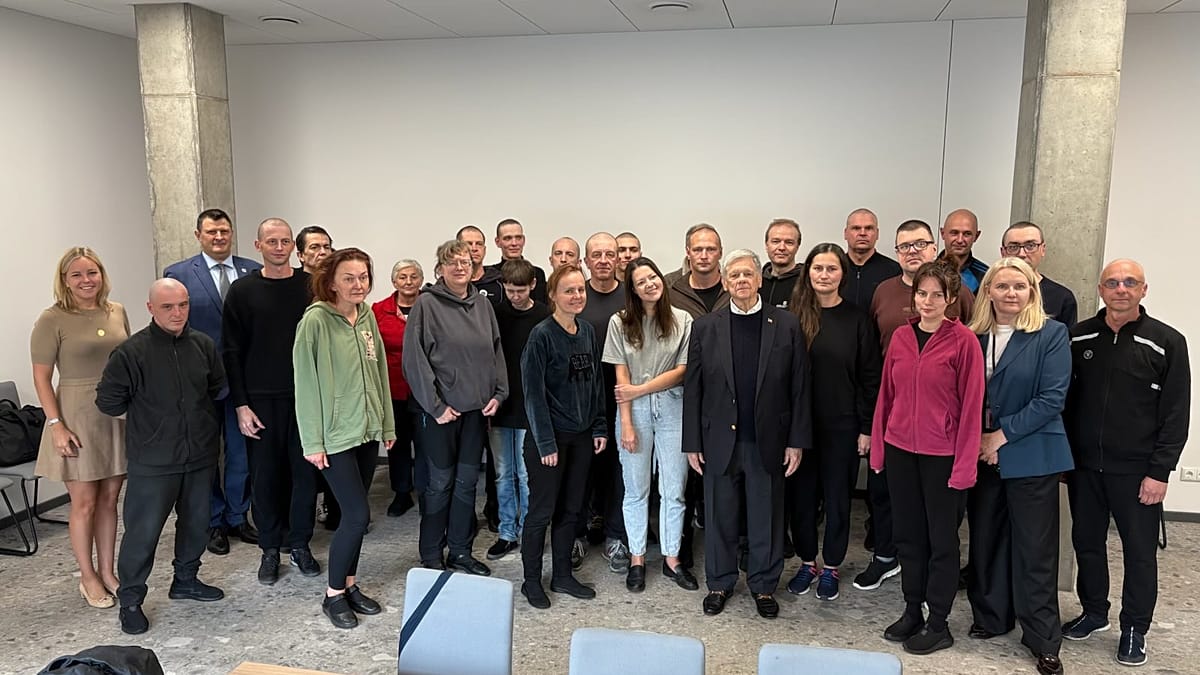
Belarus released 25 political prisoners on Wednesday after talks between President Alexander Lukashenko and John Coale, President Trump's special envoy for the country, in exchange for the United States lifting sanctions on two Belarusian state-linked companies. Coale announced the deal in Minsk, calling the releases "a show of goodwill" under what he described as an interim agreement that could lead to further releases and further sanctions relief.
"We agreed to an interim deal, and as a show of goodwill Belarus will release 25 people and in exchange the United States will lift sanctions on two companies," Coale said. The companies are Lakokraska, a paint and industrial coatings manufacturer, and Bellesbumprom, a state-owned forestry, pulp and paper concern. Both had been under U.S. sanctions imposed after Lukashenko's disputed 2020 re-election and expanded in 2022 after Belarus allowed Russian forces to stage the invasion of Ukraine from its territory. Coale credited Trump's "commitment to direct diplomacy" and said he expected to return in about a month, telling Reuters: "I hope hundreds are released. I'm confident that we'll get a lot more out."
Among those freed were Lyudmila Chekina, director-general of TUT.BY, the country's largest independent news portal before authorities shut it down in 2021, who was serving a 12-year sentence on national security charges; journalist Andrei Alyaksandrau, sentenced to 14 years, and his wife Iryna Zlobina, sentenced to nine; and Paval Belavus, an art manager and shop founder serving 13 years for high treason. Photographs released after the handover showed the group, many with shaved heads, posing with Coale in a bare conference room.
The releases extend a pattern that has become the centerpiece of Washington's re-engagement with Minsk. Since Coale began meeting Lukashenko last year, the talks have produced roughly 500 releases, including a batch of 52 in September 2025 that coincided with the lifting of sanctions on the national airline Belavia, 123 in December that included Nobel Peace Prize laureate Ales Bialiatski, and a batch of 250 in a subsequent round. Each round has been paired with a specific concession: airline parts, potash exports, or, this time, two industrial firms. The dialogue resumed under the Trump administration as part of its broader push to negotiate an end to Russia's war in Ukraine, in which Lukashenko is Vladimir Putin's closest ally.
Human rights groups welcomed the releases while warning that the arithmetic still runs against the prisoners. Viasna, the Belarusian rights center Bialiatski founded, counts 912 political prisoners still in custody. A recent United Nations report found that "Belarusian authorities are using the country's criminal justice system as an instrument of repression." Exiled opposition leader Sviatlana Tsikhanouskaya, who ran against Lukashenko in 2020 and now lives in Vilnius, welcomed the 25 but said, "it is clear that Lukashenka does not want to release all political prisoners," pointing to the three-year sentence handed down days earlier to a lawyer who represented jailed opposition figure Viktor Babaryko. "There are hundreds of them," she said, each "a person and a family waiting."
Analyst Vadim Mozheiko said Lukashenko is using the releases to buy international legitimacy while replacing freed detainees with new arrests, a revolving door that lets him trade the same currency repeatedly. Coale, for his part, said the U.S. would "continue to improve US-Belarus relations" and was "working to secure the release of more people in the very near future."
Originally reported by Euronews.