Brahmaputra Floods Kill at Least 50 in India's Assam State and Drive 700,000 From Their Homes
Nearly 900 villages are submerged and about 300,000 people have crowded into government relief camps after days of monsoon rain pushed one of Asia's largest rivers over its banks.
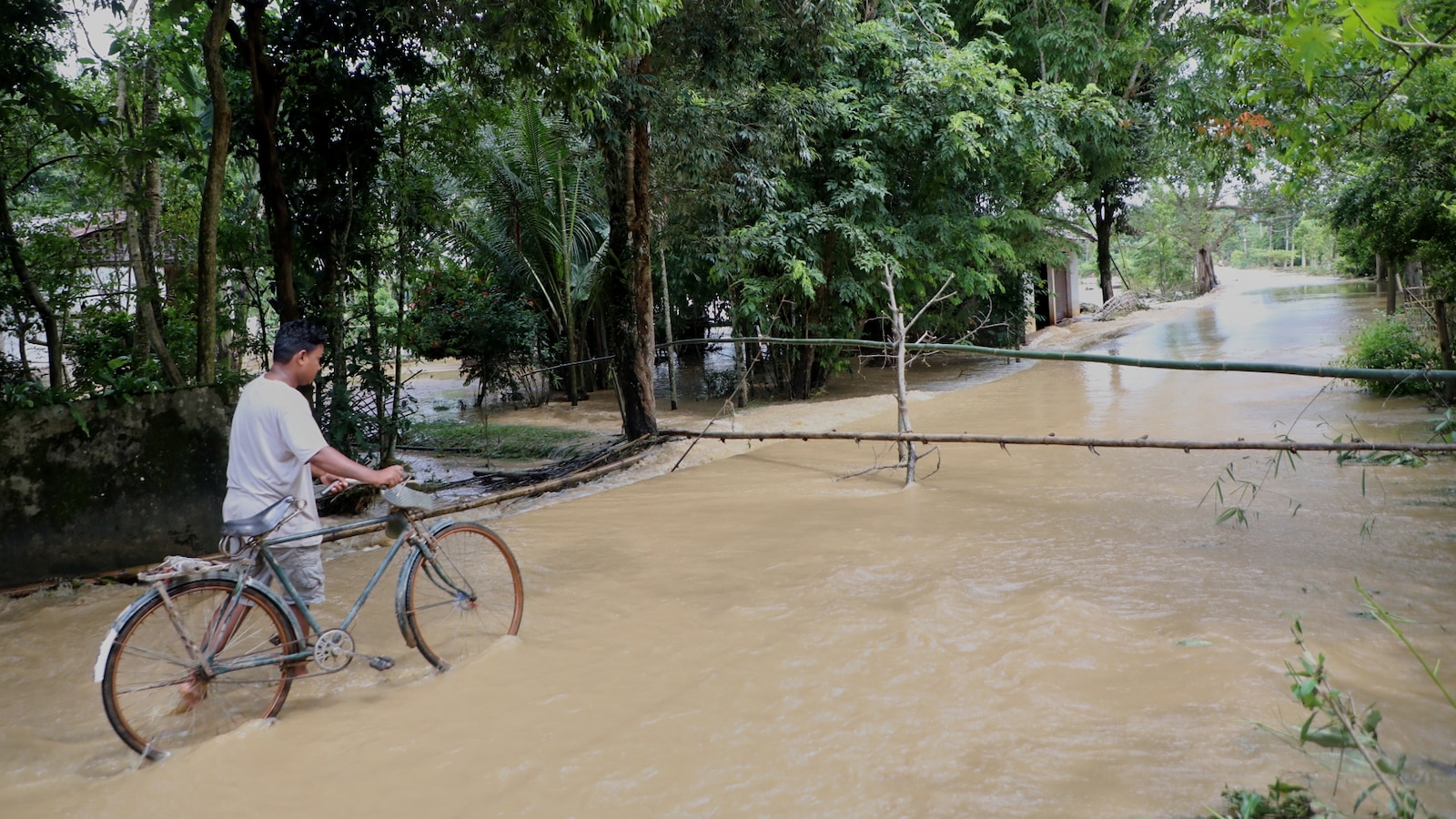
Flooding in India's northeastern state of Assam has killed at least 50 people and displaced 700,000 after days of heavy monsoon rain sent the Brahmaputra River over its banks, officials said Friday.
The river — one of Asia's largest, originating in China's Tibet region and running about 900 kilometers, or 560 miles, through Assam — swamped villages, swept away homes and forced nearly 300,000 people into government-run relief camps. Nearly 900 villages were submerged and more than 7,000 homes were left without electricity, Assam Chief Minister Himanta Biswa Sarma said. Authorities have been delivering food and relief supplies to marooned communities, including airdrops from helicopters.
The toll has climbed steeply through the week. Officials counted at least 41 dead in Assam on Thursday; by Friday the number had reached 50 as police, national disaster response teams and local volunteers pushed farther into cut-off districts to reach stranded residents.
For families in the river's path, the loss is total. Jatin Gogoi, a 52-year-old farmer from Nazira, said the rising water carried off his bamboo-walled house along with his livelihood. "I lost all my cattle. My five-member family and I have nowhere to go, so we are taking shelter in a relative's home," he said by phone.
The flooding reached Guwahati, the state capital of roughly 2 million people, on Thursday evening, where submerged roads stranded commuters for hours. "I had to stay overnight at my office. The roads were filled with water, some waist deep," said Sudip Mazumdar, a journalist in the city. Guwahati's drainage system, built for a smaller and less paved city, has been overwhelmed repeatedly in recent monsoon seasons.
Scientists say human-caused climate change is intensifying South Asia's monsoons, which traditionally run from June to September and again from October to December. Rains that were once broadly predictable now arrive in erratic bursts, dumping extreme volumes of water over short periods and then giving way to dry spells — a pattern that overwhelms embankments and drainage designed for a steadier season. Assam, a low-lying floodplain wedged between the Himalayas and the Meghalaya hills, sits at the sharp end of that shift: water that falls across a vast upstream catchment funnels into a single braided channel that has nowhere to spread but into farmland and villages.
Assam floods most years, but the scale of displacement in this event ranks among the worst of the past decade, and the state's relief camps are already near capacity with the monsoon still months from ending.