Supreme Court Lets Trump Revive the SAVE Citizenship Database for Voter Roll Checks
In a 6-3 emergency order, the justices lifted a ruling that found the expanded system broke federal privacy laws. Justice Ketanji Brown Jackson warned eligible voters could be burdened or disenfranchised.
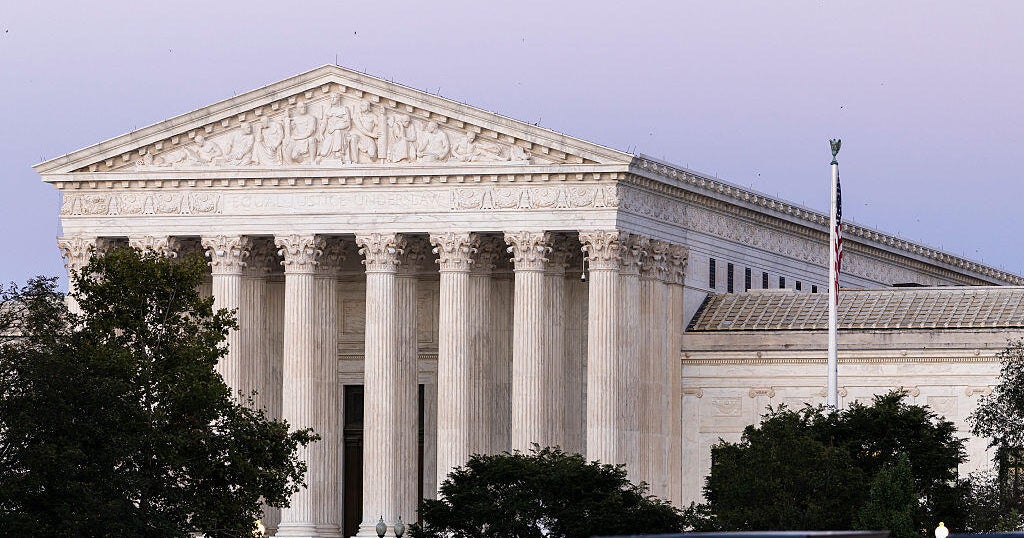
WASHINGTON — The Supreme Court on Friday cleared the way for the Trump administration to resume using an expanded federal citizenship database to check state voter rolls, reviving the tool less than six weeks before the midterm elections.
The justices split 6-3 along ideological lines, granting the administration's emergency request to pause a lower court order that had blocked the overhauled Systematic Alien Verification for Entitlements program, known as SAVE. In June, U.S. District Judge Sparkle Sooknanan in Washington ruled that the Department of Homeland Security's changes to the system likely violated the Social Security Act, the Privacy Act and the Administrative Procedure Act. "The federal government has knowingly trampled on the privacy rights of American citizens in a manner that threatens the sacred right to vote," she wrote. A federal appeals court panel refused 2-1 to lift her order.
SAVE was created by Congress in 1986 to let agencies check the immigration status of noncitizens applying for public benefits. After President Trump's March 2025 executive order on election integrity, DHS linked it for the first time to Social Security Administration records covering most Americans, allowed searches by Social Security number and opened it to bulk queries. The department encouraged states to upload their entire voter rolls. Solicitor General D. John Sauer told the court that since May 2025 the updated system had checked more than 65 million voters in 26 states and flagged 28,635 as potential noncitizens.
In its unsigned order, the majority said the lower court injunction stopped the government "from using the modified SAVE program to conduct individualized inquiries, which are permitted under federal law" during the 90 days before an election, and so "inhibits the Federal Government's efforts to assist state and local agencies in the proper administration of the midterm elections." The court noted that the National Voter Registration Act bars systematic purges of voter rolls within 90 days of a federal election, which it said "limits the potential impact" of the decision this year. It added that federal law requires the government to answer states' questions about citizenship.
Justice Ketanji Brown Jackson, writing for the three liberal justices, faulted the majority for its "omission of any consideration of the harms that might occur if the modified SAVE system is allowed to continue operating," including the risk that states cancel the registrations of recently naturalized citizens or force them to prove citizenship before voting. "The harm caused by burdening or disenfranchising even a few lawful voters outweighs the nonexistent harm that the Government experiences when it is prevented from taking an action that it likely lacks the authority to take," she wrote.
The system's track record is at the heart of the fight. When Texas ran its full list of about 18 million registered voters through SAVE last year, it flagged 2,724 people as possible noncitizens. Counties gave them 30 days to prove citizenship and removed those who did not respond. The Texas secretary of state's office later said about 20% of those flagged turned out to be citizens and were reinstated, and it referred 117 cases, or 4.2%, for investigation. Reporting by ProPublica and the Texas Tribune found many of the wrongly flagged were newly naturalized citizens.
The challengers, led by the League of Women Voters and the Electronic Privacy Information Center, said the case is not over. "Today's decision is profoundly disappointing, as it puts millions of Americans at risk of being unlawfully targeted by the administration's unreliable voter purge database weeks before the midterm elections," the coalition said. The groups argued that Congress never authorized a "master database of U.S. citizens" and that the government has not disclosed SAVE's error rate.
The ruling also frees the administration to press ahead with a separate project under a March executive order that directs agencies to use SAVE and other federal records to compile state-by-state lists of adult citizens, an effort that is facing its own legal challenge. Sauer argued the lower court order "threatens the integrity of upcoming elections." Voting is already underway in several states ahead of Election Day on Nov. 3.