Supercomputer Simulations Unlock Mystery of Cosmic Magnetic Fields
Advanced plasma simulations reveal how turbulent disorder in space creates massive organized magnetic structures that influence everything from black holes to solar storms.
Scientists have used some of the most advanced plasma simulations ever created to solve a fundamental mystery about how the universe builds enormous magnetic fields from seemingly chaotic turbulence. The discovery could reshape our understanding of cosmic phenomena ranging from stellar formation and black hole dynamics to dangerous solar eruptions that threaten Earth's technology.
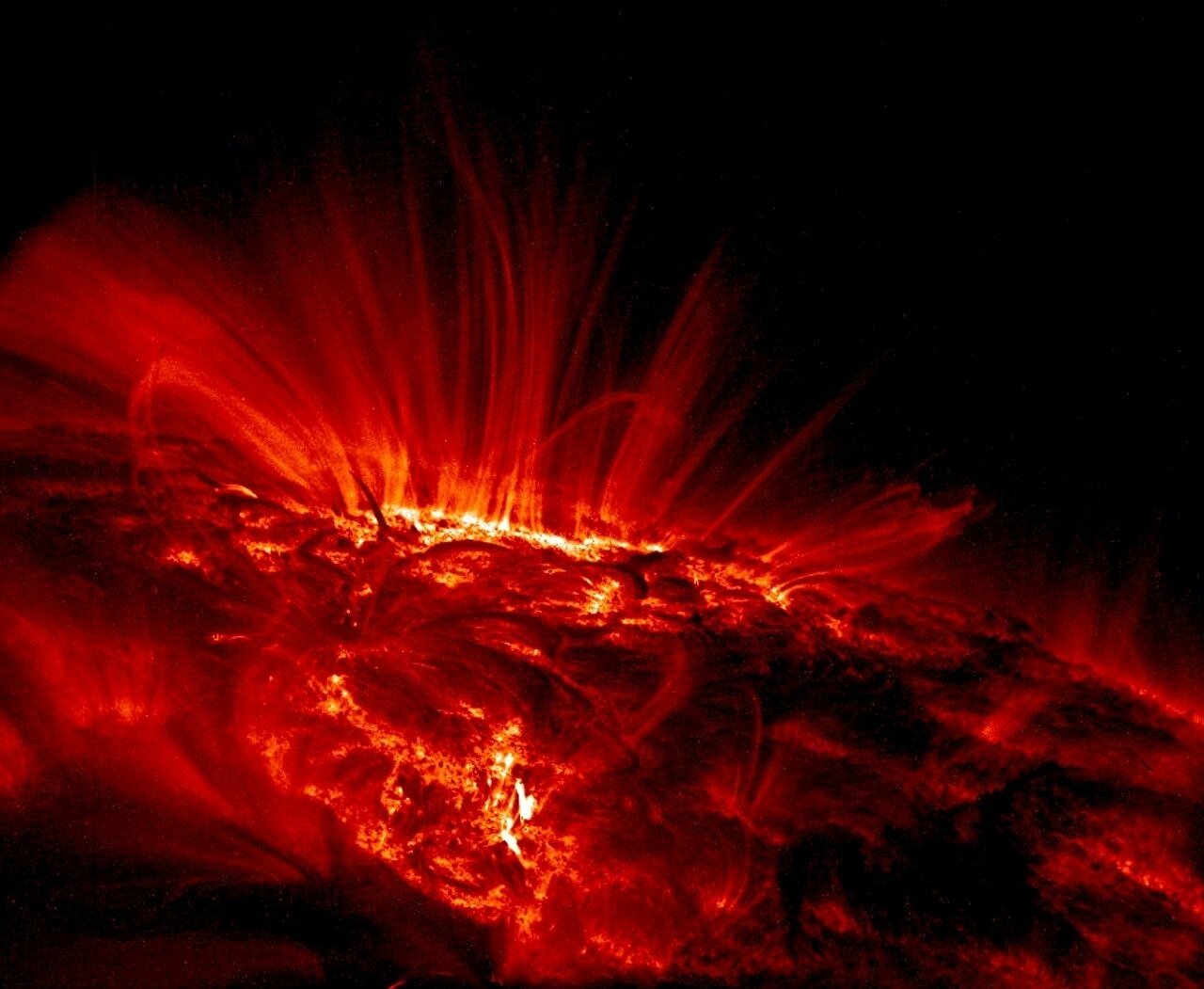
Magnetic fields permeate the cosmos, found everywhere from planets and stars to entire galaxies. These invisible forces play crucial roles in major cosmic events, influencing solar storms, the movement of high-energy particles, and even galaxy formation processes. While small-scale magnetic fields are typically chaotic and turbulent, much larger magnetic structures throughout the universe appear surprisingly organized and coherent, creating a puzzle that has confounded scientists for decades.
The breakthrough research, led by scientists at the University of Wisconsin-Madison and published in Nature, focused on understanding how turbulent plasma develops organized jet-like flows that can generate large-scale magnetic fields. The team used extraordinarily detailed computer simulations involving 137 billion grid points to model magnetic fields interacting with unstable velocity gradients, representing what may be the most comprehensive simulation of this type ever attempted.
The simulations incorporated constantly renewed velocity gradients, which occur throughout the universe when different parts of a system move at different speeds. These gradients are common during events like neutron star mergers, inside stellar cores like the Sun, and during other high-energy cosmic processes. The research team suspected these gradients could play a major role in shaping the organized magnetic fields observed throughout the cosmos.
The results revealed that large magnetic fields can emerge when turbulent plasma develops organized flows, introducing a new explanation for how cosmic magnetic fields form and evolve. This understanding could help scientists better predict space weather events that can damage satellites and power grids on Earth, while also providing new insights into the formation of stars, galaxies, and other cosmic structures that depend on magnetic field interactions.