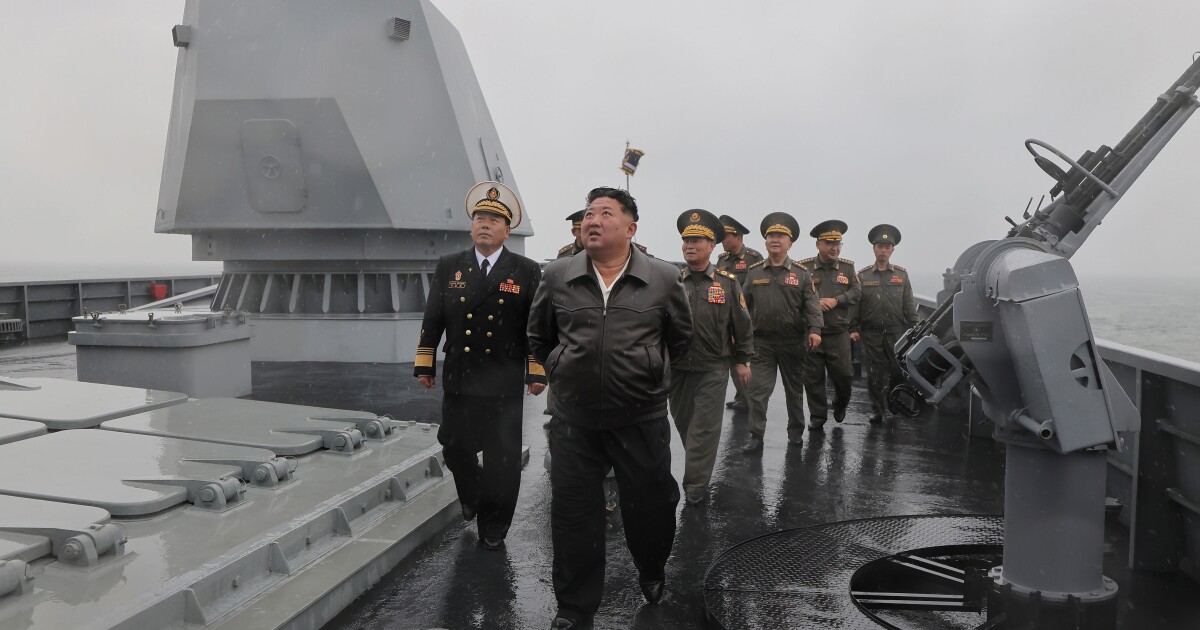
Kim Jong Un's 'Miraculous Transformation' Fortifies North Korea Through Pandemic Isolation
The North Korean leader used COVID-19 lockdowns to ruthlessly tighten control, then energized the economy by leveraging Russia's war in Ukraine.

North Korean leader Kim Jong Un has emerged from the COVID-19 pandemic significantly more powerful than before, having used the global crisis as an opportunity to consolidate unprecedented control over his isolated nation. Despite making a rare tearful apology on national television during the pandemic's peak, acknowledging that his "efforts and sincerity have not been sufficient," Kim strategically transformed the health crisis into a tool for strengthening his regime's grip on power.
The 42-year-old leader implemented brutal measures during the pandemic, shutting down the border with China and issuing shoot-to-kill orders to prevent North Koreans from fleeing across the boundary. He systematically dismantled the informal markets where many citizens had survived since the devastating 1990s famine, targeting underground economies that had allowed people to trade Chinese goods and foreign entertainment smuggled in on thumb drives. Those caught distributing K-pop or Korean dramas faced public execution as enforcement became increasingly severe.
By eliminating these shadow markets, Kim strengthened his regime's monopoly over both the economy and ideology, forcing his population to rely entirely on state-controlled systems. The campaign also targeted cross-border trade and smuggling, compelling North Koreans to depend less on Chinese imports and produce more goods domestically. This economic isolation, while causing significant hardship for ordinary citizens, ultimately reduced the country's dependence on external influences that had previously provided alternative information and economic opportunities.
Kim's strategic approach extended beyond internal control to international relations, where he leveraged Russia's invasion of Ukraine to energize North Korea's economy. The war created new opportunities for North Korean arms sales and strategic partnerships that provided crucial resources while circumventing international sanctions. This external revenue stream helped offset some of the economic damage caused by pandemic isolation and border closures.
Political analysts now recognize Kim Jong Un as North Korea's most powerful leader to date, surpassing even his grandfather, the country's founder, because he has achieved the status of a de facto nuclear power while maintaining absolute domestic control. His transformation of a global health crisis into an opportunity for regime consolidation demonstrates a level of strategic calculation that has fundamentally altered North Korea's position both domestically and internationally, creating a more isolated but potentially more stable authoritarian system.