Kansas Votes Today on Electing Its Supreme Court Justices Outright, After $12.8 Million in Ads
The amendment would abolish the state's merit-selection commission and put justices on partisan statewide ballots for six-year terms. Kris Kobach and Americans for Prosperity are for it; Gov. Laura Kelly, two former governors and the state bar are against.
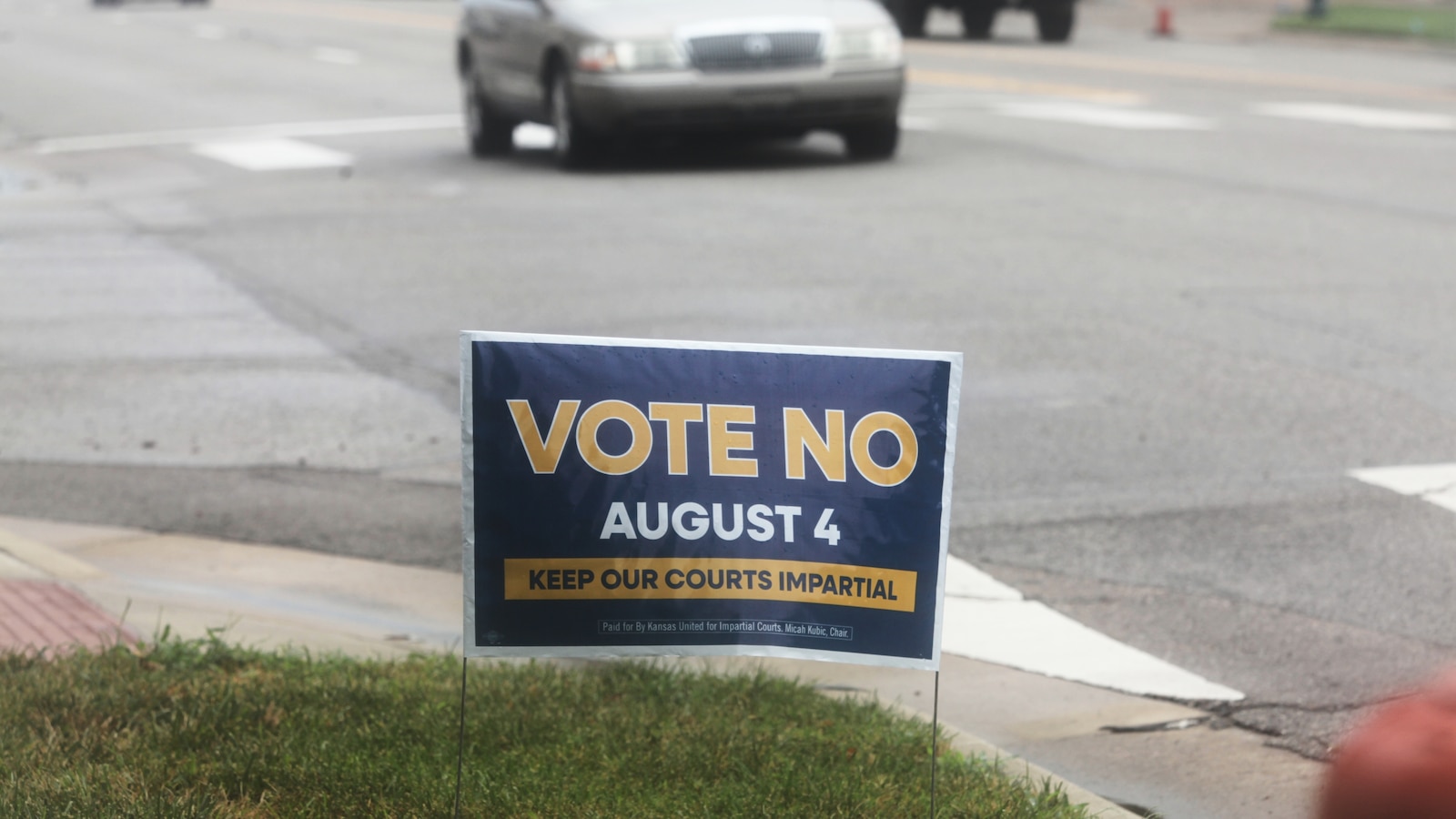
Kansas voters decide Tuesday whether to tear out the machinery their state has used for generations to pick its highest court and replace it with something no other state uses in quite the same way: direct, partisan, statewide elections for Supreme Court justices.
Under the current system, a nominating commission screens applicants and sends the governor a short list. The commission has nine members — five lawyers, elected by other attorneys within each of the state's congressional districts, and four non-lawyers appointed by the governor. The governor must pick from the list. A new justice serves a year, then faces a statewide retention vote, and another every six years after that. The amendment on Tuesday's ballot would abolish the commission entirely and put justices directly on the ballot for six-year terms.
The Republican-controlled Legislature put the question to voters, and the case for it is straightforward: the people who write the state's laws should not be outranked by a court chosen by a committee half-elected by the bar. Attorney General Kris Kobach, former Gov. Jeff Colyer, Americans for Prosperity Kansas and the Kansas Chamber of Commerce are backing it. Americans for Prosperity alone put $935,000 behind the yes campaign in digital advertising and turnout operations.
The opposition is unusually broad for Kansas and cuts across party lines. Democratic Gov. Laura Kelly opposes the amendment. So do two former governors — Republican Bill Graves and Democrat Kathleen Sebelius — along with former Kansas Supreme Court justices, the Kansas Bar Association and the ACLU of Kansas. Their argument is about what elected judges have to do to get elected: raise money, take positions, and then rule on cases involving the people who wrote the checks. Former judicial leaders have warned openly about the effect on impartiality.
Money has poured in on both sides. Partisan donors spent at least $12.8 million on television advertising and mailers, an extraordinary sum for an August ballot question in a state of fewer than three million people. The vote-no side alone spent more than $8 million, including $1.6 million from the national and state affiliates of Planned Parenthood. One of the anti-amendment vehicles, the Kansas Fair Courts Fund, is linked to the Kansas Values Institute, the group that spent heavily on Kelly's reelection.
Planned Parenthood's involvement points at what everyone in Kansas understands the fight to actually be about. In 2019, the Kansas Supreme Court ruled that the state constitution protects the right to abortion. In August 2022, Kansas voters — in another August ballot question, in a state Donald Trump had carried twice — rejected an amendment that would have stripped that protection out, by a margin that stunned the national political class. Changing how justices are chosen is the route to the same destination by a different road.
Turnout in a midterm August primary is typically low and heavily weighted toward the most reliable partisans, which is exactly why both campaigns spent what they did. The result will shape the court that hears Kansas cases on abortion, school funding, redistricting and executive power for a decade or more.
Originally reported by ABC News.