The Trump Administration Wants to Delete Most of Head Start's Rulebook and Make Teaching English-Only
HHS proposed scrapping more than 100 pages of federal regulations governing the preschool program for 700,000 poor children, handing oversight to state childcare licensing agencies. A 60-day comment period starts now.
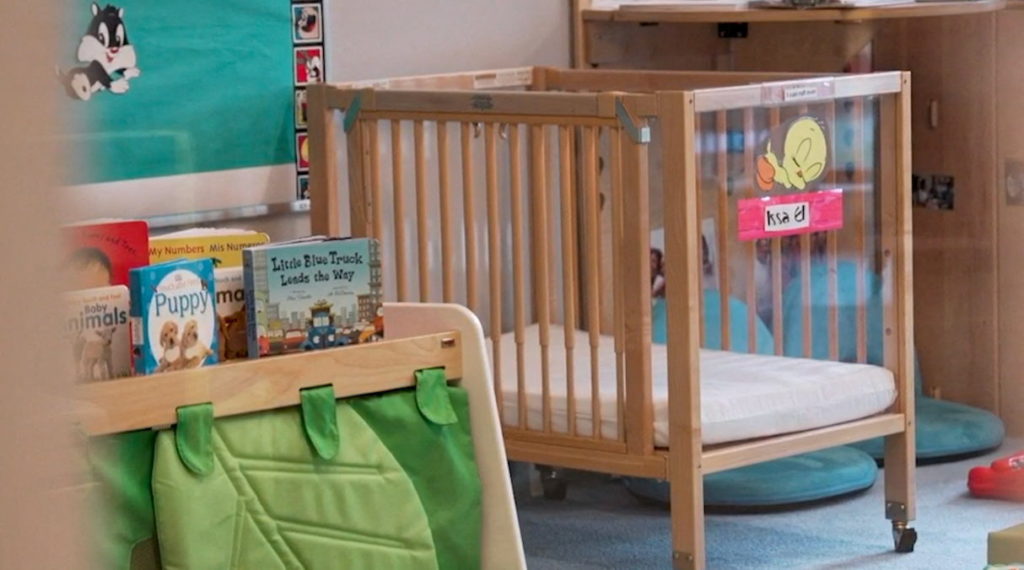
WASHINGTON — The Trump administration moved Thursday to strip away most of the federal rulebook that has governed Head Start for decades, proposing to eliminate the staffing ratios, curriculum standards and family-service requirements that made the program the benchmark for early childhood education in the United States.
Head Start serves roughly 700,000 children from the nation's poorest families through about 1,600 local operators. The current federal performance standards run more than 100 pages and dictate not just how many adults must be in a classroom but what the program owes families outside it: medical and dental screenings, research-backed curricula, home visits and parent coaching. Under the proposal from the Department of Health and Human Services, most of that would be replaced by whatever the state or locality already requires of licensed childcare providers.
Officials framed the rewrite as a transfer of authority downward. "Federal mandates can certainly hinder local decision-making, drive up costs and limit the program's reach," said Alex J. Adams, the HHS assistant secretary overseeing the change. The department estimated the deregulation could free more than $2 billion. Health Secretary Robert F. Kennedy Jr., who has championed new nutrition provisions included in the package, defended the program itself. "It's a program that works for the most vulnerable of the poorest kids in our society, and it's really important we protect it," Kennedy said.
The proposal is not purely a subtraction. It adds two new federal mandates of its own. Staff would be required to deliver all instruction in English, with an exception carved out for tribal communities running native-language immersion programs. And it would cap administrative expenses at 5% of a grantee's budget, down from the current 15% — a squeeze that program operators say would fall hardest on small rural agencies that cannot spread back-office costs across many centers.
Early childhood policy researchers say the arithmetic of the swap is the problem. State childcare licensing rules are, almost uniformly, far more permissive than Head Start's standards on child-to-adult ratios, teacher credentials and required educational services. Handing oversight to those agencies does not simply decentralize the program; it lowers the floor. Khari Garvin, who ran Head Start under President Joe Biden, said the wraparound services being cut were never incidental to the classroom work. The model was built, he said, "as part of a strategy to move families out of poverty" — the screenings and parent coaching were the strategy, not overhead attached to it.
The public has 60 days to comment before the rule can take effect. Head Start has survived repeated attempts to shrink it, including a White House budget proposal last year that would have zeroed out its funding entirely; that effort failed in Congress. This one does not require Congress. It runs through the rulemaking process, which means the fight over whether a federally funded preschool for poor children keeps its national standards will be decided in the Federal Register rather than on the House floor.