Child's Tooth and Green Stones Uncover 5,500-Year-Old Mountain Mining Mystery
Ancient Pyrenees cave may represent one of earliest high-altitude mining camps ever discovered, with evidence of repeated visits spanning thousands of years.
High in the eastern Pyrenees, archaeologists have uncovered evidence that could transform our understanding of how prehistoric people used mountain landscapes, discovering what may be one of the earliest high-altitude mining camps ever found. A cave perched more than 7,300 feet above sea level contains dozens of ancient hearths filled with fragments of green mineral that point to early copper mining activities. The discoveries suggest that people repeatedly traveled to this remote location over a span of roughly 2,000 years, challenging the long-standing belief that prehistoric communities only passed briefly through high-altitude environments.
Known as Cave 338 and located in the Freser Valley, the site has yielded a remarkably rich archaeological sequence that includes multiple combustion structures and large numbers of green mineral fragments. Professor Carlos Tornero of the Catalan Institute of Human Paleoecology and Social Evolution, lead author of the study published in Frontiers in Environmental Archaeology, explained that the repeated use of the space and density of remains suggest occupations that were short to medium in duration but occurring again and again over long periods. The evidence contradicts previous assumptions that high-mountain environments were marginal spaces that prehistoric communities used only occasionally.
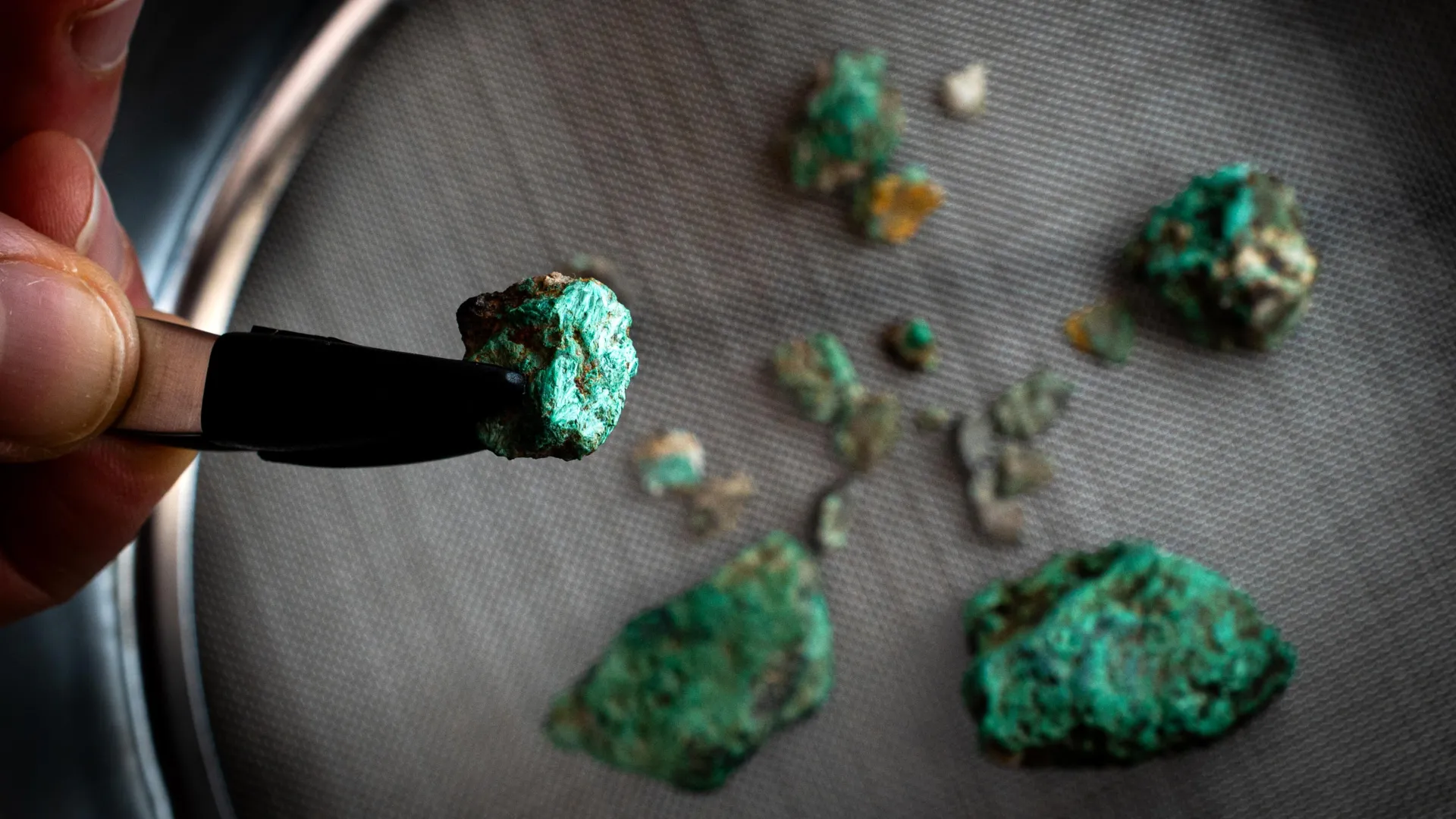
Archaeologists excavated a 6-square-meter area near the cave entrance and identified four distinct layers of human activity spanning from approximately 6,000 years ago to historical periods. The most significant discoveries came from the second and third layers, where researchers uncovered 23 hearths containing large numbers of crushed and burned fragments of green mineral. Detailed testing is still underway, but the material resembles malachite, a copper-rich mineral that can be processed to produce copper, potentially indicating that Cave 338 functioned as a surprisingly early high-altitude mining camp.
Dr. Julia Montes-Landa of the University of Granada, co-author of the study, noted that many of these mineral fragments are thermally altered while other materials in the cave are not, clearly suggesting that fire played an important role in their processing and that there was deliberate intention behind it. The hearths often overlap one another, showing that the same area was reused repeatedly, but individual hearths remain clearly distinct, indicating that visits were separated by substantial periods rather than representing continuous occupation.
Perhaps most intriguingly, researchers have recovered a child's finger bone and baby tooth from the site, raising the possibility that the cave may have served as a burial site in addition to its mining functions. The presence of human remains in such a remote high-altitude location adds another layer of complexity to the site's significance and suggests that these ancient communities had deep connections to specific mountain locations that went beyond simple resource extraction.