A Manila Court Issued an Arrest Warrant for Vice President Sara Duterte Over a Threat to Kill President Marcos
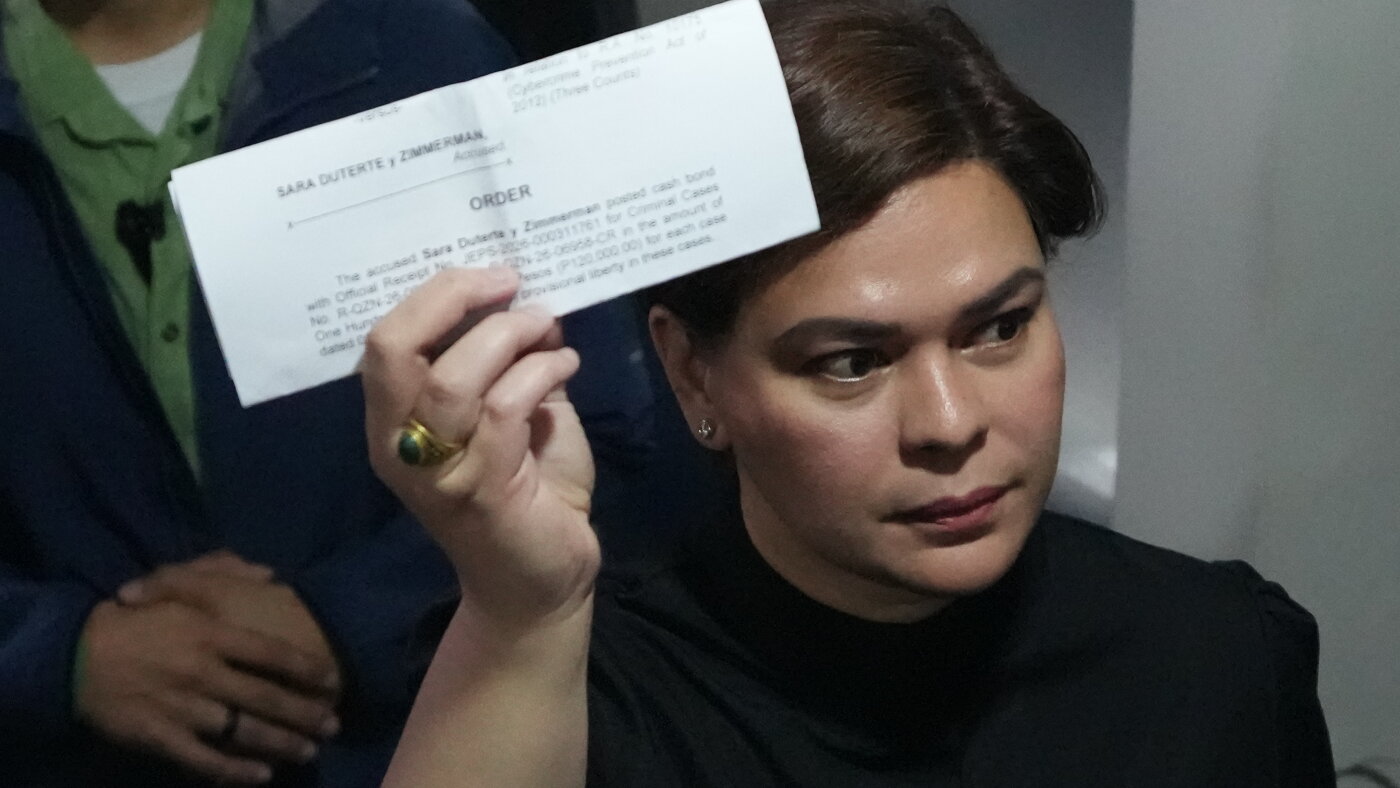
Quezon City Regional Trial Court Branch 98 charged her with three counts of grave threats and set bail at 120,000 pesos per count. Her lawyer says she will not evade the warrant.
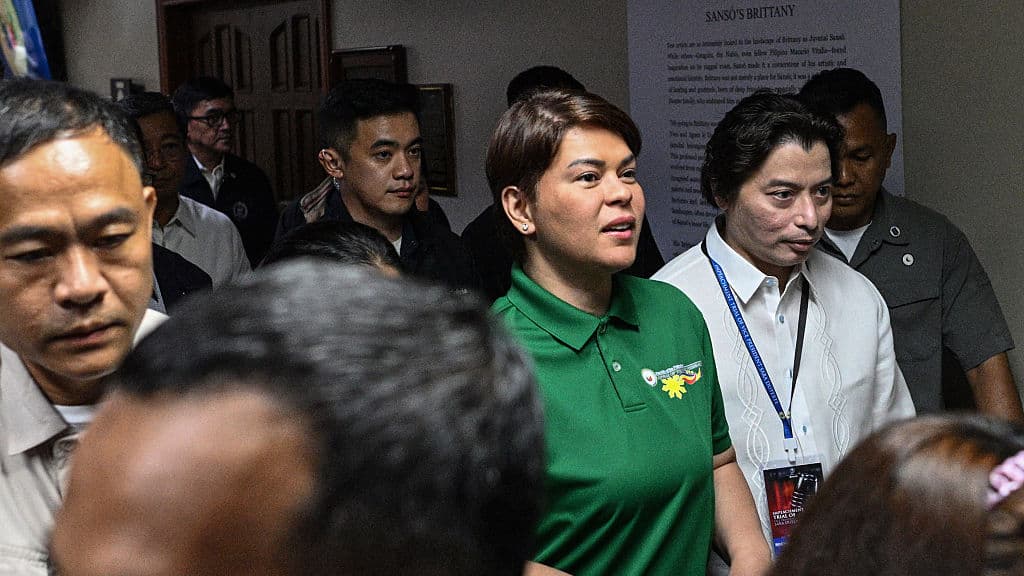
A Philippine court ordered the arrest of Vice President Sara Duterte on Friday over remarks in which she said she had contracted an assassin to kill President Ferdinand Marcos Jr. if she were killed first.
Branch 98 of the Quezon City Regional Trial Court issued the warrant on three counts of grave threats, charged in relation to Republic Act 10175, the Cybercrime Prevention Act, because the remarks were delivered on a livestream. The court set bail at 120,000 pesos for each count, roughly 360,000 pesos in total.
The case traces to a November 2024 online briefing held during a standoff between Duterte's office and congressional investigators. She said on that stream that she had spoken to an assassin and instructed him to kill Marcos, first lady Liza Araneta-Marcos, and Martin Romualdez, the president's cousin, who was then Speaker of the House of Representatives, in the event of her own death. Duterte later said the words were not a threat but a reaction to what she described as threats against her.
Her legal team confirmed the warrant the same day. Her lawyer said the vice president has no intention of evading the law and will pursue every available legal remedy. The defense had been waiting on a ruling on a motion to quash the charges, which argued that the Quezon City court lacks jurisdiction over the case; the court heard oral arguments on that motion in late August and issued the warrant before ruling on it.
The warrant lands on top of a political fight that has run for most of two years. Duterte, daughter of former president Rodrigo Duterte, ran on a joint ticket with Marcos in 2022 and then broke with him publicly. She was impeached by the House of Representatives, and her trial in the Senate has consumed months of the legislative calendar. The two families now anchor opposing blocs heading into the next national elections, and any criminal proceeding against the sitting vice president reshapes that map.
Grave threats is not a capital charge. Under the Revised Penal Code it carries a penalty measured in months to a few years, and the modest bail figure reflects that. The consequence that matters is procedural: an arraignment forces Duterte into a courtroom as a criminal defendant while she is simultaneously defending herself in an impeachment trial and positioning for a presidential run.
Marcos has said little publicly about the prosecution, which was brought by private complainants and taken up by state prosecutors rather than launched from the palace. His allies in Congress have pressed the impeachment case hard, and Duterte's supporters have framed both proceedings as a single coordinated effort to disqualify her before the campaign begins.
Philippine authorities have not said when the warrant will be served or whether Duterte will surrender voluntarily and post bail, the ordinary course for a bailable offense.