Ukrainian Drones Reached 2,200 Kilometers Into Siberia and Set Fire to the Plant That Makes Half of Russia's Plastic
The West Siberian Petrochemical Complex in Tobolsk lost its central gas fractionation unit to a drone strike on Monday. It is also the only place in Russia that makes maleic anhydride, a feedstock for aircraft and drone composites.
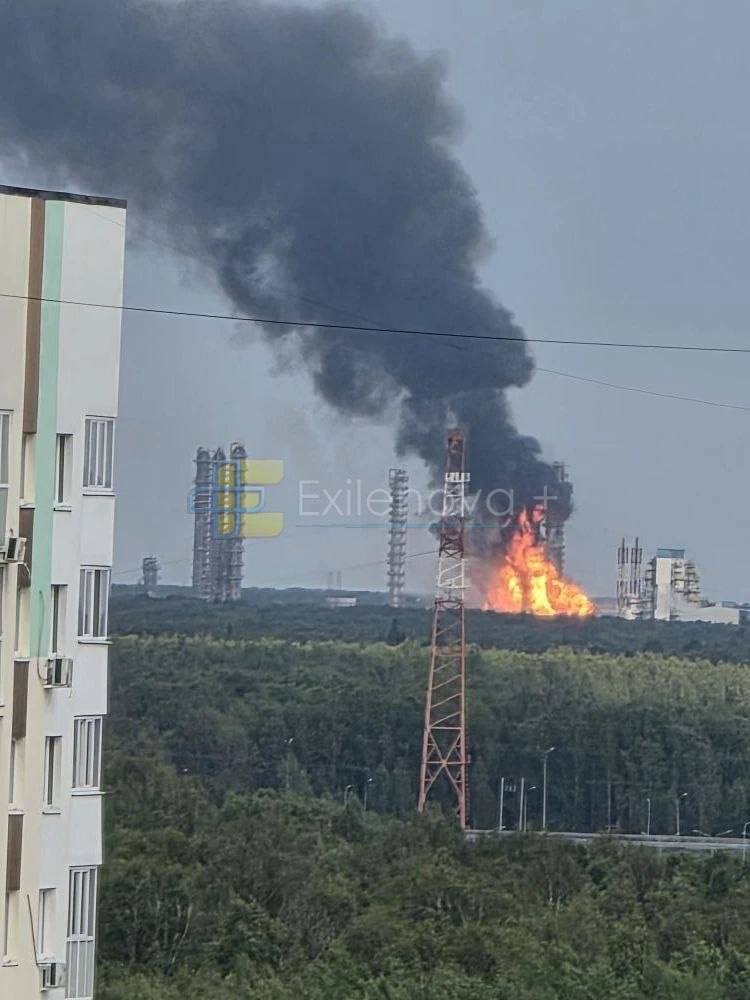
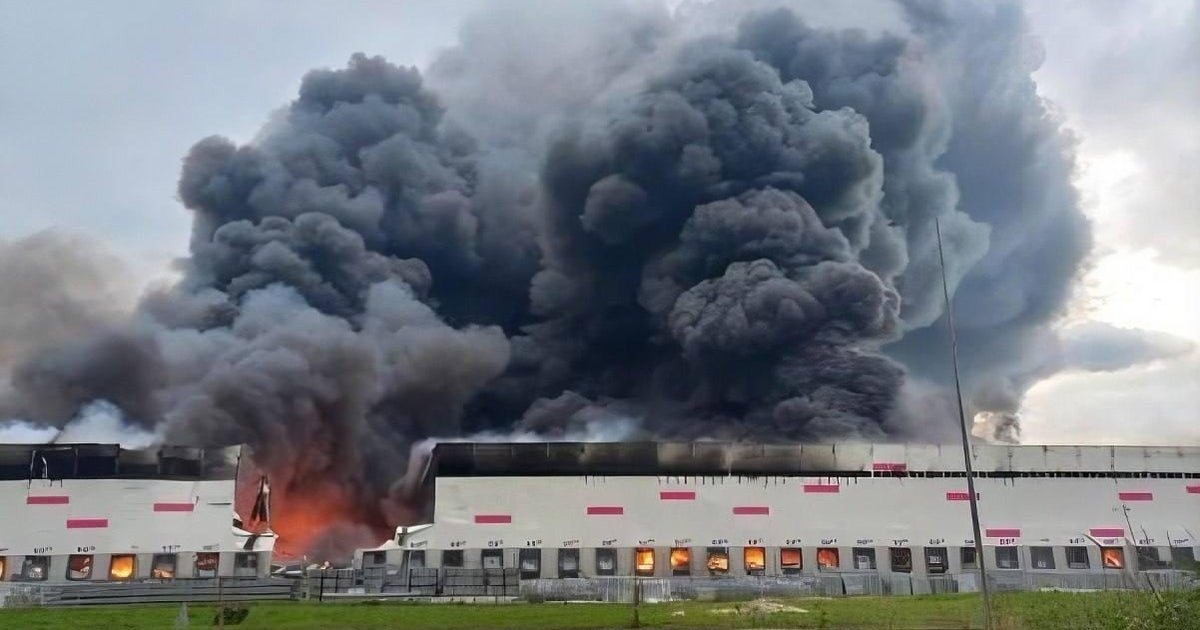
Drones struck the West Siberian Petrochemical Complex in Tobolsk on Monday afternoon, setting fire to Russia's largest petrochemical facility at a distance of roughly 2,200 kilometers from Ukrainian-held territory. The plant, known as ZapSibNeftekhim and owned by the Sibur holding company, sits in Tyumen Oblast deep in western Siberia -- a location chosen decades ago in part because nothing was supposed to be able to reach it.
Tyumen regional governor Alexander Moor confirmed the attack in a statement that avoided naming the target. "A fire broke out on the grounds of one of the industrial facilities after several drones crashed," he said. Open-source analysts at ASTRA, working from imagery and geolocation, identified the point of impact as the plant's central gas fractionation unit, the installation that separates light hydrocarbons into the feedstocks everything downstream depends on. The unit consists of two trains, GF-1 and GF-2, with a combined capacity of about eight million metric tons a year. Reuters reported that operations at the site were suspended indefinitely.
By Sibur's own accounting, the Tobolsk site produces approximately half of all polyethylene and polypropylene made in Russia -- the two commodity plastics that go into packaging, pipe, film, containers, and automotive parts. A prolonged outage does not just dent Sibur's balance sheet; it removes a large fraction of domestic plastics supply from an economy already operating under sanctions that make imported substitutes expensive and slow to arrange.
The military logic runs through a smaller and less famous product line. Tobolsk houses the only maleic anhydride production in Russia, with annual capacity above 45,000 metric tons. Maleic anhydride is a precursor for the resins used in fiberglass composites -- the material that shows up in aircraft structures and, increasingly, in the airframes of the long-range drones both sides are building by the thousand.
Sibur's customer list extends further into the defense industrial base. The company supplies raw materials to the Kamensk Plant, which manufactures solid rocket propellant; to the Perm Powder Plant, which makes charges for launch systems and missiles; and to the Sverdlov and Biysk facilities, both of which produce explosives. Feedstock disruptions at Tobolsk propagate through that chain with a lag rather than immediately, which is precisely what makes the target attractive.
The strike is the latest and by far the deepest in a campaign that has hit Russian refining and petrochemical infrastructure repeatedly through the summer, including the Nizhnekamskneftekhim plant in Tatarstan at 1,200 kilometers and refineries at Syzran and Ryazan. Each successive strike has pushed the demonstrated range further east, and Tobolsk establishes that there is effectively no Russian industrial site west of the Yenisei that can be considered out of reach.