A $46 Billion Industry's Federal Regulator Hasn't Issued a Single Enforcement Action Since January
The National Indian Gaming Commission's enforcement powers belong solely to its chairperson. That seat has been empty for seven months, and no one has been nominated.
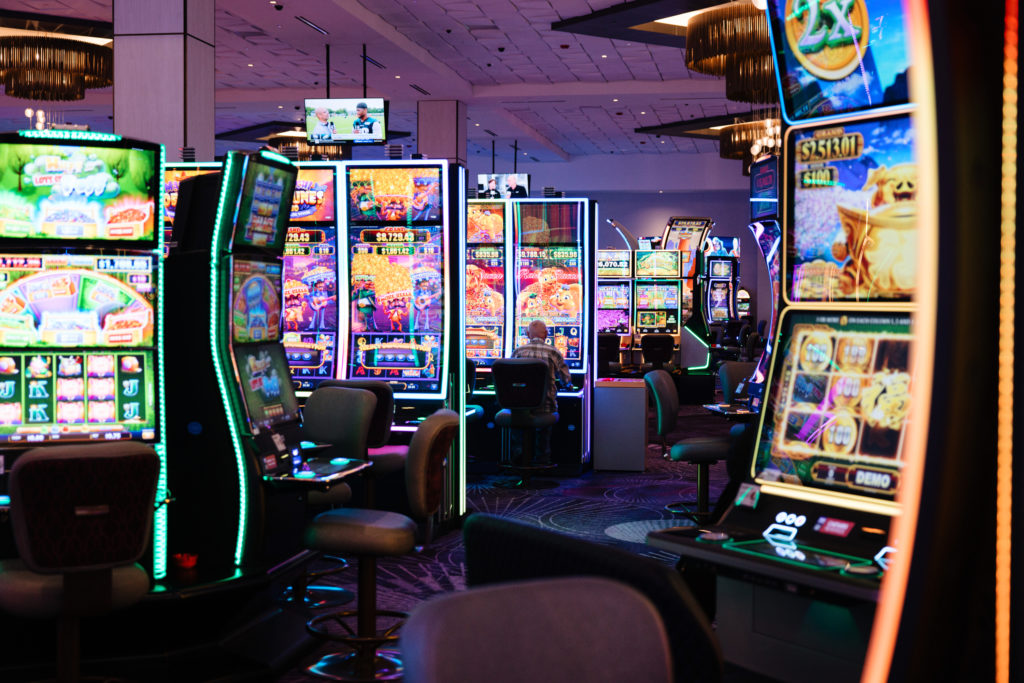
ALBUQUERQUE, N.M. — On opening day at the Iowa Tribe of Oklahoma's new Harrah's-branded casino, Chairman Jacob Keyes watched the gambling floor fill past capacity while cars backed up out of the parking lot.
"We couldn't let them in because we were so full," Keyes said. "That's a direct impact from the Harrah's name."
But the name is all the tribe has been able to use. Plans for Harrah's parent company to take over day-to-day management of the 175,000-square-foot casino in Chandler, Oklahoma, stalled after it opened in April — because nobody is running the federal commission that oversees tribal gambling.
The last chairperson of the National Indian Gaming Commission stepped down in January. President Donald Trump has not nominated a replacement. Under federal law the commission's enforcement powers are vested solely in the chairperson, so without one the agency cannot cite casinos for violating federal law, force the emergency closure of unsafe facilities, approve new tribal gambling ordinances, or certify management agreements between tribes and casino operators. The commission's last enforcement action was issued on Jan. 12 — the same day acting chairperson Sharon Avery's term expired. She remains on the commission.
"At this crucial time, the (National Indian Gaming Commission) is operating with one arm tied behind its back," said Jonodev Chaudhuri, who chaired the agency from 2013 to 2019 and is a citizen of the Muscogee (Creek) Nation. "That's a very precarious position for tribes and Indian gaming."
The stakes are not abstract. Tribal gambling brought in a record $46 billion in 2025, nearly triple the annual casino revenue of Nevada, and many tribes depend on that money to fund healthcare, housing, education and other basic services. Some 250 tribal governments across 29 states operate 545 gambling facilities, according to the commission, which was created as a three-member body in 1988 to regulate casino-style gambling and promote economic development on tribal lands.
For the Iowa Tribe, the vacancy has meant a small government staff running a mammoth casino it had specifically planned to outsource. The decision to bring in Harrah's was strategic: the brand would draw more business than existing staff could handle. Instead, those employees are now balancing casino management against preparing tribal budgets and overseeing social programs. "It's discouraging. We're paying a fee and not getting the full value," Keyes said.
The commission declined an interview request and said in an emailed statement that tribal officials and its own field staff provide "excellent regulation" during the leadership gap. Steven Light, an expert in tribal gambling law at the University of Nevada, Las Vegas, said the absence of enforcement power could chill investment. "Markets function best when there's stability and certainty around processes and rules," Light said.
The timing collides with a threat tribes consider existential. Online prediction markets such as Kalshi and Polymarket, which let users wager on the outcome of virtually any event, have exploded in popularity. Tribal leaders argue the platforms encroach on their sovereignty and siphon off revenue. At least eight tribes have sued prediction market operators, alleging they accept bets placed from tribal lands and in states where tribes hold exclusive gambling rights, in violation of the Indian Gaming Regulatory Act — the very law the commission is charged with enforcing. The platforms counter that their users are engaged in futures trading, not gambling.
"Every dollar generated by Indian gaming goes to fund healthcare for our people, education for our children, housing for our elders," said David Bean, chairman of the Indian Gaming Association and a citizen of the Puyallup Tribe.
The chairperson has traditionally served as the industry's advocate in Washington, according to former commissioners and staff. Joe Valandra, the commission's chief of staff from 2005 to 2007 and a citizen of the Rosebud Sioux Tribe, said the agency has been conspicuously silent as the federal government weighs how to regulate prediction markets.
James Siva, who leads the California Nations Indian Gaming Association and is vice chairman of the Morongo Band of Mission Indians, suggested the administration's own ties to the prediction markets industry may explain the delay. "These things are happening in conjunction with each other," Siva said at an April news conference with the Indian Gaming Association. "It is not a coincidence by any means."
The commission's last Senate-confirmed chairperson termed out under President Joe Biden with no successor in place. A White House spokesperson called the commission a "valued board" but would not say when a nomination is coming.