Republican Rep. Salazar's Ad Telling Trump He's 'Gone Too Far' Exposes GOP Worry Over Latino Voters in Miami
In a Cuban-American district that is more than 70% Latino, deportations and the cost of living are splitting voters who helped Trump win in 2024, and a recent survey shows Latino voters favoring Democrats for Congress by 26 points.
MIAMI — At the heart of Little Havana sits Máximo Gómez Park, better known as Domino Park, where Cuban Americans play games to escape the pressures of daily life. Last week, a typical day there turned tense when Miami police arrested a player in the middle of a game after a dispute with a city worker. The arrest set other players worrying about deportations, and it kicked off a broader argument over whether President Trump or former President Biden is to blame for the higher cost of living.
"It's Biden," said Alejandro Torres, a Republican voter. "It's Trump," answered Ricardo Carracedo, who plans to vote for Democrats in the midterm elections. The same divide is playing out across Florida's 27th Congressional District, a Miami-Dade County seat that is more than 70% Latino. It is a warning for Republicans, whose 2024 wins relied heavily on Latino voters.
That year Trump cut the Democratic margin with Latino voters nationally to just three points, down from 25 points four years earlier, according to the Pew Research Center. Cuban Americans, the district's largest Latino group, have been reliable Trump supporters. But many of their friends and relatives have been swept up in the administration's deportation agenda, and a crack in that support could signal broader trouble for Republican candidates.
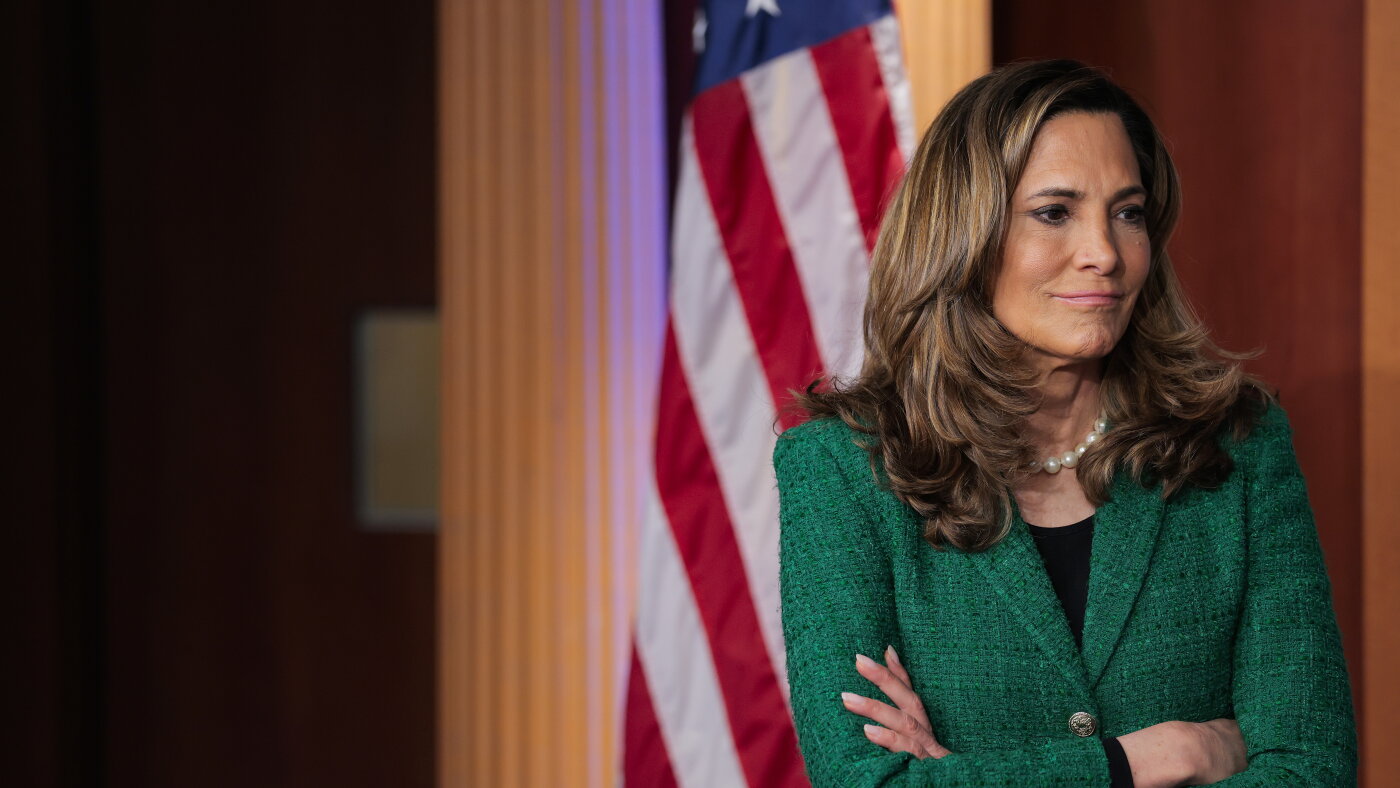
Rep. María Elvira Salazar, a Cuban-American Republican in her third term, has been sounding the alarm. Last month she filmed a television ad in front of the White House telling Trump he has "gone too far" on immigration. "The same Hispanics who helped you get to the White House in 2024 feel betrayed today," she said. Trump hit back on Truth Social by sharing a post in which another user called her a "back stabber." Salazar told NPR she did not take the comments as attacks and that she later spoke to the president. "I told him, 'You know, what I'm telling you is what my people are feeling,'" she said. "This is Democracy where we tell the boss, 'hey, this is what's happening in my neck of the woods.'"
Her reading of the mood may be right. A recent survey of registered Hispanic and Latino voters by the polling firm Equis Research found that voters would pick the Democratic candidate for Congress over the Republican by 57% to 31%. At a Salazar campaign event on Thursday, friends Mirla Loredo and Ramona Tunon were divided. Loredo sided with Trump, while Tunon said, "I like her position."
Salazar has pushed against aggressive immigration policies before. For several years she has proposed legislation she calls the Dignity Act, which would block deportations of immigrants considered pillars of their community, such as hospitality, construction and farm workers. Still, Carracedo said he will vote a straight Democratic ticket and called her recent break with Trump too little, too late. "I'm not going to vote for her, because at the last hour she's defending Hispanics," he said. "But the entire time she supported Trump and the money Trump wanted for ICE." He said Trump reminds him of the communist leaders he left behind in Cuba.
Republican messaging about socialism once carried real weight in this district, but it has lost potency, eclipsed by worries over the cost of living and deportations. Eduardo Gamarra, a politics professor at Florida International University, said the local economy's malaise outweighs every other issue. "It's probably the number one thing," he said, "and that cuts across all of the electorate." He called deportations the second-biggest issue, noting they have devastated some Miami businesses that lost workers and customers.