Two Private Prison Companies Booked $1.4 Billion in a Single Quarter
One Sold Four Jails to DHS for $1.6 Billion.
CoreCivic's revenue jumped 27% and GEO Group's 15% as the number of people in U.S. immigration detention climbed toward 66,000 — with the administration targeting 100,000 beds.
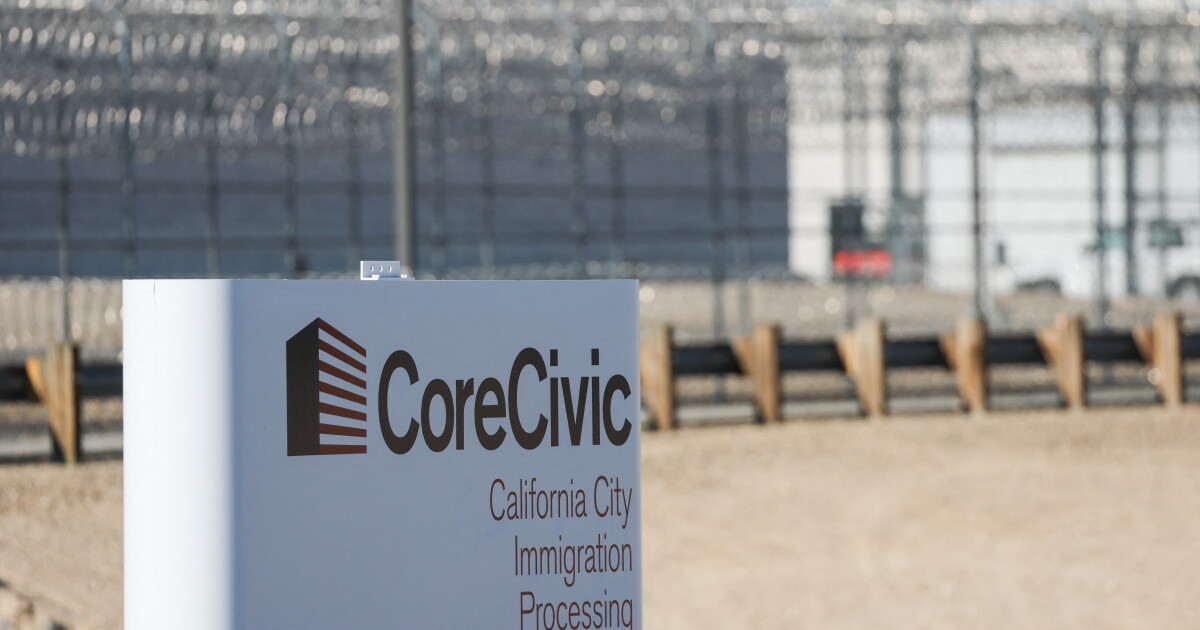
The two companies that run most of America's for-profit detention capacity reported a combined $1.4 billion in revenue for the second quarter of 2026, a haul built almost entirely on the federal government's immigration enforcement surge.
CoreCivic posted $684.9 million for the quarter, up 27% from a year earlier. GEO Group reported $732.1 million, up about 15%, or roughly $96 million. Both figures were disclosed in earnings calls in early August. They arrive as the population held in U.S. immigration detention sits at roughly 66,000 people, according to the Transactional Records Access Clearinghouse, a nonpartisan research center at Syracuse University that tracks federal enforcement data. That is close to the record set earlier this year, and still short of the administration's stated target of holding 100,000 people at once.
The most striking transaction of the quarter was not an operating contract at all. CoreCivic sold four facilities outright to the Department of Homeland Security for $1.6 billion in net proceeds — an average of about $307,000 per bed. The company then negotiated contracts to keep operating the facilities it had just sold, and to build additional detention centers on top of that. GEO Group is in talks to pursue a similar structure. The arrangement lets the companies convert real estate into cash while retaining the recurring management revenue, and it moves the underlying asset onto the federal balance sheet.
CoreCivic President and CEO Patrick Swindle told investors the company "exceeded expectations in a period that included the government shutdown," crediting lower operating costs and rising detention populations. GEO Group CEO George Zoley pointed analysts toward a second revenue stream: electronic monitoring. He said the number of people wearing GPS ankle monitors under the Intensive Supervision Appearance Program "will likely keep climbing" following the end of Temporary Protected Status for Haitian immigrants, and told investors to expect "a significant increase in the number of people in the ISAP program." Both firms have also expanded transportation and deportation-flight contracts.
The revenue growth sits inside an unusually tight web of personnel ties. David Venturella, the acting director of ICE, is a former GEO Group executive who divested his stock in the company. White House border czar Tom Homan previously worked as a paid consultant to GEO. Former Attorney General Pam Bondi lobbied for the company before entering the administration. Trump himself has made 29 private-prison stock trades since taking office, the first of them on day 10 of his second term, worth hundreds of thousands of dollars across both companies.
Congress supplied the fuel. The immigration enforcement funding package enacted last year directed roughly $170 billion toward detention, removal operations and border infrastructure — a sum that both companies have repeatedly cited to investors as the reason their growth is durable rather than cyclical. For CoreCivic and GEO, the bet is that detention capacity is now a long-term federal utility rather than a policy that swings with elections. The quarterly numbers suggest the market agrees.