A North Korean Missile Unit Is Moving Into Voronezh With as Many as 120 Ballistic Missiles Aimed at Ukraine
Ukrainian military intelligence says roughly 90 North Korean personnel will be embedded in Russia's 112th Missile Brigade with six launchers. Ukraine's thinnest defensive layer is exactly the one those weapons are built to beat.
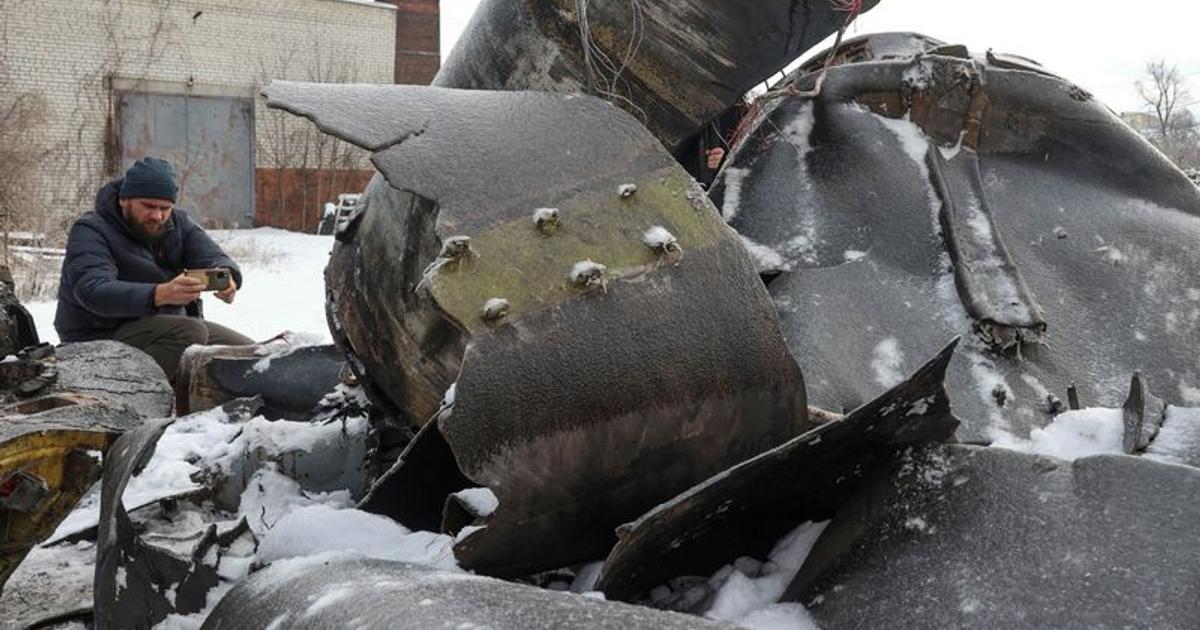
A North Korean missile unit has begun deploying to western Russia and could be equipped with 120 ballistic missiles and six launchers for strikes on Ukraine, an official at Ukraine's military intelligence agency said — an escalation that would move Pyongyang from supplier to participant in Russia's war.
Andrii Cherniak of Ukraine's Main Directorate of Intelligence said Russia plans to base the unit, roughly 90 North Korean personnel, in the Voronezh region, folded into Russia's 112th Missile Brigade. Pyongyang has already sent a fresh batch of 40 KN-23 and KN-24 missiles along with personnel, he said, and the final shape of the deployment and the total missile count will be settled at top-level talks next month. Russia expects the arrangement to involve 120 missiles and six launchers. What exact role the North Koreans would play in Russian missile operations is not clear.
The timing matters. Russia has fired scores of North Korean ballistic missiles at Ukraine since late 2023, but stationing North Korean missile forces on Russian soil would be a categorical expansion of a partnership that already includes millions of artillery shells and, Ukrainian officials say, 14,000 troops sent to Russia's Kursk region in 2024 to push back a Ukrainian ground incursion. Moscow and Pyongyang signed a mutual defense pact that same year.
The deployment Cherniak described lines up with a shift on the battlefield. Last week Russia fired its first two North Korean missiles at Ukraine since August 2025, drawing from that new batch of 40. One of them flattened a residential home in the central Ukrainian village of Radushne, killing at least five members of the same family.
Ukraine is badly short of high-end air defenses, and Russia has been leaning into ballistic missiles precisely because they are the hardest thing to intercept. "Ballistic missile defence is one of Ukraine's greatest vulnerabilities so any increase in the quantities of ballistic missiles they face will pose a greater challenge," said Rob Lee, a senior fellow at the Philadelphia-based Foreign Policy Research Institute. He added that the sharper worry is this coming winter, when Russia could again hit the power grid with sustained heavy attacks, as it has in previous years.
North Korea's KN-23 and KN-24 have greater range and a larger payload than Russia's comparable Iskander, but are considerably less accurate — a tradeoff that has historically made them more useful against cities than against precise military targets.
Reuters, which first reported the deployment, said it could not independently verify Cherniak's account, which he said rests on intelligence he could not disclose because of its sensitivity. The Russian Defense Ministry and North Korea's mission to the United Nations in New York did not immediately respond to written requests for comment.
Originally reported by The Spokesman-Review.