Navi Pillay, 85, Wins Nobel Peace Prize as Committee Defends International Law
The former U.N. human rights chief and International Criminal Court judge was honored on the prize's 125th anniversary, as Washington sanctions ICC officials.
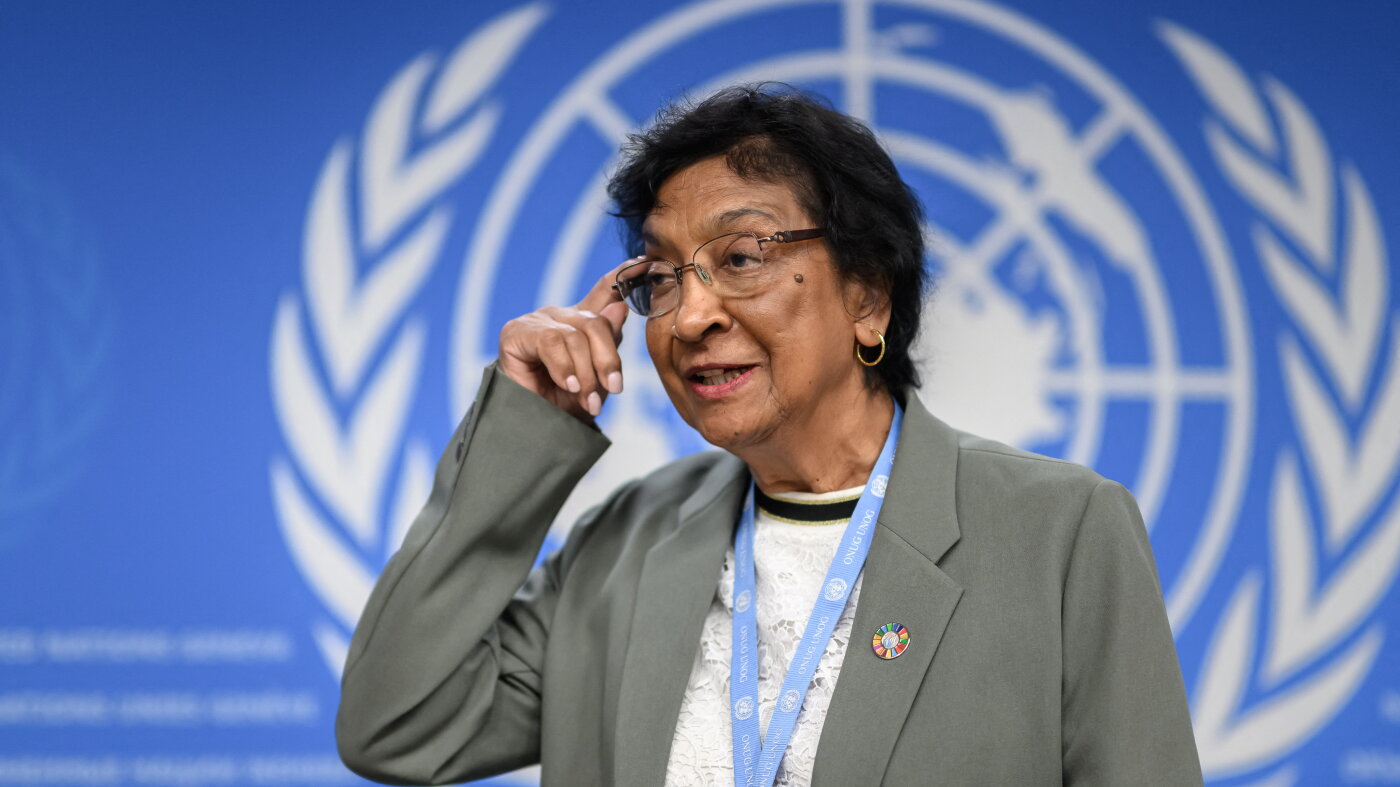
Navanethem "Navi" Pillay, a South African jurist and former United Nations human rights chief, won the 2026 Nobel Peace Prize on Friday for her lifetime commitment to international law. Norwegian Nobel Committee Chair Jørgen Watne Frydnes announced the award in Oslo and called her "one of the most courageous and important legal experts of our time."
Pillay, 85, was attending a conference in Nuremberg, Germany, when she got the news. "If you clap a little bit more, I may share this prize with Trump," she joked to a small crowd of well-wishers. "Being a lawyer and a judge I still want to verify this information," she added. Asked about the word courage, she played it down. "Why would you need courage to speak the truth? You interpret the law, you look at all the facts, so it's impartial decision-making," she said.
Born in Durban in 1941 to a South African family of Indian-Tamil descent, Pillay became the first woman of color to open a legal practice in Natal province, where she defended anti-apartheid activists. In 1973 she successfully sued the government to establish that political prisoners on Robben Island, including Nelson Mandela, had the right to legal representation. Frydnes drew a line from that work to her later career. "There is a thread to her involvement in standing and supporting Nelson Mandela and the prisoners of Robben Island, to her being a key to all the major international court cases of our time," he said.
A year after apartheid ended in 1994, Pillay became a high court judge in South Africa. She was soon appointed to the International Criminal Tribunal for Rwanda, where she presided over a landmark case establishing that rape and sexual assault can constitute acts of genocide. She served as a judge at the International Criminal Court from 2003 to 2012 and as U.N. High Commissioner for Human Rights from 2008 to 2014. More recently she chaired the Independent International Commission of Inquiry on the Occupied Palestinian Territory, which concluded in 2025 that Israel had committed genocide in Gaza.
The committee said continued attacks on the rule of law and its institutions influenced its decision. "This is a message that international law and its institutions are the cornerstone of a more peaceful world," Frydnes said. The timing is pointed. The United States has sanctioned senior ICC officials, including half of the court's judges and its former chief prosecutor, in connection with investigations into U.S. military personnel in Afghanistan and arrest warrants issued for Israeli Prime Minister Benjamin Netanyahu and former Defense Minister Yoav Gallant over alleged war crimes in Gaza. Neither the U.S. nor Israel is an ICC member, but the Trump administration argues the court threatens American sovereignty, and Secretary of State Marco Rubio announced a campaign this year to "dismantle" it.
The prize is likely to sting the White House. President Trump has long coveted the Nobel Peace Prize and told reporters on Wednesday he believed he deserved it. "I settled eight wars," he said, while acknowledging the committee had "a reputation for maybe not giving it to people like me." In January, Venezuelan opposition leader María Corina Machado, the 2025 laureate, gave Trump her gold medal in thanks for the U.S. military operation that captured former Venezuelan president Nicolás Maduro.
This year's prize drew 287 nominations, individuals and organizations combined. It carries 12 million Swedish kronor, about $1.2 million, and marks the 125th anniversary of the first award in 1901.