A Military Judge Threw Out Khalid Sheikh Mohammed's 9/11 Confession, Citing an 'Unbroken Continuation' of CIA Coercion
Lt. Col. Michael Schrama ruled the statements KSM gave FBI agents over four days in January 2007 were not voluntary. The trial is set for June 2028 — nearly 27 years after the attacks.
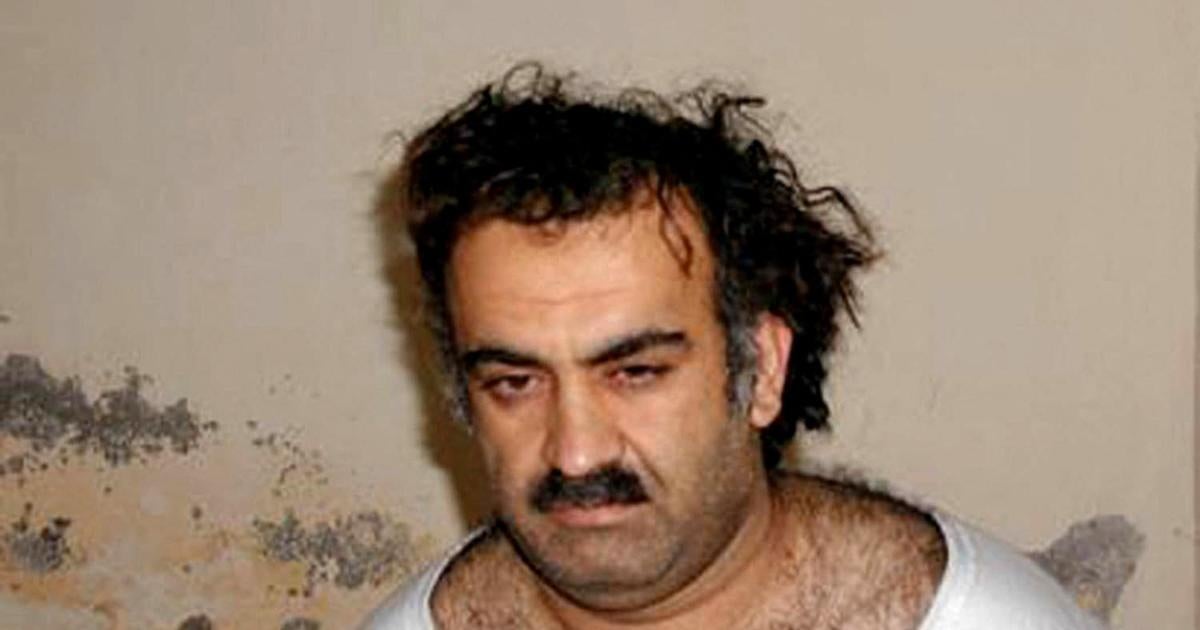
A military judge on Friday suppressed the confession that Khalid Sheikh Mohammed, the man accused of designing the Sept. 11 attacks, gave to FBI agents at Guantánamo Bay in January 2007, ruling that the statements were not made voluntarily and cannot be used against him at trial.
Lt. Col. Michael Schrama found that the four days of FBI questioning were an "unbroken continuation of the CIA's psychological conditioning and severe coercion." Mohammed had been captured in 2003 and held for years in the CIA's network of secret prisons, where he was waterboarded and subjected to other interrogation methods widely described as torture. By the time a separate FBI "clean team" sat down with him at Guantánamo, Schrama concluded, Mohammed had reason to fear that refusing to cooperate would return him to that treatment.
The judge cited two additional defects in the 2007 sessions: Mohammed was not given Miranda warnings advising him of a right to remain silent, and he was not given access to a lawyer. The clean-team interviews were designed specifically to produce statements untainted by the CIA program, and their exclusion removes what prosecutors had treated as among the strongest evidence in the case.
The ruling arrives days after Schrama scheduled a trial for June 2028 for Mohammed and three co-defendants — a date that would fall nearly 27 years after the attacks that killed close to 3,000 people. The case has been in pretrial litigation at Guantánamo since 2008, consumed by fights over exactly this question: what a court can do with evidence gathered downstream of torture.
Rear Adm. Aaron C. Rugh, the chief prosecutor for the military commissions, said the government would "make a decision on whether to appeal in the near future." Frank Pellegrino, the retired FBI agent who conducted the 2007 interview, has maintained that Mohammed "confessed to his role in the Sept. 11 attacks voluntarily," while acknowledging that courts must weigh the legality of what came before.
Prosecutors have already lost one route to resolution. In 2024, military prosecutors reached a plea agreement under which Mohammed and two co-defendants would have pleaded guilty and received life sentences in exchange for taking the death penalty off the table. Then-Defense Secretary Lloyd Austin moved to revoke the deal, and an appeals court sided with him, sending the case back toward a capital trial.
Mohammed is accused of conceiving the plot to hijack four commercial airliners and fly them into the World Trade Center and the Pentagon, and of presenting the plan to Osama bin Laden. If convicted at the 2028 trial, he could be sentenced to death. The ruling comes roughly two weeks before the 25th anniversary of the attacks; Trump said this week he plans to mark the date at the Pentagon rather than in New York.