Google's Willow Chip Cleans Up Quantum 'Magic States' and Cuts Errors 40-Fold in a First
A Science paper shows magic state cultivation working on real superconducting hardware, reaching fidelity of about 99.99%.

Google Quantum AI researchers have shown for the first time on real hardware that a noisy quantum resource called a magic state can be cleaned up from the inside, cutting its errors by a factor of 40. The result, published in the journal Science, tackles one of the biggest cost problems standing between today's fragile quantum chips and reliable large machines.
Qubits, the quantum counterpart of digital bits, are easily disrupted, which makes dependable quantum computers extremely hard to build. A magic state is a specially prepared quantum state needed for advanced calculations that ordinary error-protected operations cannot perform on their own. The standard way to purify these states, magic state distillation, filters out flaws but demands an enormous amount of extra equipment.
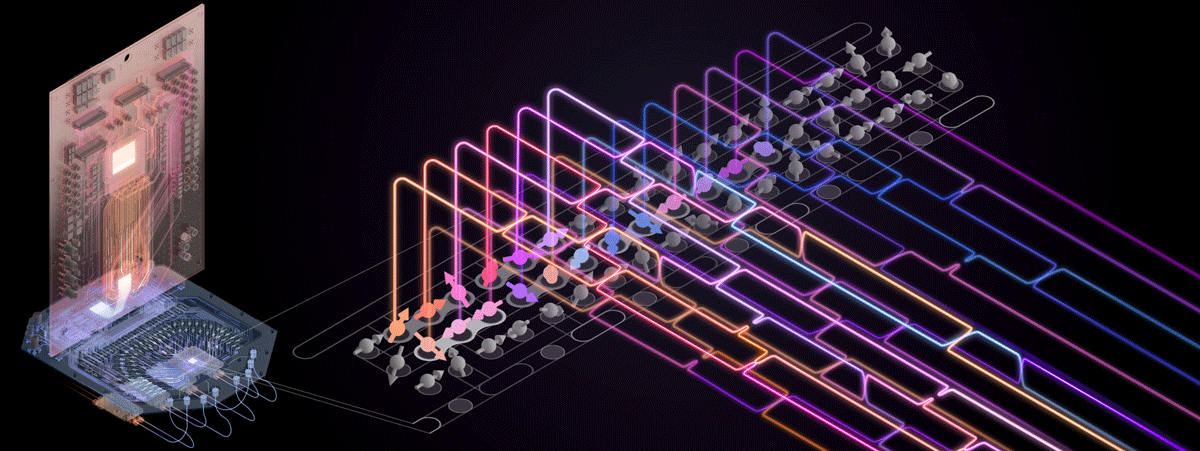
Magic state cultivation offers a leaner alternative. It cleans a noisy magic state directly inside a protected qubit rather than running it through a separate factory. Until now, the approach had never been tested successfully on real hardware. The team, led by E. Rosenfeld, ran it on Willow, Google's superconducting processor.
To have something to fix, the researchers encoded a deliberately noisy magic state across several physical qubits, spreading the information over a small grid to protect it. Helper qubits then scanned the information for mistakes without destroying the delicate data. If the checks caught any flaw, the system threw that attempt away and started over. If an attempt passed every test, the refined state was kept for further processing.
The paper reports that "cultivation reduces the error by a factor of 40." The refined states reached a fidelity of at least approximately 99.99%, a measure of how closely the prepared state matches the intended one. The filtering was strict: only about 8% of initial attempts passed every check used to measure the state's fidelity.
Measuring errors that small required a new tool. The team developed a checking method called kickback tomography, which can detect remaining errors using far fewer measurements than traditional techniques. They also moved the cultivated states into a larger protective arrangement compatible with a surface code, a scheme designed to shield quantum information from errors. "Overall, our grafting results show a proof-of-principle demonstration of a magic state escaping into an advantageous code," the authors wrote.
The work addresses what the article describes as the massive amount of extra equipment needed to produce the special states that universal quantum computing requires. By refining states inside protected qubits, cultivation could reduce the resources needed to make them. The next step for the technology is scaling it up for larger quantum computers. The paper is E. Rosenfeld et al., "Magic state cultivation on a superconducting quantum processor," Science (2026), DOI 10.1126/science.aee7961.