The FDA Approved the First mRNA Flu Shot — After Rejecting It Once, and Over the Objections of the Man Running HHS
Moderna's mFlusiva beat a standard flu shot by 26.6% in a 40,805-person trial. Against hospitalizations and ER visits, the gap was 47.9%.
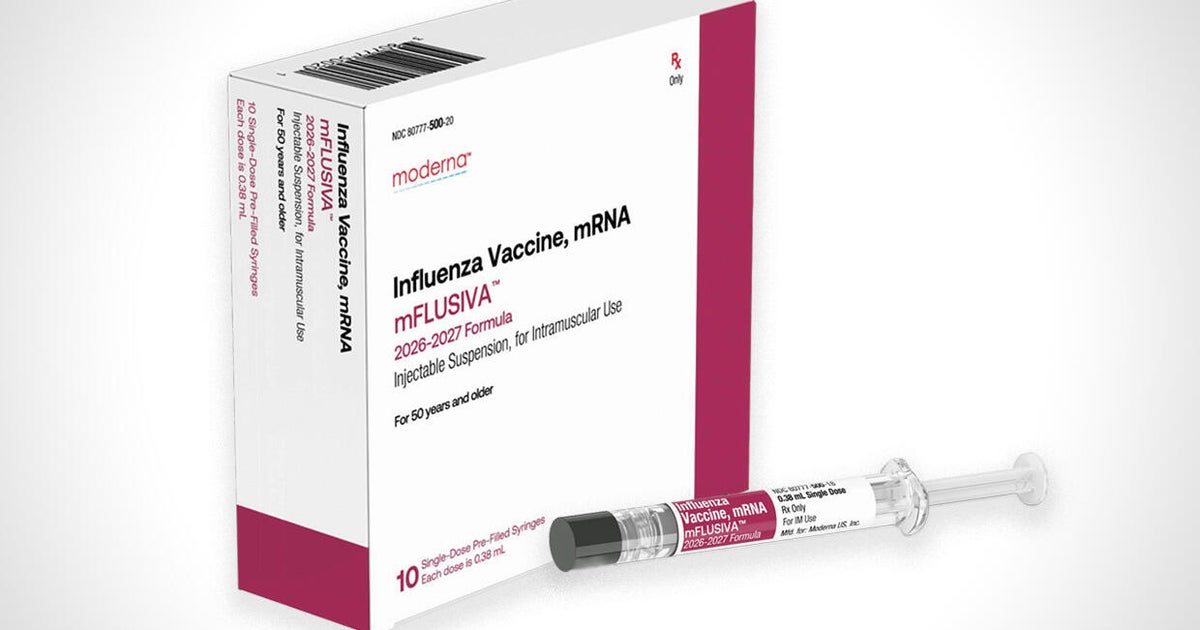
The Food and Drug Administration approved Moderna's mFlusiva on Thursday, the first seasonal influenza vaccine built on messenger RNA to clear U.S. regulators — and the first major validation of the mRNA platform beyond COVID-19.
The shot is cleared for adults 50 and older. Regulators split the decision: a traditional approval for adults 50 to 64, and an accelerated approval for those 65 and up. Moderna expects doses to be available in time for the 2026-27 flu season, which begins arriving in U.S. pharmacies in September.
The approval rests on FLUENT, a Phase 3 trial that enrolled 40,805 adults aged 50 and older across 301 sites in 11 countries during the 2024-2025 influenza season. Against a licensed standard-dose flu vaccine, mFlusiva was 26.6% more effective at preventing influenza-like illness — 2.0% of recipients got sick versus 2.8% in the comparison group. In the 65-and-older subgroup, relative efficacy came in at 27.4%. The number that will matter most to hospital systems: when researchers narrowed the analysis to high-acuity outcomes — emergency room visits, hospitalizations and urgent care encounters — the relative efficacy rose to 47.9%. Reported side effects were the familiar ones, injection site pain, fatigue and headache.
Getting here was not smooth. The FDA initially refused Moderna's application before reversing course after the company revised its regulatory approach and filed an amended submission. That reversal happened inside a Department of Health and Human Services run by Robert F. Kennedy Jr., who has spent his tenure dismantling federal support for the technology and canceled 22 mRNA vaccine development projects. Approving an mRNA flu shot is, in effect, the agency's scientific reviewers reaching a conclusion the secretary above them has publicly rejected.
The appeal of mRNA for influenza has always been speed rather than incremental efficacy. Conventional flu vaccines are grown in chicken eggs, a process that takes roughly six months and forces manufacturers to guess in February which strains will be circulating in October — a guess that goes wrong often enough to explain most bad flu years. Infectious disease physician Dr. Céline Gounder noted that mRNA production can be spun up fast enough to cover a quarter of the global population within months, against the roughly 18 months egg-based technology would need in a pandemic.
For Moderna, which has spent three years watching COVID vaccine revenue collapse, the approval also unlocks the rest of its respiratory pipeline: a flu-COVID combination shot and a pandemic influenza candidate that both depended on a licensed standalone flu vaccine as their foundation. European regulators authorized the company's flu-COVID combination in April, ahead of the United States.