China Could Weaponize Rare Earth Controls Against Trump During Beijing Summit
A central question hanging over this week's summit is whether China will extend its temporary postponement of tougher rare-earth export restrictions.
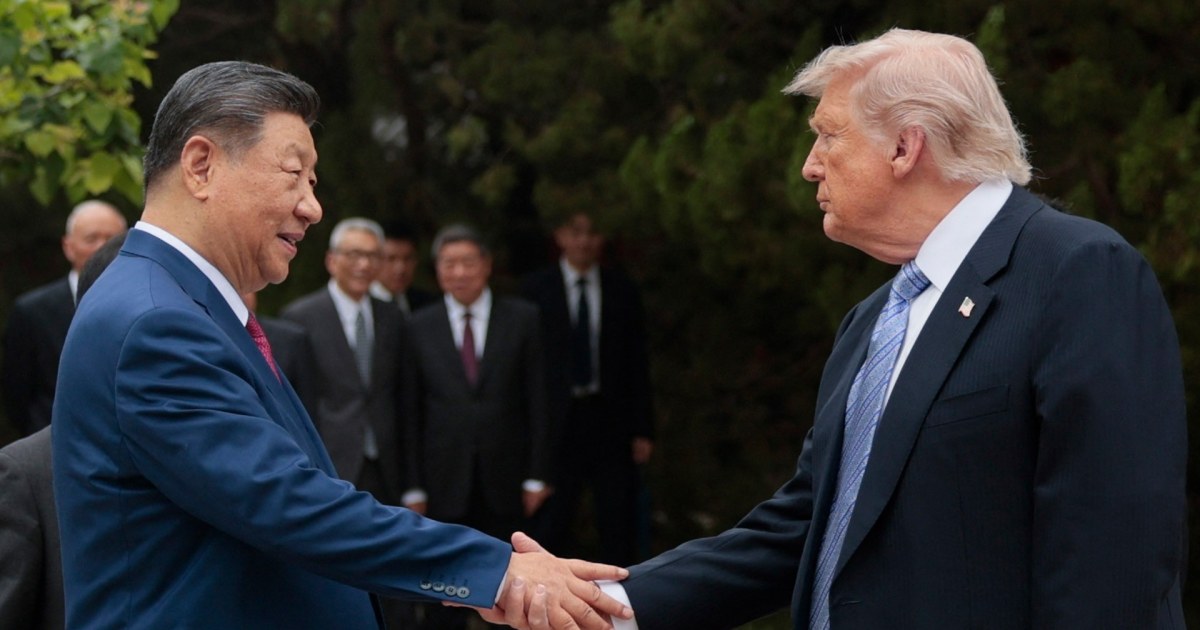
As President Trump arrives in Beijing for crucial talks with Chinese President Xi Jinping, one of the most significant leverage points in the bilateral relationship remains China's dominant control over rare earth elements that are essential to American technology and defense systems. China currently controls approximately 80% of global rare earth production and processing, giving Beijing enormous potential influence over industries ranging from smartphones to military equipment.
The timing of the summit has heightened concerns about China's willingness to use rare earth exports as a geopolitical weapon. Currently, China has agreed to a temporary postponement of even tougher export controls that could severely disrupt American supply chains. However, that temporary arrangement is set to expire soon, and Chinese officials have made clear that any extension will depend on broader progress in trade negotiations and the overall state of US-China relations.
Rare earth elements are critical components in everything from electric vehicle batteries to advanced military systems, including precision-guided munitions and radar systems. The seventeen metallic elements are notoriously difficult to mine and process, requiring specialized facilities and significant environmental controls. While rare earth deposits exist in other countries, China's decades-long investment in processing infrastructure has made it virtually irreplaceable in global supply chains.
American defense officials have long identified rare earth dependence as a critical national security vulnerability. The Pentagon has been working to diversify supply chains and invest in domestic rare earth processing capabilities, but those efforts are still years away from meaningfully reducing American reliance on Chinese supplies. In the meantime, any disruption to Chinese rare earth exports could force American manufacturers to halt production of critical technologies and defense systems.
The rare earth issue exemplifies the complex interdependence that defines the US-China relationship even as political tensions continue to escalate. While Trump has promised to take the toughest stance on China in American history, the practical reality is that American companies and the defense establishment remain deeply dependent on Chinese-controlled supply chains. How China chooses to wield its rare earth leverage during the Beijing summit could significantly influence the trajectory of US-China relations for years to come.