Polish and Ukrainian Teams Have Dug Up More Than 50 Bodies From a Massacre the Two Countries Still Argue About
Between 30% and 40% of the remains recovered in two abandoned villages in western Ukraine belonged to children. None have been identified yet.
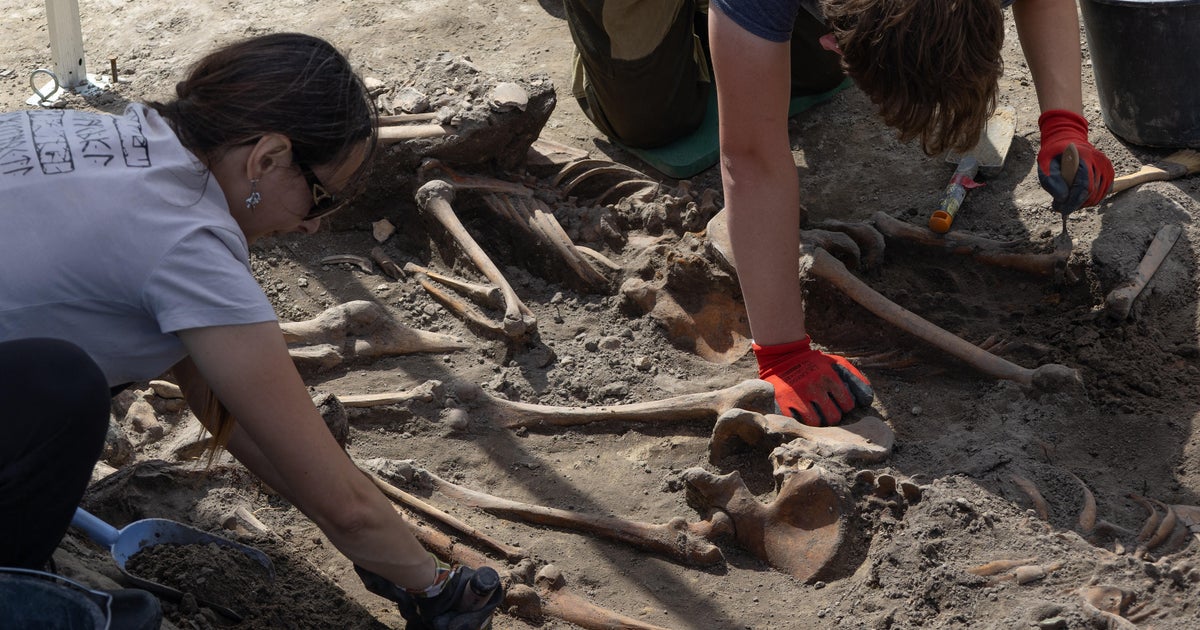
Archaeologists working in two deserted villages in western Ukraine have exhumed the remains of more than 50 people killed in the Volyn massacres, the World War II-era slaughter that remains the most poisonous unresolved question between Poland and Ukraine.
Between 1943 and 1945, fighters of the Ukrainian Insurgent Army, known by its Ukrainian initials UPA, killed tens of thousands of Polish civilians across territory then under Nazi occupation. Poland's Institute of National Remembrance puts the toll at roughly 100,000 and classifies the campaign as genocide against the country's Polish minority. It also documents at least 10,000 Ukrainians killed in Polish retaliation. Ukraine has historically treated the UPA as a resistance movement fighting both Nazi Germany and the Soviet Union, and describes the killings as a wartime tragedy in which Ukrainians also died.
The current excavations are being carried out by joint Polish-Ukrainian teams, a cooperation that took years to negotiate. Of the remains recovered so far, none have been identified. An estimated 30% to 40% belonged to children.
"We want to restore their first and last names," said Karol Polejowski of the Institute of National Remembrance, describing the identification work as an obligation to the dead rather than a political exercise.
The digging is happening against a diplomatic backdrop that has deteriorated sharply. Relations soured after Ukrainian President Volodymyr Zelenskyy named a military unit in honor of the UPA. Polish President Karol Nawrocki responded by withdrawing Poland's highest national honor, the Order of the White Eagle, and three former Ukrainian presidents returned their own White Eagle awards in solidarity. Polish Prime Minister Donald Tusk has announced plans for a national memorial to the Volyn victims while trying to keep the dispute from spilling into military and economic cooperation. "Memory cannot be the servant of hatred," Tusk said.
That balancing act matters well beyond the two capitals. Poland has been Ukraine's most important logistical partner since Russia's full-scale invasion in 2022 — the corridor through which most Western weapons and much humanitarian aid physically enter the country — and it hosts a large Ukrainian refugee population. Polish farmers have staged repeated blockades over Ukrainian grain imports, and Volyn has become the emotional anchor for a broader nationalist argument in Poland that Kyiv takes Polish support for granted.
Historians on both sides largely agree on the underlying facts of what happened in Volhynia and Eastern Galicia. The dispute is over the word "genocide," and over how each country's wartime nationalists should be commemorated today. Ukraine's position has hardened rather than softened during the war with Russia, in part because the UPA is central to the national story Kyiv is telling about resistance to Moscow.
The exhumations are continuing. Each set of remains is being recorded and catalogued in the hope of matching victims to descendants — a process that could take years, and that, for the families involved, is the only part of this argument with a definite answer.
Originally reported by CBS News.