Scientists Map Vast Underground Fungal Networks Stretching 110 Quadrillion Kilometers
First global maps reveal hidden mycorrhizal infrastructure that moves 4 billion tons of carbon annually and supports most plant life on Earth.
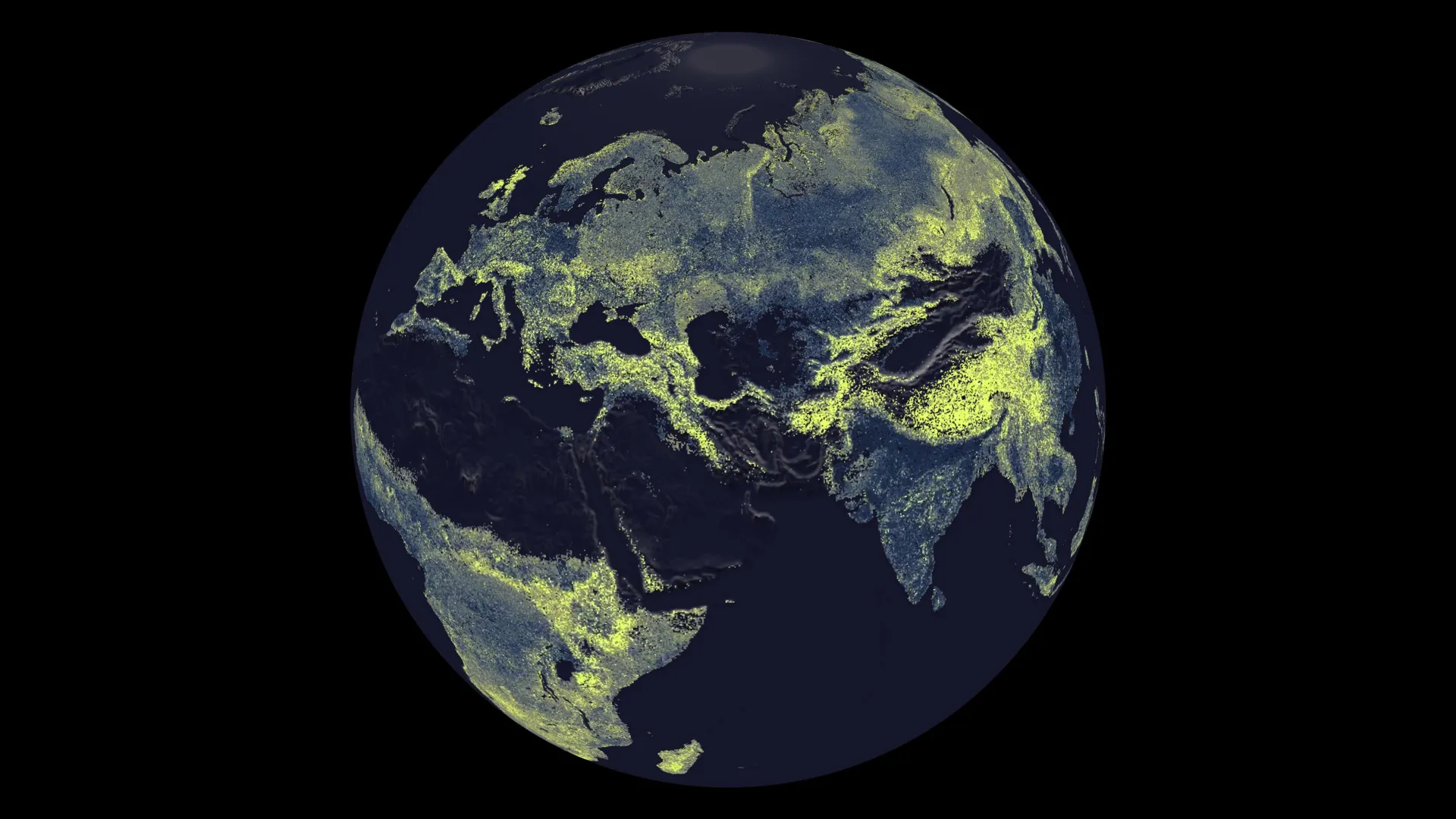
Beneath our feet lies a vast hidden fungal superhighway that helps sustain much of life on Earth, and scientists have now mapped it for the first time with stunning results. Researchers estimate that these underground networks stretch an astonishing 110 quadrillion kilometers—a distance so vast it could reach beyond the Solar System—move about 4 billion tons of carbon dioxide into soils each year, and play a major role in supporting plants and regulating the planet's climate.
The study, published in Science, focuses on arbuscular mycorrhizal fungi, a group that forms partnerships with approximately 70% of plant species worldwide. These fungi create mutually beneficial relationships where plants provide carbon produced through photosynthesis, while the fungi supply plants with essential nutrients and water. The research team compiled measurements from more than 16,000 soil cores collected around the world and used machine-learning models to predict fungal network density in unmeasured regions.
Working with the Physics of Behavior group at the AMOLF research institute, scientists also used robotic imaging to analyze more than 300,000 living fungal threads grown in laboratory conditions. Their analysis suggests that these networks contain roughly 300 megatons of carbon—equivalent to four to six times the mass of all living humans. Dr. Justin Stewart, lead author with the Society for the Protection of Underground Networks, noted that "there could be up to 10 meters (32 feet) of mycorrhizal network in just a teaspoon of soil."
Scientists often describe mycorrhizal networks as one of Earth's circulatory systems because they transport carbon, nutrients, and water throughout underground ecosystems. These living networks function as infrastructure that helps sustain plant communities and move carbon from the atmosphere into soil storage, playing a crucial role in climate regulation that has been largely invisible until now.
The researchers also released an interactive visualization allowing users to explore the remarkable scale of this hidden underground infrastructure. The maps are expected to help scientists and policymakers identify areas where these fungal networks are thriving and where they may be under threat from human activities, climate change, or other environmental pressures. Understanding and protecting these networks could prove critical for maintaining healthy ecosystems and managing global carbon cycles.