Arctic Ocean Crossed an Irreversible Tipping Point in 2009, Edinburgh-Led Study Finds
Accelerating sea-ice loss flipped the Arctic from a system limited by light to one starved of nitrate, choking the nutrient supply that underpins the entire polar food web.
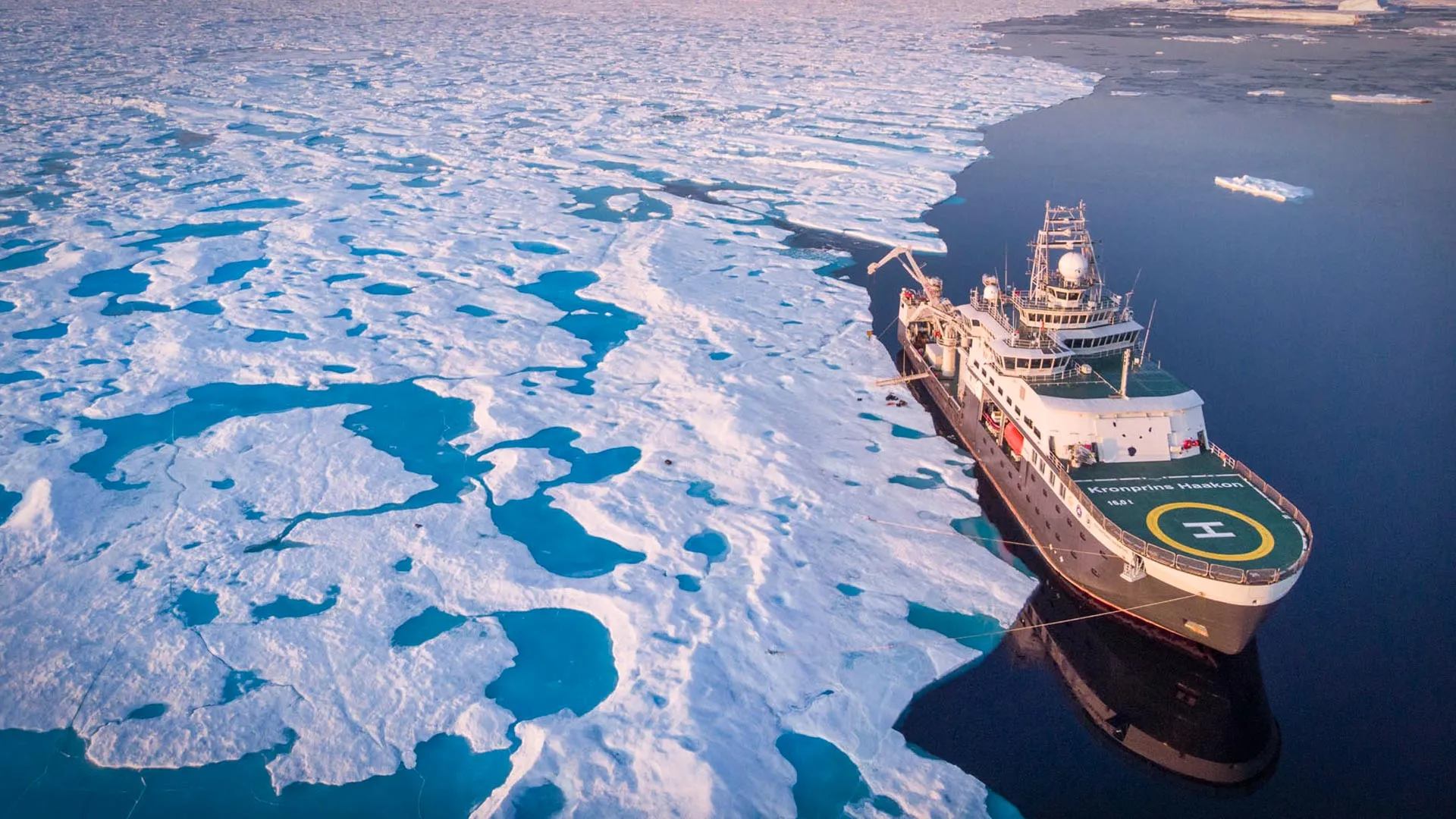
The Arctic Ocean appears to have crossed a critical and possibly irreversible threshold around 2009, when a sharp acceleration in sea-ice loss triggered a fundamental shift in the ocean's chemistry, according to a study published May 28 in the journal Communications Earth & Environment.
Drawing on more than two decades of ocean sampling, much of it from the Fram Strait between Greenland and Svalbard, researchers led by Professor Raja Ganeshram of the University of Edinburgh's School of GeoSciences identified 2009 as the turning point. Before then, the growth of microscopic plant life in the Arctic was mostly limited by the availability of light. After, it became increasingly limited by a shortage of nitrate, a key nutrient.
"The Arctic Ocean appears to have shifted from a system mainly limited by light to one increasingly limited by nitrate availability," the team reported. That distinction matters enormously: phytoplankton form the base of the marine food web, and a chronic nutrient shortage can ripple upward through fish, seabirds and marine mammals.
The mechanism is a process called benthic denitrification. As sea ice retreats and conditions change over the shallow continental shelves that cover roughly half of the Arctic Ocean, microbial activity in the seafloor sediments accelerates, converting dissolved nitrate into nitrogen gas that escapes back to the atmosphere. The result is a steady draining of the nutrient that Arctic ecosystems depend on.
What makes the finding especially sobering is its apparent permanence. Because the chemical shift is tied directly to the ongoing decline of sea ice, the researchers argue that reversing it would require restoring the ice itself — an unlikely prospect on any near-term horizon given the trajectory of Arctic warming. The work was co-led by PhD student Marta Santos-García and drew contributions from the Norwegian Polar Institute, the Scottish Association for Marine Science, the Technical University of Denmark and Germany's Alfred-Wegener-Institut.
The Fram Strait, where much of the data was gathered, is the main deep-water gateway between the Arctic and the Atlantic, making it a sensitive bellwether for changes sweeping the wider ocean. A sustained drop in phytoplankton productivity would not only stress Arctic fisheries and the communities that depend on them, but could also weaken the ocean's capacity to draw carbon dioxide out of the atmosphere — a feedback that would, in turn, compound the warming driving the ice loss in the first place.
The study adds the Arctic nutrient system to a growing list of climate "tipping points" — thresholds beyond which change becomes self-sustaining and difficult to undo. For a region already warming several times faster than the global average, the conclusion is a warning that some of the consequences of ice loss may already be locked in, reshaping one of the planet's most fragile ecosystems for generations.