The Ocean's Chemistry May Hinge on a Tiny Microbe Hidden Inside Fish, Surprising Scientists
A new study finds that gut bacteria team up with marine fish to manufacture carbon-trapping minerals, revealing a hidden partnership that could reshape how scientists understand the ocean's carbon cycle.
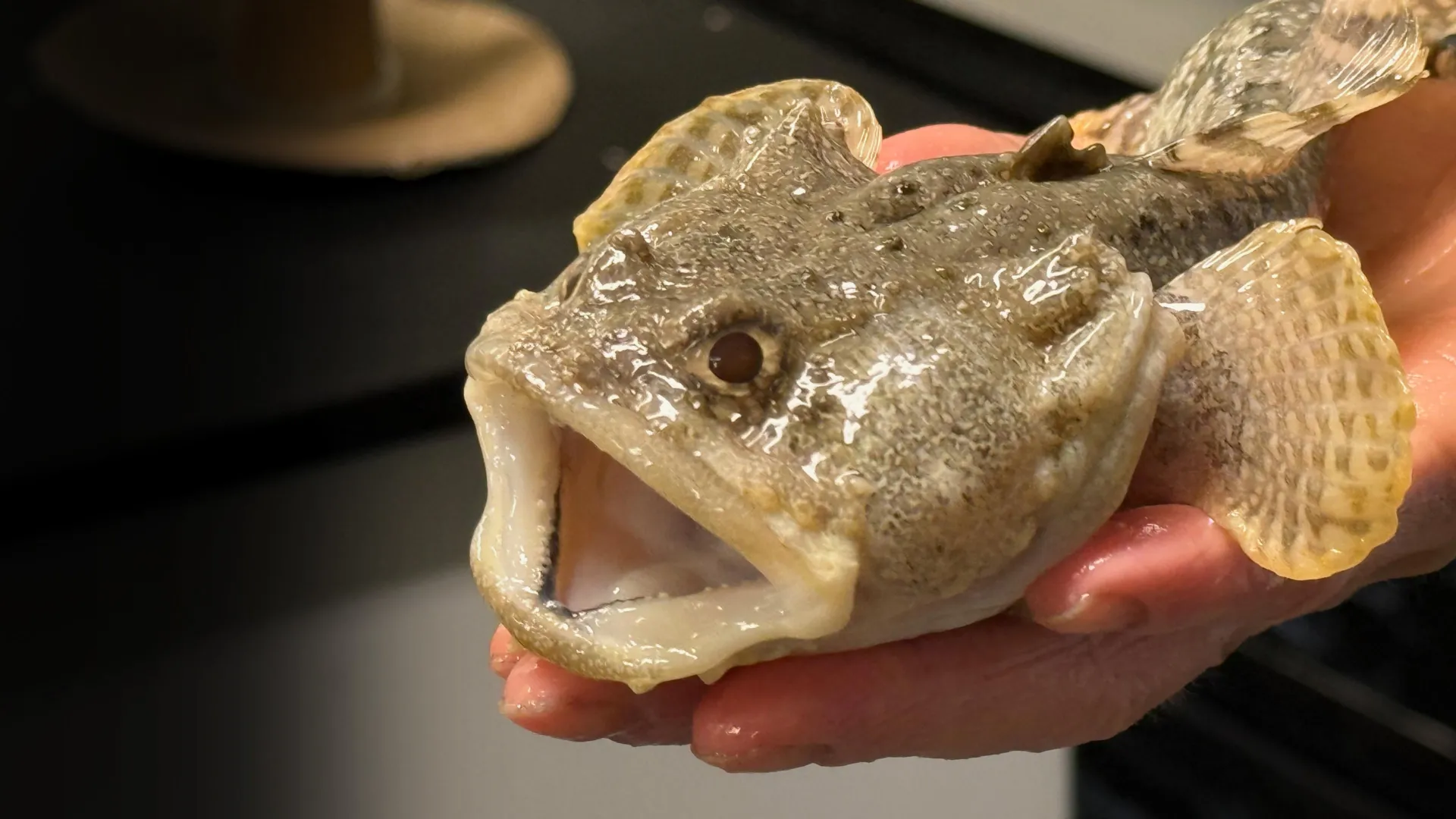
For decades, scientists credited fish alone with a quiet but consequential job: helping to set the chemistry of the world's oceans. A new study suggests they have been missing a crucial partner all along — the microscopic bacteria living inside the fish themselves.
Marine fish are known to excrete tiny pellets of calcium carbonate, the same mineral that makes up chalk and seashells, as a byproduct of regulating the salts and water in their bodies. Those carbonate granules sink, dissolve and buffer the acidity of seawater, and together they represent a significant and still poorly understood piece of the marine carbon cycle. The conventional view held that the fish's own gut produced these minerals on its own.
The new research, published in the journal PLOS Biology under the title "Symbiotic bacteria may support calcium carbonate precipitation in the Gulf toadfish," tells a different story. It points to a hidden collaboration in which symbiotic bacteria in the fish's intestine help drive the formation of the carbonate, working alongside their host rather than as bystanders. The discovery reframes a process long attributed solely to the animal as a true partnership between fish and microbe.
The work was led by Anthony Bonacolta, a former graduate student at the University of Miami's Rosenstiel School of Marine, Atmospheric, and Earth Science, who focused on the Gulf toadfish, a hardy, well-studied species that has become a workhorse for research on fish physiology. By examining the microbial communities in the toadfish gut, the team found bacteria positioned to influence the chemical conditions under which calcium carbonate precipitates, suggesting the microbes are active contributors to mineral production.
The implications stretch well beyond a single fish. Calcium carbonate produced by marine life plays a pivotal role in sequestering carbon dioxide, helping to lock away a greenhouse gas that drives climate change. If gut microbes are quietly shaping how much carbonate the ocean's vast fish populations generate, then a largely invisible community of bacteria may be helping to regulate the planet's carbon balance — and, by extension, its climate.
The findings also underscore how much remains unknown about the microbiomes of wild animals and their effects on the environment at large. Researchers caution that the study identifies a plausible partnership rather than a fully proven mechanism, and that more work is needed to measure exactly how much carbonate the bacteria help create across different species and seas. Still, the result adds to a growing recognition that some of the biggest forces shaping the ocean operate at the smallest possible scale, inside the bodies of the creatures that swim through it.