Pentagon Plans to Hold Back Report on U.S. Strike on Iranian School Until After Midterms
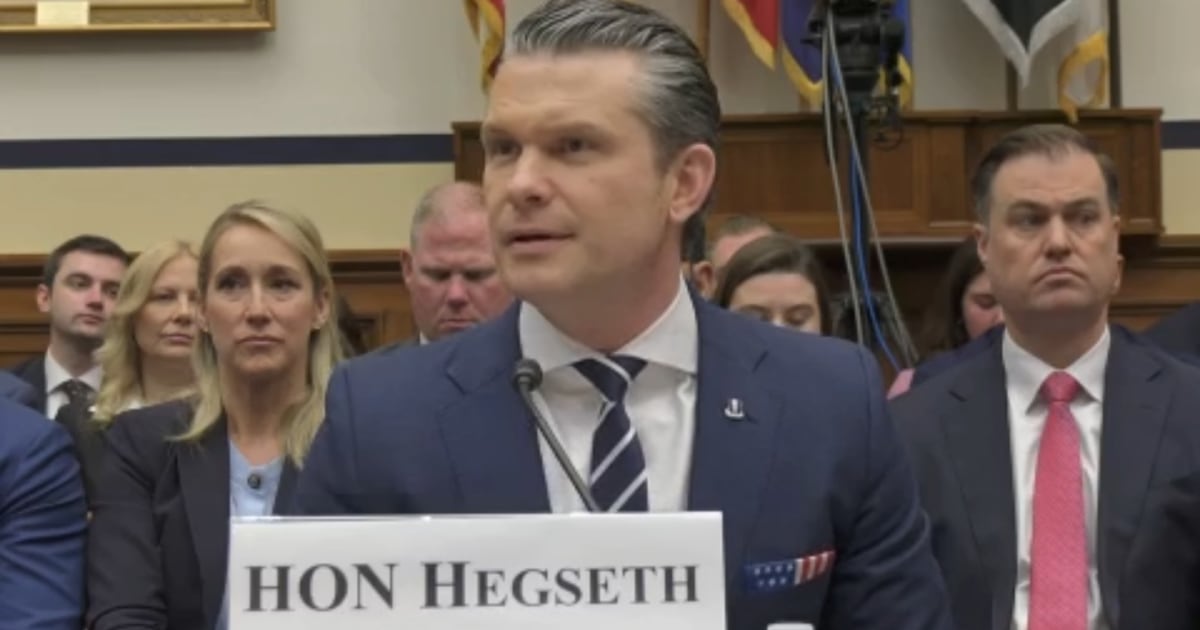
Hegseth advisers have told Pentagon staff the all-but-finished report on the Minab school attack will not go public before the Nov. 3 election, Bloomberg reports.

Top Pentagon officials intend to keep an internal report on the U.S. bombing of an Iranian elementary school out of public view until after the midterm elections at the earliest, Bloomberg News reported Thursday. The strike hit the Shajareh Tayyebeh Elementary School in Minab, in southern Iran, on Feb. 28, the opening day of the war.
Advisers to Defense Secretary Pete Hegseth have conveyed to other Pentagon personnel that the report will not be shared before the Nov. 3 vote, according to Bloomberg's account as relayed by Antiwar.com and Consortium News. Officials told Bloomberg the investigation has been all but complete for several months. A Pentagon official has said in the past that the investigation is ongoing and that there are no updates to announce, and Bloomberg's reporting does not describe a final decision on the timeline.
The report reportedly found that flawed intelligence, outdated imagery and an overreliance on artificial intelligence contributed to the attack. An earlier Bloomberg investigation found that within hours of the strike, Pentagon personnel knew the United States was responsible. The Trump administration has not formally admitted carrying out the attack.
The death toll varies by source. Bloomberg counts 123 children killed. The general prosecutor in Minab said in early April that the final toll was 156, including 120 students, 26 female teachers, the unborn child of a pregnant teacher, seven parents, a school-bus driver and a technician at a nearby clinic. Funerals were held in Minab on March 3.
Congress has pressed for answers for months. In July, Democratic senators led by Kirsten Gillibrand asked the administration to release the findings within a week, to finalize the investigation and to brief lawmakers on how it planned to prevent a repeat. Senators had called for a probe within days of the strike.
The dispute is tied to a wider fight over how the Pentagon handles civilian casualties. Last month Rep. Thomas Massie, a Kentucky Republican, introduced a resolution to impeach Hegseth. One article accuses him of ignoring U.S. laws meant to minimize civilian harm and links that to the Minab strike. The resolution says Hegseth sought to repeal congressionally mandated civilian-protection requirements, dismantled the department's civilian-harm mitigation infrastructure, removed senior military lawyers responsible for independent legal oversight and stripped civilian protection from the National Defense Strategy.
The timing adds a political layer to an already charged campaign. The war with Iran has dominated the fall, with a U.S. naval blockade of Iranian ports, record attacks on shipping near the Strait of Hormuz and crude prices above $100 a barrel in the United States. Releasing a report that blames U.S. intelligence failures and AI for the deaths of more than 100 children would land less than three weeks before voters decide control of Congress.
The Pentagon has not publicly confirmed the Bloomberg account. Consortium News and Antiwar.com, which carried the details, are advocacy outlets that rely on Bloomberg's original reporting for the central claim, and Planck Standard has not seen the underlying Bloomberg article. Lawmakers are weighing rules that would force the release of final reports in civilian-harm cases.