Nvidia Bets $150 Billion on Taiwan as Trump's US AI Hub Plans Backfire
The chip giant's massive investment in Taiwan undermines Trump administration efforts to establish America as the center of artificial intelligence development.
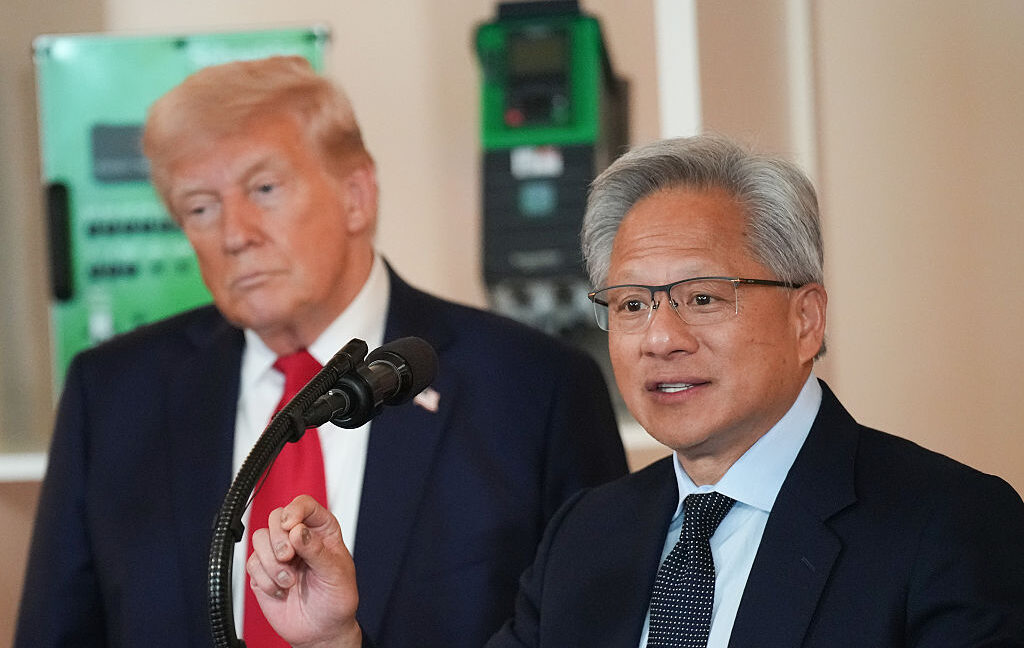
Nvidia CEO Jensen Huang has announced plans to invest $150 billion in Taiwan's semiconductor infrastructure, dealing a significant blow to the Trump administration's efforts to establish the United States as the global center of artificial intelligence development. The massive investment commitment represents one of the largest foreign direct investments in Taiwan's history and signals Nvidia's confidence in the island's continued dominance in advanced chip manufacturing.
Huang's announcement comes at a particularly sensitive time for U.S.-Taiwan relations and American technology policy. The Trump administration has spent considerable political and economic capital attempting to convince major technology companies to relocate critical manufacturing and research operations to American soil, offering substantial tax incentives and regulatory relief as inducements. Nvidia's decision to double down on Taiwan instead represents a high-profile rejection of these efforts.
The investment will focus on expanding Taiwan's already formidable semiconductor manufacturing capabilities, with particular emphasis on the advanced chips that power artificial intelligence applications. Taiwan currently produces the majority of the world's most sophisticated semiconductors through companies like Taiwan Semiconductor Manufacturing Company (TSMC), which has become indispensable to the global technology supply chain.
Nvidia's commitment to Taiwan reflects broader industry skepticism about the viability of quickly establishing comparable manufacturing capabilities in the United States. Despite billions of dollars in government incentives through programs like the CHIPS Act, industry executives argue that Taiwan's decades of experience, skilled workforce, and established supply chains cannot be easily replicated elsewhere.
The move also highlights the complex geopolitical calculations facing technology companies as they navigate tensions between the United States and China while maintaining relationships with Taiwan. For Nvidia, the investment represents a bet that Taiwan will remain a stable and profitable location for semiconductor operations despite ongoing regional tensions and American pressure to diversify supply chains away from Asia.