Israel's Defense Minister Ordered the Army to Take Another West Bank Refugee Camp. 33,000 Are Still Displaced From the Last Three.
Israel Katz told the military to follow "the Tulkarem, Nur Shams and Jenin model." Human Rights Watch says that model, applied in 2025, amounted to war crimes.
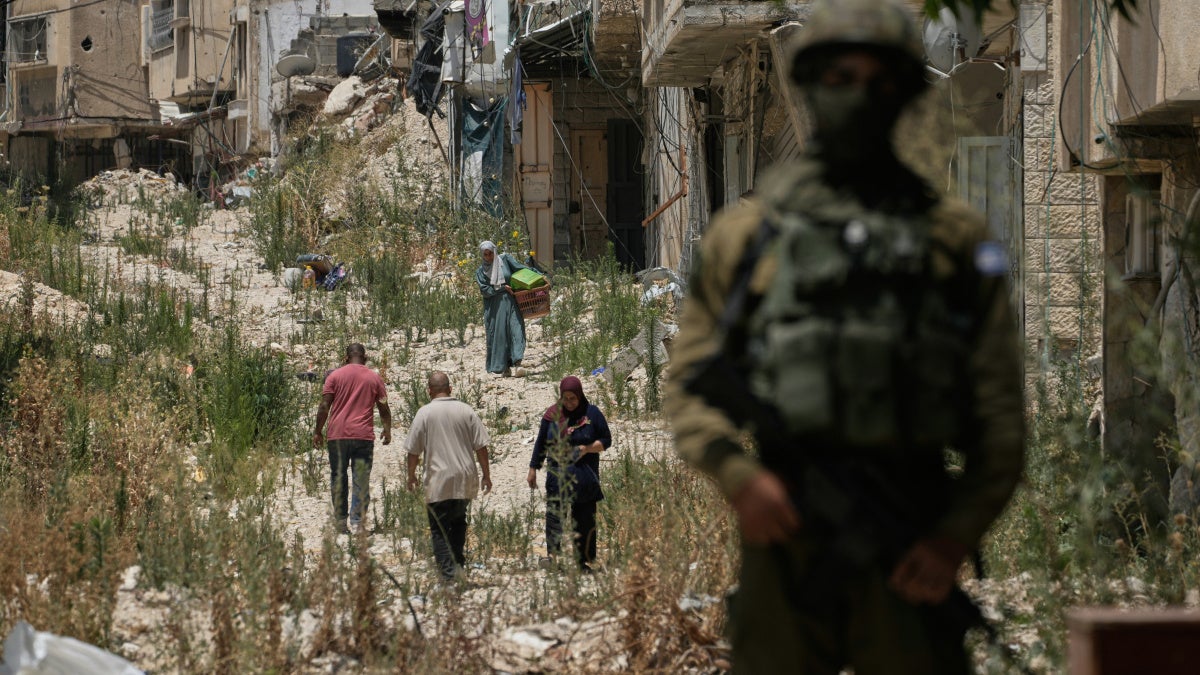
Israeli Defense Minister Israel Katz instructed the military on July 28 to prepare to take control of another Palestinian refugee camp in the occupied West Bank. He did not name the camp. He named the template: the operation, he said, should follow "the Tulkarem, Nur Shams and Jenin model."
That model has a documented history. In January and February 2025, during an operation the Israeli military called Iron Wall, forces emptied those three camps in the northern West Bank. Roughly 40,000 Palestinians were displaced. Katz said at the time that residents would not return for a year.
Twenty months on, according to United Nations figures, more than 33,000 of them are still displaced from homes they have not been allowed to go back to. Some have been granted short-term permits to retrieve belongings under military escort and then leave again. The camps themselves remain under permanent Israeli military presence, with wide access roads bulldozed through the dense housing blocks that made them difficult to patrol.
Human Rights Watch, which published its assessment of Katz's order on July 31, has previously concluded in a November 2025 report titled "All My Dreams Have Been Erased" that the forced displacement in the three camps amounted to war crimes and crimes against humanity. The organization's argument turns on duration and intent: international humanitarian law permits an occupying power to evacuate civilians temporarily for their own security or for imperative military reasons, but requires their return as soon as hostilities in the area cease. It does not permit an occupier to empty an area and keep it empty. Nadia Hardman, a senior adviser in the group's refugee and migrant rights division, wrote the July analysis, which argues that ordering a fourth camp cleared on the same model, with the previous three still unreturned, indicates the displacement is not temporary.
Katz issued the order after a security assessment attended by the military's chief of staff, Lt. Gen. Eyal Zamir, the heads of the operations and intelligence directorates, the commander of Central Command, the coordinator of government activities in the territories, the commander of the Israel Police's West Bank district and representatives of the Shin Bet. It followed a shooting near the village of Tal, southwest of Nablus, in which two Israelis and four members of a Palestinian family were killed, and a wave of settler attacks across the territory afterward — 30 separate incidents over one weekend, by the count of Israel's own Army Radio, including arson at homes, vehicles and a newly built mosque in Qusra.
Israeli authorities have not opened investigations into military conduct during Iron Wall, and no foreign government has attached consequences to it. Prime Minister Benjamin Netanyahu's government has defended the camp operations as necessary to dismantle armed groups that had established themselves in the camps, and points to the militant infrastructure the military says it destroyed there. What it has not offered is a date on which the 33,000 people displaced from the first three camps are permitted to go home.
Originally reported by Human Rights Watch.