Musk Unveils a Tesla Roadster That Flies on Rocket Thrusters, Production Set for 2028
At a SpaceX test site in Texas, the car launched off a ramp, flipped midair and landed on its wheels. Tesla's own website says the flying model is not approved for public roads.
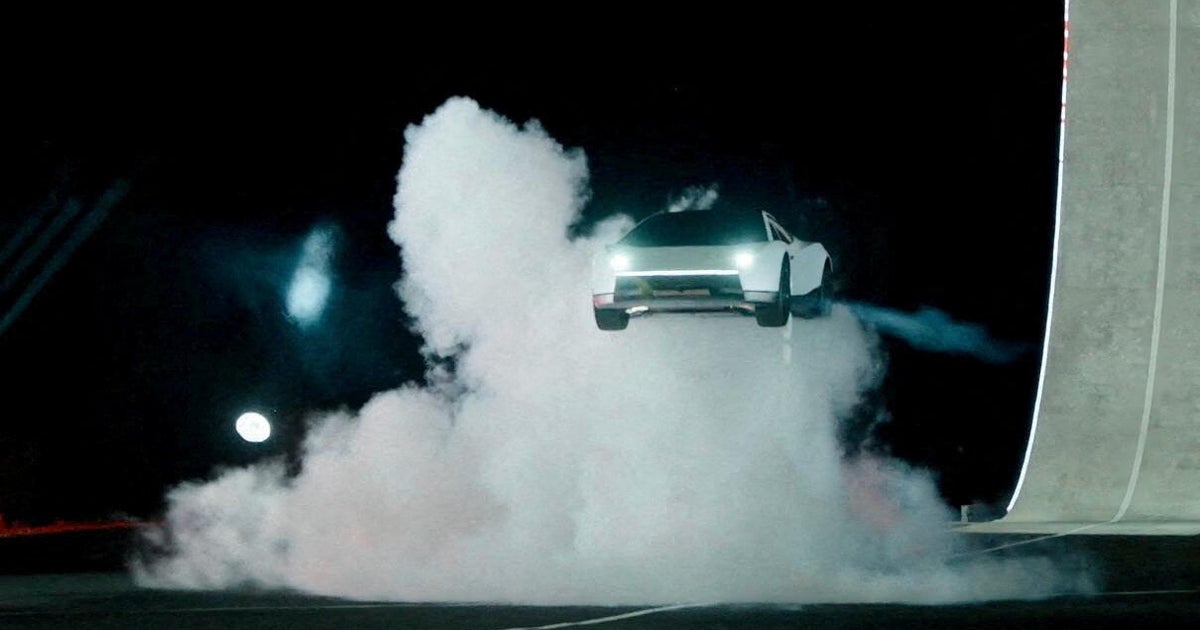
HOUSTON — Elon Musk unveiled what he called a "flying" car on Thursday, a new Tesla Roadster fitted with thrusters, during a livestreamed event at a SpaceX test facility in Texas.
In the demonstration, shown on Tesla's account on X, the car launched from a ramp that curled over until the vehicle was upside down. It appeared to cling to the surface before flying off the end, then rolled 180 degrees in midair and landed on its wheels. "Flying cars are real," Musk said, though he added that the vehicle's "success is not guaranteed" and that "it will probably work."
Musk said the car uses "ultra high-pressure air tanks" to propel itself into the air. He described the project as the result of a collaboration between "the world's best car company and the world's best rocket company," a reference to Tesla and SpaceX. He said the vehicle would go into production in 2028. No price was announced.
The details on Tesla's own website are more modest than the stunt. The site says the planned flying model is not approved for use on public roads. Buyers can place an online reservation with a $5,000 deposit for a non-flying version of the Roadster. A limited-edition Thrust model is promised but cannot yet be reserved, and the Rocket model, with its "full flight system," will be offered by invitation only.
Technical and regulatory hurdles have so far kept the long-promised flying car sector from taking off in any commercial sense. The idea is nearly as old as the automobile: American aviation pioneer Glenn Curtiss showed the first flying car prototype in 1917. More serious efforts have gathered pace in recent years as electric motors and high-performance batteries have improved.
Wall Street analyst Dan Ives of Yorkville Ives told clients that the Roadster "will not move the volume or revenue needle, with production likely limited, and investors should not model it as a growth driver." What it does, he wrote, is "restore the brand halo at the top of the market and put a spotlight on the engineering stack a week before the FY3Q26 print on October 21st," referring to Tesla's third-quarter earnings report.
Ives said the car also makes the Tesla-SpaceX relationship tangible, with "propulsion, pressure-vessel, and control hardware developed at the rocket company sitting on a Tesla product." In his view that strengthens the case for the two companies operating as one engineering platform over time.
Musk, a major Republican donor known for a close but sometimes tumultuous relationship with President Trump, has pushed his companies into several major industries. A week ago, SpaceX said it had agreed to buy licenses for radio airwaves that would let its Starlink Mobile satellite business provide cellular service inside buildings. Musk wrote on Oct. 8 that the deal was "the last critical piece of the spectrum puzzle needed for SpaceX to provide complete phone coverage in America," and the company said it would let SpaceX "become a major mobile carrier in the U.S."