Layoffs Fell to a Two-Year Low in July. AI Was Still the Single Biggest Reason for the Ones That Happened
American employers announced 33,429 job cuts last month, down 46% from a year earlier, while artificial intelligence accounted for a third of them for the fifth straight month.

American employers announced 33,429 job cuts in July, the smallest monthly total since July 2024 and a 46% drop from the same month a year ago, according to the outplacement firm Challenger, Gray & Christmas. It is a striking figure given how much of the past year's economic commentary has been devoted to the idea that artificial intelligence is about to hollow out white-collar employment.
"The pace of layoffs fell dramatically this summer," said Andy Challenger, the firm's chief revenue officer. A separate government measure pointed the same direction: the four-week average of initial jobless claims fell below 200,000 for the first time since October 2022, a level that historically indicates employers are holding onto the workers they have rather than trimming.
AI has not disappeared from the numbers, though. It was cited as the cause of 33% of July's announced cuts — the fifth consecutive month in which it ranked as the leading stated reason. What has kept the aggregate low is that those reductions remain concentrated in the technology sector rather than spread across the economy. Software firms restructuring around AI tooling are shedding staff; hospitals, logistics companies and manufacturers largely are not.
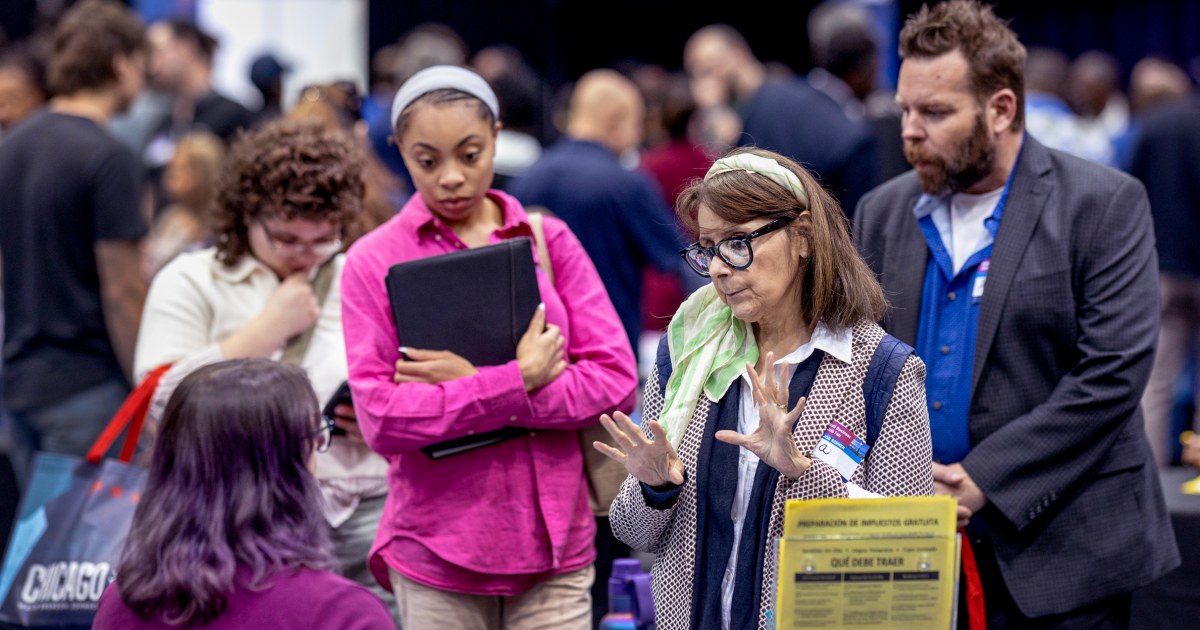
The weakness shows up somewhere else instead: at the entry level. Openings for entry-level corporate positions have declined 15%, while applications per job opening have surged 30%. That combination — fewer doors and more people knocking on each one — describes a market that is stable for the employed and brutal for anyone trying to get in. Recent college graduates in particular report far longer searches than the headline unemployment rate of 4.2% would suggest.
That gap between the aggregate and the entry point is the most consequential thing in the report. Layoff counts measure the people companies decide to remove. They say nothing about the jobs companies quietly decide not to create, which is where AI adoption tends to show up first: a team that would have hired two junior analysts hires none and routes the work through a model instead. Nothing about that appears in a layoff announcement.
Economists expected the July payroll report to show a gain of about 97,500 jobs, following a modest addition of 57,000 in June. Numbers in that range would confirm the picture the Challenger data sketches — an economy that is not firing people but is also not hiring at anything close to the pace of the post-pandemic boom, with the burden of that slowdown falling almost entirely on people at the start of their careers.