Iran Demands Big Tech Pay Transit Fees for Undersea Internet Cables Through Strait of Hormuz
Tehran's new policy targets major technology companies whose data flows through critical maritime chokepoint connecting global internet infrastructure.
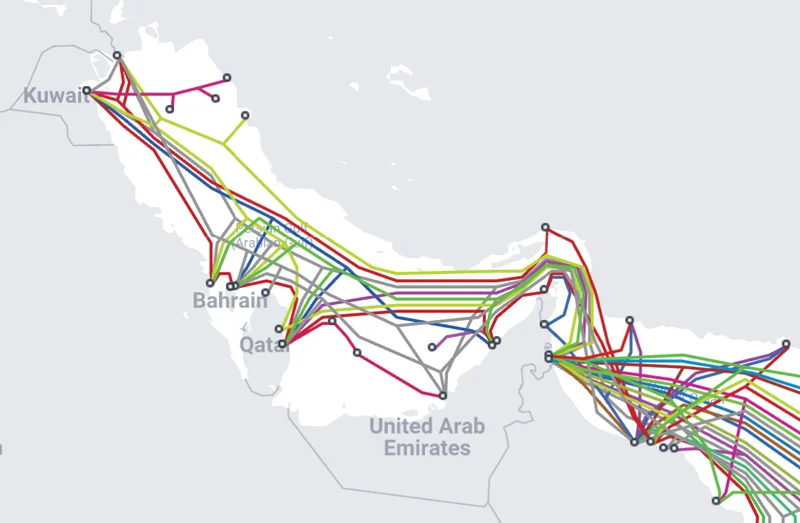
Iran has announced plans to impose transit fees on major technology companies for undersea internet cables that pass through the Strait of Hormuz, a critical maritime chokepoint that carries a significant portion of global internet traffic between Asia, Europe, and the Americas.
The policy represents a new attempt by Tehran to extract revenue from the digital infrastructure that passes through waters under Iranian influence. The Strait of Hormuz, which connects the Persian Gulf to the Gulf of Oman and Arabian Sea, serves as a vital route for undersea fiber optic cables that form the backbone of international internet communications.
Major technology companies including Google, Meta, Amazon, and Microsoft rely on these undersea cable networks to connect their global data centers and provide services to billions of users worldwide. The cables carry everything from video streaming and social media traffic to critical business communications and cloud computing services.
Iranian officials have not yet specified the exact fee structure or implementation timeline, but the policy could potentially affect internet costs and performance for users across multiple continents. The country's ability to enforce such fees may depend on its practical control over cable infrastructure and international legal frameworks governing maritime internet infrastructure.
The announcement comes amid broader tensions in the Persian Gulf region and reflects Iran's efforts to leverage its strategic geographic position for economic and political purposes. Technology companies and internet service providers are likely monitoring the situation closely, as any disruption to major cable routes could require expensive rerouting of internet traffic through alternative undersea pathways.